When you’re browsing the dairy aisle, you’ve likely faced the choice between brown and white eggs. A common question that often comes to mind is: are brown eggs healthier than white ones? Many consumers mistakenly believe that the color of an egg’s shell signifies a difference in its nutritional value or quality. However, the truth about brown vs. white eggs is far simpler and more surprising than you might think.
At Glowra Health, we believe in making informed choices about the foods that nourish us. This article will crack open the myths surrounding egg shell color, reveal what truly distinguishes these everyday staples, and guide you on what factors genuinely matter when selecting eggs for your table: quality, proper storage, and freshness.
The Great Egg Debate: Myth vs. Fact
For years, a pervasive misconception has colored our perception of eggs. Let’s separate the folklore from the facts.
Myth: Brown Eggs Are Healthier
It’s a belief deeply ingrained in many minds: brown eggs, with their earthier tone, must be more natural, organic, or simply packed with more nutrients than their white counterparts. This often leads to brown eggs being perceived as a ‘premium’ choice, sometimes even justifying a slightly higher price tag in the market.
Fact: Shell Color Doesn’t Dictate Nutrition
The reality is, the color of an egg’s shell has absolutely no bearing on its nutritional content, taste, or cooking properties. Whether an egg is brown or white simply depends on the breed of the hen that laid it. For instance, breeds like Leghorns typically lay white eggs, while Rhode Island Reds and Plymouth Rocks are known for laying brown eggs.
The slight price difference you might observe for brown eggs often comes down to the size and appetite of the hens. Brown egg-laying hens are generally larger breeds and require more feed, which can translate to slightly higher production costs. So, while you might pay a little more, you’re not getting any extra health benefits from the shell color itself.
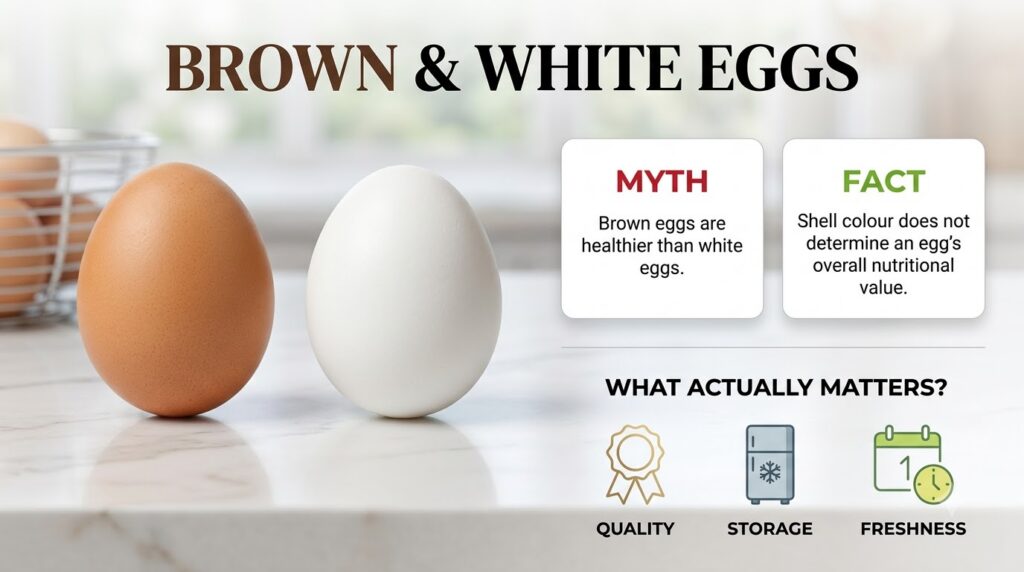
What Truly Matters: Beyond the Shell Color
Instead of focusing on shell color, shift your attention to the factors that genuinely impact the quality, safety, and deliciousness of your eggs.
Quality: The Real Indicator of a Good Egg
The nutritional profile and overall quality of an egg are primarily influenced by the hen’s diet and living conditions. Eggs from hens that forage on diverse diets, have access to sunlight, and live in humane environments may offer subtle differences in yolk color and sometimes even nutrient density, such as higher omega-3 fatty acids or vitamin D. Look for labels like ‘pasture-raised,’ ‘free-range,’ or ‘organic’ if these aspects are important to you, as they often indicate higher welfare standards and potentially more varied hen diets.
Proper Storage for Peak Freshness
Once you bring your eggs home, how you store them is crucial for maintaining their quality and extending their shelf life. In many countries, including the United States, eggs are washed before packaging, removing their natural protective bloom. This makes refrigeration essential. Always store eggs in their original carton on an inner shelf of your refrigerator, not in the door, where temperature fluctuations are common. The carton helps protect them from absorbing odors from other foods and minimizes moisture loss.
Freshness: Enjoying Eggs at Their Best
Freshness plays a significant role in an egg’s culinary performance and taste. A fresh egg will have a firm yolk and a thick, clear albumen (egg white) that holds its shape well. As eggs age, the albumen thins, and the yolk flattens. While still safe to eat, older eggs might not perform as well in recipes requiring a sturdy yolk or fluffy whites.
To check for freshness:
- Best-by Date: Always check the ‘best-by’ or ‘expiration’ date on the carton.
- The Float Test: Gently place an egg in a bowl of water. A fresh egg will sink to the bottom and lie on its side. An older egg might stand on its end, while a very old, spoiled egg will float because of a larger air cell inside.
Making Informed Choices for Your Health
Now that you know the truth, you can confidently choose eggs based on what truly matters to you. Whether you prefer white or brown, focus on purchasing eggs from reputable sources that prioritize hen welfare and proper handling. Pay attention to the ‘best by’ dates and ensure you store them correctly to preserve their freshness and nutritional integrity. Eggs are a versatile and nutritious food, offering a complete source of protein, essential vitamins, and minerals, making them a fantastic addition to a balanced diet.
Final Thoughts
The next time you’re at the grocery store, remember that the color of an egg shell is merely a cosmetic detail determined by genetics, not a marker of superior health benefits. Instead, prioritize factors like the farming practices, proper storage, and the egg’s freshness to ensure you’re getting the best possible product for your healthy eating goals. Enjoy your eggs, regardless of their hue!