The sweet, tropical guava fruit is a well-known delight, but the true hidden treasure of the guava tree often goes overlooked: its leaves. Most people ignore these potent green powerhouses, discarding them without a second thought, yet for centuries, various cultures have prized guava leaves for their remarkable practical benefits.
It’s time to peel back the curtain and discover why these humble leaves are a staple in traditional remedies, from soothing a troubled gut to boosting hair health. Forget the vague wellness claims; we’re diving deep into actionable methods for harnessing the power of guava leaves for your daily routine.
What Are Guava Leaves and Their Practical Uses?
Guava leaves come from the Psidium guajava tree, a common sight in tropical and subtropical regions. Unlike the fruit, the leaves are typically not eaten raw but are highly valued for their extracts and infusions. They are commonly prepared as teas, rinses, or poultices, often targeting issues related to digestion, skin health, and hair care. The leaves contain a rich profile of compounds, including antioxidants, anti-inflammatory agents, and antimicrobials, which are believed to contribute to their wide range of traditional applications.
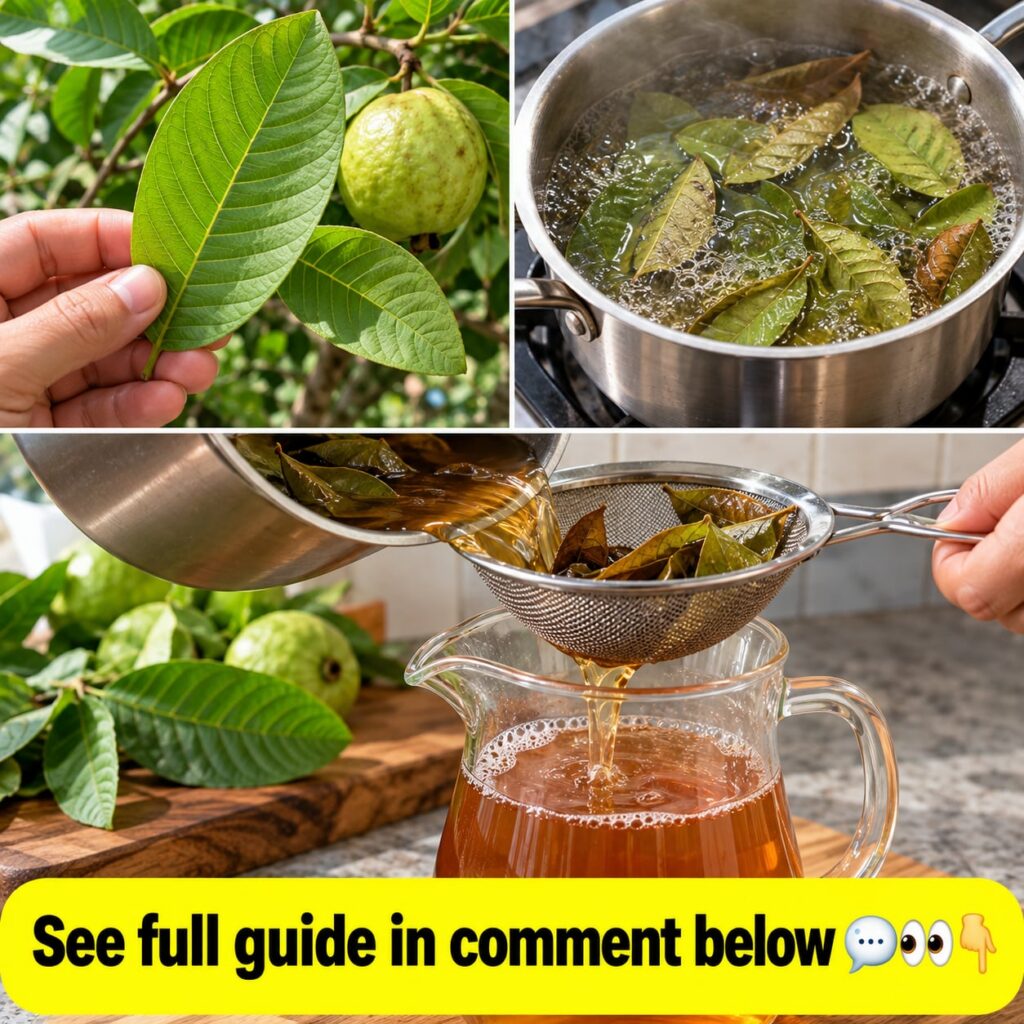
Guava Leaf Tea: Your Simple Home Remedy
One of the most popular and straightforward ways to utilize guava leaves is by brewing them into a tea. This infusion is a staple in many households, often used for digestive comfort or as a general wellness tonic.
Ingredients
- 10-15 fresh guava leaves (or 1 tablespoon dried, crushed leaves)
- 2-3 cups filtered water
- Optional: a slice of lemon or a teaspoon of honey for taste
Approximate Measurements
- **Fresh Leaves:** Approximately 10-15 medium-sized leaves, thoroughly washed.
- **Dried Leaves:** 1 tablespoon of crushed dried leaves.
- **Water:** 2-3 cups, depending on desired strength.
Formula / Recipe: Basic Guava Leaf Infusion
This simple formula ensures you extract the beneficial compounds effectively without over-processing.
Step-by-Step Method for Brewing Guava Leaf Tea
- Prepare the Leaves: If using fresh leaves, wash them thoroughly under cold running water to remove any dirt or residue. If using dried leaves, ensure they are crushed or broken into smaller pieces.
- Boil Water: Bring 2-3 cups of filtered water to a rolling boil in a small saucepan.
- Add Leaves: Once the water is boiling, add the prepared guava leaves to the pot.
- Simmer: Reduce the heat to low, cover the pot, and let the leaves simmer gently for 10-15 minutes. This gentle simmering allows the beneficial compounds to steep into the water without excessive evaporation.
- Strain: Remove the pot from the heat and let it cool slightly. Strain the liquid into a cup or heat-proof container, discarding the used leaves.
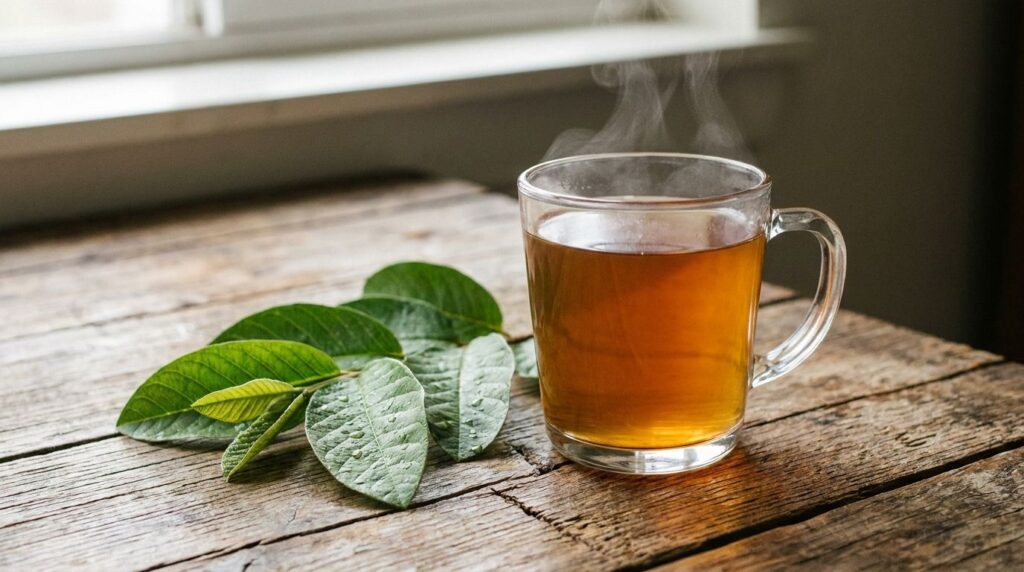
- Serve: Your guava leaf tea is ready. You can drink it warm or chilled. Add lemon or honey to taste if desired.
How to Use
Guava leaf tea is typically consumed orally. For digestive support, drink it after meals. For general wellness, it can be consumed once or twice a day.
How Often to Use
For most practical purposes, consuming guava leaf tea 1-2 times daily is common. Consistency is often more important than high frequency. If using for a specific acute issue, consult a healthcare professional.
How to Buy / How to Choose Ingredients
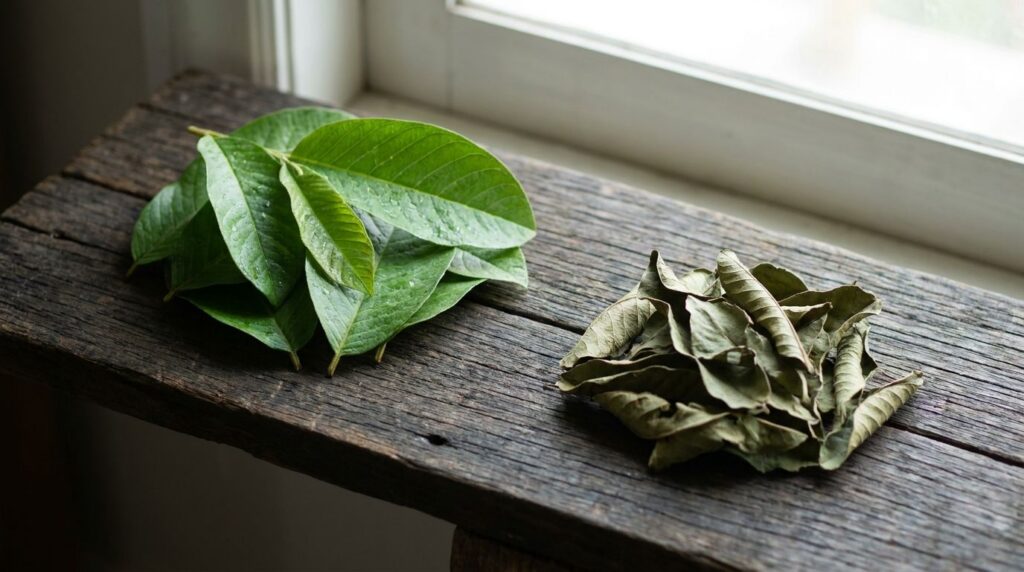
The best way to ensure quality is to source fresh, organic guava leaves. If you don’t have access to a guava tree, look for dried guava leaves from reputable herbal suppliers. Always check for signs of pesticides or damage.
- Fresh: Look for vibrant green leaves, free from brown spots, holes, or wilting.
- Dried: Opt for leaves that retain some of their natural color and have a mild, earthy aroma. Avoid overly dusty or discolored batches.
You may also like: Simple Herbal Teas for Daily Wellness
Storage
- Fresh Leaves: Store fresh guava leaves in a plastic bag in the refrigerator for up to a week. For longer storage, you can gently wash, pat dry, and then air-dry them completely before storing in an airtight container in a cool, dark place.
- Dried Leaves: Keep dried guava leaves in an airtight container away from direct sunlight and moisture. They can last for up to a year while retaining potency.
- Brewed Tea: Store brewed guava leaf tea in a sealed container in the refrigerator for up to 2-3 days.
Practical Tips for Guava Leaf Preparations
- Gentle Heat: Avoid aggressively boiling the leaves. A gentle simmer is sufficient to extract the beneficial compounds.
- Fresh is Best: While dried leaves work, fresh leaves often yield a more potent and flavorful tea.
- Taste Test: If you find the taste too strong, you can dilute the tea with more water or add natural sweeteners like honey or stevia.
Common Mistakes
One small preparation mistake can ruin the whole batch or reduce its effectiveness. Here are the common pitfalls to avoid:
- Over-Boiling: Boiling leaves for too long or at too high a heat can degrade delicate compounds, reducing the tea’s benefits. Stick to a gentle simmer for 10-15 minutes.
- Using Sprayed Leaves: If harvesting from a garden, ensure the tree has not been treated with pesticides or herbicides. Contaminated leaves can introduce harmful chemicals into your remedy.
- Improper Storage: Storing fresh leaves in a wet environment can lead to mold, and dried leaves exposed to moisture will quickly lose potency. Always ensure leaves are completely dry before storing in airtight containers.
- Ignoring Leaf Quality: Using old, discolored, or damaged leaves will result in a less effective remedy. Always choose healthy, vibrant leaves.
Cautions / Who Should Avoid It
While generally considered safe for most people when consumed in moderation, there are a few cautions:
- Pregnancy and Breastfeeding: Limited research exists on guava leaf safety during pregnancy and breastfeeding. It’s best to consult a doctor before use.
- Diabetes: Guava leaf tea might lower blood sugar levels. If you are diabetic and taking medication, monitor your blood sugar closely and consult your doctor.
- Allergies: If you have allergies to guava fruit or other related plants, exercise caution.
- Surgery: Guava may slow blood clotting. Stop using guava leaf products at least two weeks before a scheduled surgery.
Read more: Natural Ways to Support Blood Sugar Levels
Quick Summary
- Best Preparation: Simple tea infusion for internal use, topical rinse for skin/hair.
- Best Use-Case: Digestive comfort, minor skin irritations, hair health.
- Storage: Fresh in fridge (up to a week), dried in airtight container (up to a year), brewed tea in fridge (2-3 days).
- When to Use: 1-2 times daily for general wellness, as needed for specific issues.
- What to Avoid: Over-boiling, using sprayed leaves, improper storage, neglecting leaf quality.
FAQ
- Can I use fresh or dried guava leaves?
Both fresh and dried leaves can be used. Fresh leaves often yield a stronger flavor and potentially more potent compounds, but dried leaves are convenient for storage and year-round use. Adjust quantities accordingly (e.g., more fresh leaves than dried). - How long does guava leaf tea last?
Brewed guava leaf tea can be stored in an airtight container in the refrigerator for up to 2-3 days. After that, its potency and freshness may diminish. - Can I refrigerate guava leaves?
Yes, fresh guava leaves can be stored in a plastic bag in the refrigerator for about a week. Dried leaves should be stored in a cool, dark, and dry place. - How often should I use guava leaf tea?
For general wellness, once or twice a day is a common recommendation. For specific issues, it’s best to consult a health professional or observe your body’s response. - What part of the guava plant is best for remedies?
While the fruit is nutritious, for the traditional remedies discussed here, the leaves are the primary part used due to their unique compound profile. - Can I reuse the leaves for another brew?
It’s generally not recommended to reuse the leaves. Most of the beneficial compounds are extracted during the first brewing cycle, so a second brew will be significantly weaker. - When should I avoid guava leaf remedies?
Avoid if pregnant, breastfeeding, or undergoing surgery soon. Individuals with diabetes should monitor blood sugar. If you have any underlying health conditions or are on medication, consult your doctor first. - Does guava leaf tea help with digestion?
Traditionally, guava leaf tea has been used to aid digestion and alleviate symptoms like diarrhea, likely due to its antimicrobial and anti-inflammatory properties.
Conclusion
Guava leaves, far from being mere botanical debris, are a powerful, practical resource for natural home remedies. By understanding their preparation, usage, and storage, you can unlock a treasure trove of benefits that most people simply overlook. Whether you’re brewing a simple tea for digestive comfort or exploring its potential for skin and hair health, these unassuming leaves offer a natural and accessible path to wellness. Embrace the hidden wisdom of the guava tree and integrate this versatile ingredient into your daily regimen.

