Tired of pesky weeds invading your beautiful garden and walkways? Many commercial weed killers contain harsh chemicals that can be harmful to pets, children, and the environment. But what if you could fight back with ingredients already in your pantry? Unlocking the secret to a thriving, weed-free garden with simple household items is easier and more rewarding than you think!
The Persistent Problem of Weeds
Weeds are more than just an eyesore; they compete with your desirable plants for vital nutrients, water, and sunlight. Left unchecked, they can quickly take over garden beds, crack driveways, and make patios look untidy. Finding an effective, safe, and budget-friendly solution is a top priority for many homeowners.
Why Choose a Natural Weed Killer?
Opting for natural solutions like a white vinegar and salt weed killer means you can maintain your garden without exposing yourself, your family, or local wildlife to synthetic herbicides. It’s an eco-conscious choice that aligns with sustainable living and often proves to be much more cost-effective than store-bought alternatives.
Your Secret Weapon: White Vinegar & Salt Weed Killer
This powerful duo creates an effective, non-toxic weed killer that can tackle common weeds on contact. But how exactly do these kitchen staples become garden superheroes?
The Science Behind the Solution
- White Vinegar (Acetic Acid): The main active ingredient in vinegar, acetic acid, works by drawing moisture out of plant leaves, causing them to dry up and die quickly. It essentially burns the foliage on contact.
- Salt (Sodium Chloride): When applied, salt further dehydrates the plant and can make the soil inhospitable for future weed growth. It’s particularly effective on tougher weeds and helps prevent their return.
Ingredients You’ll Need
- 1 gallon (3.8 liters) of white vinegar (5% acetic acid is common, but higher concentrations like 10% or 20% are more potent for weeds)
- 1 cup (240g) of table salt or rock salt
- (Optional) 1 tablespoon of liquid dish soap (acts as a surfactant, helping the mixture stick to the weeds)
Tools for the Job
- Large mixing bowl or bucket
- Stirring spoon
- Funnel (optional, for easy pouring)
- Empty spray bottle (a large garden sprayer is ideal for bigger areas)
Step-by-Step: Crafting Your Garden Elixir
Making your own weed killer is quick and simple. Follow these steps for an effective solution:
- Combine Ingredients: In your large mixing bowl or bucket, pour in the gallon of white vinegar.
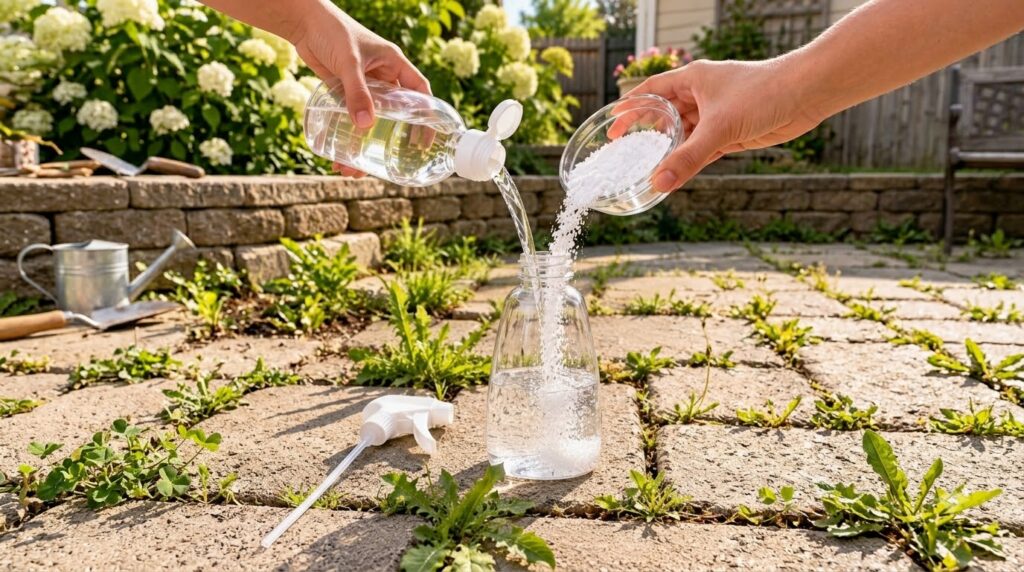
- Add Salt: Slowly add the cup of salt to the vinegar, stirring constantly until the salt is fully dissolved. Ensure there are no granules left at the bottom.
- (Optional) Add Dish Soap: If using, stir in the tablespoon of liquid dish soap. This helps the solution cling to the waxy surfaces of weed leaves, increasing its effectiveness.
- Transfer to Spray Bottle: Carefully pour the mixture into your empty spray bottle using a funnel if needed.
How to Apply Your DIY Weed Killer Effectively
Timing and precision are key to maximizing the results of your homemade weed killer.
- Best Time to Apply: Apply on a warm, sunny day when rain is not expected for at least 24 hours. The sun’s heat will intensify the vinegar’s effects, and dry conditions prevent the solution from washing away.
- Targeted Application: Spray the weeds directly, ensuring thorough coverage of their leaves. Try to avoid overspraying onto desirable plants, as this solution will harm them too. For weeds growing between pavers or cracks, direct application is easy and effective.
- Repeat if Necessary: For stubborn or deeply rooted weeds, a second application might be needed after a few days.
Important Precautions and Tips
- Protect Desirable Plants: This solution is non-selective, meaning it will kill any plant it comes into contact with. Use caution when spraying near flowers, vegetables, or grass you wish to keep. You can use a piece of cardboard or plastic as a shield.
- Soil Impact: While effective, the salt content can affect soil pH and salinity, potentially making the soil unsuitable for future planting in the treated area. For this reason, it’s best suited for paths, driveways, cracks, and areas where you don’t intend to grow anything else.
- Safety: Although natural, vinegar can be an irritant. Avoid contact with eyes and skin, and wear gloves if you have sensitive skin. Keep out of reach of children and pets while applying, though once dry, it poses minimal risk.
- Ventilation: While not toxic, vinegar has a strong smell. Ensure good ventilation if using in an enclosed area, though it’s typically used outdoors.
Beyond Weeds: Other Natural Garden Hacks
The beauty of natural ingredients like white vinegar extends beyond weed control. From cleaning garden tools to deterring pests, many everyday items can be repurposed for a greener, healthier garden. Exploring these options can further reduce your reliance on commercial products and deepen your connection with your outdoor space.
Embrace a Greener Garden
By using simple ingredients like white vinegar and salt, you can effectively manage weeds in your garden and hardscapes without resorting to harsh chemicals. This natural solution is not only budget-friendly but also empowers you to take a more hands-on approach to home and garden maintenance. Give it a try and enjoy the satisfaction of a beautifully maintained outdoor space, naturally!