Most people ignore it, perhaps even pull it from their garden beds, thinking it’s just another weed. Yet, this humble plant, often overlooked, holds incredible potential to transform your daily health solutions. We’re talking about purslane, a succulent green often dismissed, but packed with more beneficial compounds than many of your kitchen staples. It’s time to look beyond the common perception and discover why this resilient plant is a true unsung hero in natural wellness.

What is Purslane?
Purslane (Portulaca oleracea) is a common annual succulent plant found in gardens, fields, and even cracks in pavement worldwide. Recognizable by its reddish stems and thick, spoon-shaped leaves, it thrives in challenging conditions. What many don’t realize is that this unassuming plant is a powerhouse of nutrition, rich in Omega-3 fatty acids (a rarity in leafy greens), antioxidants, vitamins (especially A and C), and essential minerals. It’s often referred to as a “superfood” by those in the know, offering a simple, accessible way to boost your nutritional intake and support various body functions.
Ingredients for a Simple Purslane Wellness Tonic
Creating a revitalizing purslane tonic is easier than you might think. This recipe focuses on maximizing its fresh benefits.
- Fresh Purslane: 1-2 cups, loosely packed (leaves and tender stems)
- Filtered Water: 1 cup
- Lemon Juice: 1 tablespoon (freshly squeezed)
- Honey or Maple Syrup (Optional): 1 teaspoon, to taste
Approximate Measurements
The quantities listed provide a single serving of a potent tonic. Feel free to adjust the purslane amount based on your preference for intensity and the availability of the plant. A good starting point is equal parts purslane and water by volume before blending.
Formula / Recipe: Purslane Power Tonic
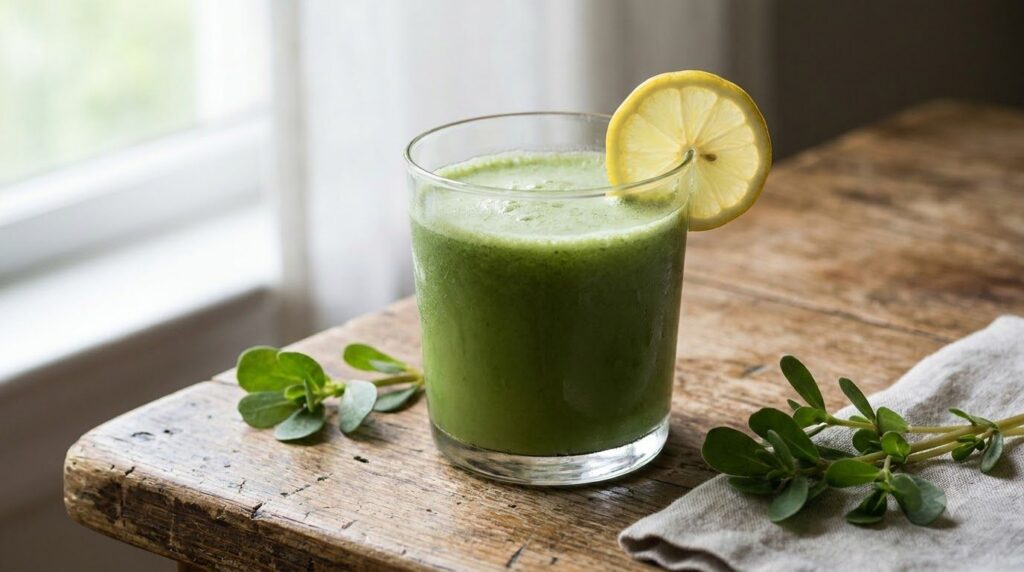
This simple tonic is designed to be easily absorbed and enjoyed. It’s a fantastic way to introduce the benefits of purslane into your diet.
Step-by-Step Method
- Gather and Clean: Carefully harvest or select fresh purslane. Wash it thoroughly under cold running water to remove any soil, dust, or tiny insects. Pat dry with a clean cloth or paper towel.
- Rough Chop: Roughly chop the purslane leaves and tender stems to help with blending.
- Blend: Place the chopped purslane and filtered water into a blender. Blend on high speed until completely smooth. This may take 1-2 minutes, depending on your blender.
- Strain (Optional, but Recommended): For a smoother tonic, strain the mixture through a fine-mesh sieve or cheesecloth into a glass. Press down on the solids to extract as much liquid as possible. Discard the pulp (or add it to compost).
- Flavor: Stir in the fresh lemon juice. If you prefer a slightly sweeter taste, add honey or maple syrup and mix well.
- Serve: Pour into a glass and enjoy immediately.

How to Use
This purslane tonic is best consumed fresh. It can be enjoyed on its own as a refreshing drink, or you can mix it into other juices or smoothies for an added nutritional punch. Some people even use cooled, strained purslane juice as a facial rinse for a natural skin refresh, thanks to its antioxidants.
How Often to Use
For general wellness, consuming one glass (about 6-8 ounces) of this purslane tonic 3-4 times a week is a good starting point. You can adjust the frequency based on your personal needs and how your body responds. Consistency is key to experiencing its full benefits.
Quick Tip: Beyond the Tonic
Don’t limit purslane to just tonics! It’s fantastic in salads, stir-fries, omelets, and soups. Its slightly tart, lemony flavor and crunchy texture make it a versatile addition to many dishes. Incorporating it into various meals ensures you’re getting a broad spectrum of nutrients.
How to Buy / How to Choose Ingredients
Foraging: Purslane is often found growing wild in gardens, fields, and even urban cracks. If foraging, ensure the area is free from pesticides, herbicides, and pollution (e.g., roadside exhaust). Always identify the plant correctly before consuming it. Look for the distinct reddish stems and succulent, paddle-shaped leaves.
Buying: Some farmers’ markets and specialty grocery stores now carry fresh purslane. Look for vibrant green, firm leaves and crisp, reddish stems. Avoid any plants that are wilting, yellowing, or have black spots. Organic is always preferable.
Storage
Fresh Purslane: Store fresh, unwashed purslane in a plastic bag in the refrigerator’s crisper drawer for up to 5-7 days. Washing it just before use helps maintain freshness. You can also loosely wrap it in a damp paper towel before placing it in a bag.
Prepared Tonic: The purslane tonic is best consumed immediately for maximum nutrient retention. If you must store it, keep it in an airtight container in the refrigerator for no more than 24 hours. Oxidation will gradually diminish its potency.
Practical Tips
- Add to Smoothies: If the tonic is too strong for your palate, blend a smaller amount of purslane into your regular fruit or vegetable smoothies.
- Hydration Boost: Due to its high water content, purslane is excellent for hydration.
- Seasonal Use: Purslane is typically a summer annual. Enjoy it fresh during its peak season.
Fresh vs. Cooked Purslane: Best Uses
The method of preparation can impact the availability of certain nutrients. Here’s a quick guide:
| Preparation Method | Best Use Cases | Nutrient Retention Notes |
|---|---|---|
| Fresh (Raw) | Tonic, salads, sandwiches, smoothies, juicing | Highest retention of heat-sensitive vitamins (C, some B vitamins) and Omega-3 fatty acids. |
| Lightly Cooked | Stir-fries, sautéed greens, soups, omelets | Improved absorption of some fat-soluble vitamins (A, E). May slightly reduce Omega-3s and Vitamin C. |
| Dried (Powder) | Capsules, added to baked goods, spice blends | Concentrates minerals and fiber. Significant loss of Omega-3s and most vitamins. Best for mineral boost. |
Common Mistakes
- Misidentification: Mistaking purslane for a similar-looking but potentially toxic plant. Always be 100% sure of your identification, especially when foraging.
- Not Washing Thoroughly: Wild-growing purslane can harbor dirt, insects, or environmental pollutants. A good rinse is crucial.
- Overcooking: Boiling or cooking purslane for too long can diminish its delicate flavor and reduce its nutritional value, especially heat-sensitive compounds.
- Ignoring Freshness: Using wilted or yellowed purslane will result in a less potent and less palatable remedy.
Cautions / Who Should Avoid It
While generally safe for most, purslane does contain oxalates, which can contribute to kidney stones in susceptible individuals. If you have a history of kidney stones or kidney disease, consult a healthcare professional before incorporating large amounts of purslane into your diet. Pregnant or breastfeeding women should also exercise caution and speak with a doctor. Always start with small amounts to assess your body’s reaction.
Quick Summary
Purslane is an often-overlooked nutritional powerhouse, rich in Omega-3s, vitamins, and minerals. The best preparation for immediate health benefits is a fresh tonic or raw in salads. Store fresh purslane in the fridge for up to a week, and consume tonics immediately. Avoid overcooking and always ensure proper identification if foraging. Those with kidney concerns should consult a doctor due to oxalates.
FAQ
- Can I use fresh or dried purslane for the tonic? Fresh purslane is highly recommended for the tonic to maximize its Omega-3s and vitamins. Dried purslane powder retains some minerals but loses much of its fresh nutritional profile.
- How long does fresh purslane last? Fresh purslane can last 5-7 days in the refrigerator when stored unwashed in a plastic bag or wrapped in a damp paper towel.
- Can I refrigerate the prepared tonic? It’s best to consume the tonic immediately. If necessary, it can be stored in an airtight container in the refrigerator for up to 24 hours, but potency will decrease.
- How often should I use the purslane tonic? Aim for 3-4 times a week for consistent benefits, adjusting based on your body’s response.
- What part of the purslane plant is best? The leaves and tender stems are the most nutritious and palatable for remedies and culinary use.
- Can purslane be frozen? Yes, you can blanch purslane briefly and then freeze it for longer storage, though its texture will soften, making it more suitable for cooked dishes or smoothies rather than fresh tonics.
- When should I avoid purslane? Individuals with a history of kidney stones or kidney disease should consult a doctor before consuming purslane due to its oxalate content.
Conclusion
Don’t let purslane be just another overlooked plant in your garden or a forgotten ingredient at the market. Its surprising value as a nutrient-dense remedy is well worth exploring. By incorporating this humble succulent into your daily routine, whether in a refreshing tonic or a crisp salad, you’re embracing a simple, natural path to enhanced well-being. Give this “weed” a chance, and you might just find your new favorite natural remedy.
You may also like: The Full Guide to Power Greens for Wellness
Read more: DIY Herbal Infusions: Simple Steps to Potent Teas

