Fiber is a true hero in the world of nutrition, often hailed for its incredible benefits for our digestive system and overall well-being. But did you know there isn’t just one type of fiber? In fact, there are two main kinds, each with unique properties and advantages: soluble fiber and insoluble fiber. Understanding the difference between them can help you make more informed food choices to boost your health.
In this guide, we’ll dive deep into the world of fiber, exploring what makes soluble and insoluble fiber distinct, their specific health benefits, and where you can find them in everyday foods. Get ready to uncover the essential roles both types play in keeping your body running smoothly!
What is Fiber?
Before we differentiate, let’s quickly review what fiber is. Dietary fiber is a type of carbohydrate found in plant foods that our bodies cannot digest. Unlike other carbohydrates, fats, and proteins that are broken down and absorbed, fiber passes largely intact through our stomach, small intestine, and colon. This unique characteristic is precisely what makes it so beneficial for our health.
Soluble Fiber: The Gel-Forming Friend
What It Is
Soluble fiber gets its name because it dissolves in water, forming a gel-like substance. This transformation happens in your digestive tract, creating a thicker, softer consistency.
Benefits of Soluble Fiber
- Heart Health: Soluble fiber can help lower LDL (bad) cholesterol levels by binding to cholesterol particles in the digestive tract and carrying them out of the body. Research suggests it may support healthy blood pressure too.
- Blood Sugar Management: By slowing down the absorption of sugar, soluble fiber can help stabilize blood glucose levels. This is particularly helpful for individuals managing diabetes or looking to prevent blood sugar spikes.
- Satiety and Weight Management: The gel-like consistency helps you feel fuller for longer, which can reduce overall calorie intake and support weight management efforts.
- Gut Health: Soluble fiber acts as a prebiotic, feeding the beneficial bacteria in your gut. These bacteria ferment the fiber, producing short-chain fatty acids that nourish colon cells and contribute to a healthy gut microbiome.
Food Sources of Soluble Fiber
You can find plenty of soluble fiber in foods like:
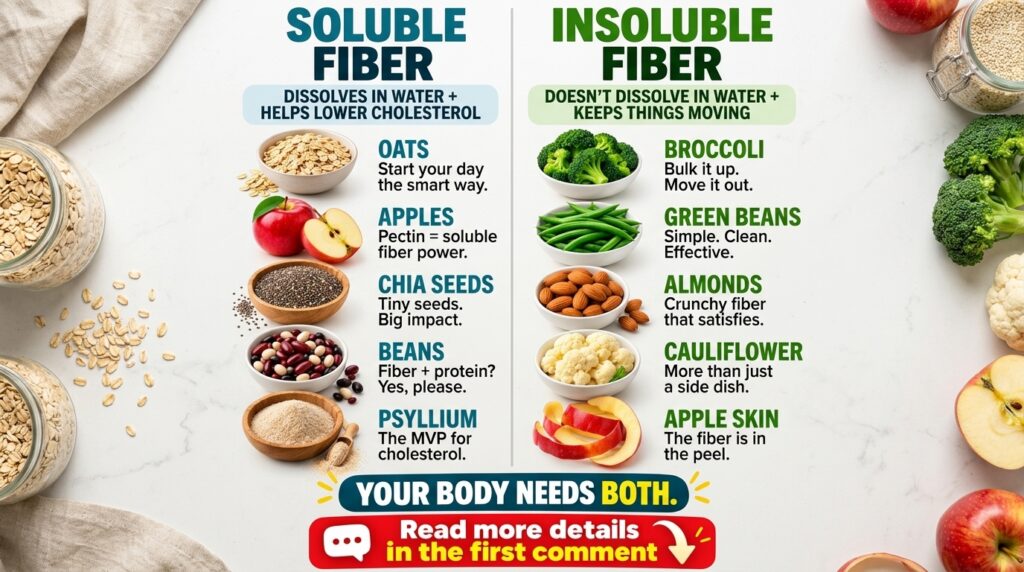
- Oats
- Barley
- Apples (especially the flesh)
- Citrus fruits
- Berries
- Carrots
- Peas
- Beans
- Lentils
- Psyllium husk

Insoluble Fiber: The Bulking Agent
What It Is
Unlike its soluble counterpart, insoluble fiber does not dissolve in water. Instead, it remains largely intact as it moves through your digestive system, adding bulk to your stool.
Benefits of Insoluble Fiber
- Promotes Regularity: By adding bulk to stool, insoluble fiber helps food pass more quickly through the digestive system, preventing constipation and promoting regular bowel movements.
- Digestive Health: It can help prevent common digestive issues like diverticulitis.
- Gut Cleansing: It acts like a scrub brush for your intestines, helping to clean them out.
- Satiety: Like soluble fiber, it can contribute to a feeling of fullness, aiding in weight management.
Food Sources of Insoluble Fiber
Insoluble fiber is abundant in:
- Whole grains (whole wheat bread, brown rice)
- Wheat bran
- Nuts and seeds (like almonds)
- Vegetables (broccoli, green beans, cauliflower, leafy greens)
- Fruit skins (apple skin)

Nutrition Comparison: Soluble vs. Insoluble Fiber
Let’s look at the key differences between these two important fiber types:
| Feature | Soluble Fiber | Insoluble Fiber |
|---|---|---|
| Solubility in Water | Dissolves | Does not dissolve |
| Texture in Digestion | Forms a gel | Adds bulk |
| Primary Benefits | Lowers cholesterol, stabilizes blood sugar, feeds gut bacteria, increases satiety | Promotes regularity, prevents constipation, aids digestion |
| Digestion Process | Fermented by gut bacteria | Passes largely intact |
| Main Food Sources | Oats, barley, apples, beans, lentils, citrus, psyllium | Whole grains, wheat bran, nuts, seeds, vegetable skins, fruit skins |
| Effect on Stool | Softens stool | Adds bulk to stool |
Best For: When to Prioritize Each
While both are crucial, you might lean on one type more if you have specific health goals:
- For Cholesterol Management: Focus on increasing your soluble fiber intake.
- For Blood Sugar Control: Soluble fiber can be particularly beneficial.
- For Constipation Relief: Insoluble fiber is your go-to for promoting regular bowel movements.
- For Digestive Regularity: A good balance of both types supports overall gut health.
- For Satiety and Weight Management: Both types contribute to feeling full, making them valuable in a balanced diet.
The Winner: Both!
It’s clear that neither soluble nor insoluble fiber is superior. Both play vital, complementary roles in maintaining your health. The best strategy is to consume a variety of fiber-rich foods to ensure you’re getting adequate amounts of both types.
Practical Tips for Boosting Your Fiber Intake
- Start Your Day with Whole Grains: Opt for oatmeal, whole-wheat toast, or high-fiber cereals.
- Eat More Fruits and Vegetables: Aim for at least 5 servings a day, including the skins where edible.
- Incorporate Legumes: Add beans, lentils, and chickpeas to soups, salads, and stews.
- Snack Smart: Choose nuts, seeds, or whole fruits instead of processed snacks.
- Read Food Labels: Look for products with at least 3-5 grams of fiber per serving.
- Hydrate: Drink plenty of water when increasing fiber intake to help it move smoothly through your digestive system.
FAQs About Fiber
How much fiber should I eat daily?
Most adults should aim for 25-30 grams of fiber per day, though individual needs may vary. Many people do not get enough fiber.
Can I eat too much fiber?
While fiber is healthy, sudden large increases can lead to bloating, gas, and abdominal discomfort. Increase your intake gradually and drink plenty of water.
Is fiber helpful for weight loss?
Yes, both soluble and insoluble fiber can contribute to weight management by promoting satiety and reducing overall calorie intake.
What’s the difference between dietary fiber and functional fiber?
Dietary fiber occurs naturally in plants, while functional fiber is isolated or extracted from plants and added to foods or supplements for its beneficial effects.
Do fiber supplements work as well as food?
Whole foods provide a broader spectrum of nutrients, including vitamins, minerals, and antioxidants, that supplements may lack. While supplements can be helpful, prioritizing fiber from food sources is generally recommended.
Can fiber help lower my risk of chronic diseases?
Regular fiber intake is associated with a reduced risk of heart disease, type 2 diabetes, and certain types of cancer.
Conclusion
Both soluble and insoluble fibers are nutritional powerhouses, each contributing unique benefits to your health. From managing cholesterol and blood sugar to promoting digestive regularity and gut health, these plant-based superheroes work together to keep your body feeling its best. By incorporating a diverse array of whole grains, fruits, vegetables, legumes, nuts, and seeds into your diet, you can easily ensure you’re getting a balanced intake of both types of fiber. Embrace the fiber journey for a healthier, happier you!
This content is for educational purposes only and should not be considered medical advice. Consult a qualified healthcare professional for personalized dietary recommendations.
Explore More Healthy Food Content:
- High Protein Breakfast Ideas
- Best Foods for Gut Health
- Healthy Smoothie Recipes
- Smart Grocery Shopping Tips