A strong core is the foundation of a healthy, active body. It’s not just about achieving a visible six-pack; a well-engaged core is crucial for good posture, preventing injuries, improving balance, and enhancing overall functional movement in your daily life. Forget endless crunches and start focusing on engaging your deep core muscles with controlled, effective movements. This approach helps build true strength and stability, leading to more sustainable and impactful results.
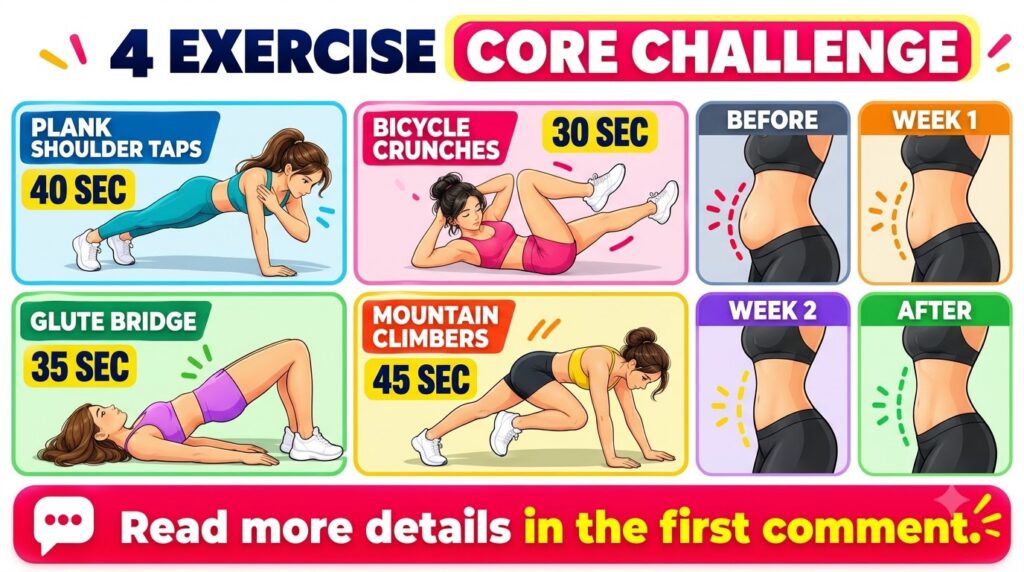
Ready to feel stronger, move better, and boost your body’s balance? We’ve put together a powerful yet beginner-friendly 4-move core challenge designed to target your entire core. Consistency is absolutely key to seeing lasting changes!
Why Core Strength Matters (Beyond the Six-Pack)
Your core is more than just your abdominal muscles. It encompasses everything from your diaphragm to your pelvic floor, including your abs, obliques, and lower back muscles. This muscular corset acts as your body’s powerhouse, supporting almost every movement you make.
- Improved Posture: A strong core helps you sit and stand taller, reducing strain on your spine.
- Reduced Back Pain: Strengthening your core can alleviate and prevent lower back pain by providing better support.
- Enhanced Balance and Stability: Everyday activities, sports, and even just walking rely heavily on a stable core.
- Better Functional Movement: Lifting, bending, twisting – all these movements become easier and safer with a strong core.
- Injury Prevention: A robust core protects your spine and joints from excessive stress during physical activity.
Your 4-Move Core Challenge: Build Strength and Stability
This challenge is designed to be effective and easy to incorporate into your routine. Aim for quality over quantity, focusing on controlled movements and proper form.
1. Plank Shoulder Taps
This exercise builds incredible core stability and challenges your anti-rotational strength.
- How to do it: Start in a high plank position, hands directly under your shoulders, body in a straight line from head to heels. Keep your hips as still as possible as you lift one hand to tap the opposite shoulder. Return the hand to the floor and repeat on the other side.
- Targets: Rectus abdominis, obliques, shoulders, and back stabilizers.
- Form Tip: Imagine balancing a glass of water on your lower back. Minimize any swaying of your hips. The slower and more controlled, the better.
2. Bicycle Crunches
An excellent exercise for targeting your obliques and upper abs.
- How to do it: Lie on your back with your hands behind your head, elbows wide. Lift your shoulders off the floor and bring your knees to a tabletop position. Extend one leg straight while simultaneously bringing the opposite elbow towards the bent knee, twisting your torso. Switch sides in a fluid motion, mimicking a bicycle pedaling.
- Targets: Obliques, rectus abdominis.
- Form Tip: Focus on bringing your elbow towards your knee by twisting your torso, not just pulling your neck. Keep your lower back pressed into the floor.
3. Glute Bridge
Often overlooked in core routines, the glute bridge is fantastic for strengthening your posterior chain and lower core stability.
- How to do it: Lie on your back with your knees bent, feet flat on the floor hip-width apart, and heels a few inches from your glutes. Press through your heels to lift your hips off the floor until your body forms a straight line from your shoulders to your knees. Squeeze your glutes at the top. Slowly lower back down.
- Targets: Glutes, hamstrings, lower back, and core stabilizers.
- Form Tip: Avoid arching your back excessively at the top. Focus on engaging your glutes to drive the movement.
4. Mountain Climbers
A dynamic exercise that works your entire core while also getting your heart rate up.
- How to do it: Start in a high plank position. Alternately bring one knee towards your chest, then quickly switch to the other leg. Keep your core tight and hips relatively stable throughout the movement.
- Targets: Rectus abdominis, obliques, hip flexors, and shoulders (cardio component).
- Form Tip: Maintain a strong plank position without letting your hips pike up or sag down. Move at a pace that allows you to control your core.

Putting It All Together: Your Challenge Plan
Here’s how you can structure your 4-move core challenge:
- Perform each exercise for 30-45 seconds (or 10-15 repetitions per side for unilateral movements like shoulder taps and bicycle crunches).
- Rest for 15-30 seconds between exercises.
- Complete 2-3 rounds of all four exercises.
- Aim to do this challenge 3-4 times per week, with at least one rest day in between.
As you get stronger, you can gradually increase the duration of each exercise, reduce rest times, or add more rounds. Remember to listen to your body and modify as needed.
Consistency is Key for Lasting Results
Like any fitness goal, consistency is the magic ingredient for a stronger core. Don’t get discouraged if you don’t see immediate changes. Focus on the feeling of improved stability, better posture, and increased strength in your daily activities. Over time, these consistent efforts will undoubtedly lead to impressive and lasting results.
Embrace this 4-move core challenge and empower your body with the strength and stability it deserves. Your journey to a stronger, more balanced you starts now!
Disclaimer: The information provided in this article is for educational purposes only and is not intended as a substitute for professional medical advice, diagnosis, or treatment. Always seek the advice of your physician or other qualified health provider with any questions you may have regarding a medical condition or before starting any new exercise program.