Most people walk past the exotic fruit section, drawn to the usual suspects, completely missing a small, unassuming gem that holds a surprising array of benefits. While its sweeter cousin, the Lanzones, often gets the spotlight, the Langsat fruit offers a slightly different profile and its own unique contributions to your well-being. This humble tropical fruit, with its pale, translucent flesh, is more than just a sweet treat; it’s a practical addition to a healthy lifestyle that many are yet to discover.
Forget vague “superfruit” claims for a moment. We’re talking about a fruit that provides tangible nutritional value and can be incorporated into your daily routine with ease. From supporting heart health to boosting immunity, the Langsat fruit offers simple ways to enhance your diet. Let’s explore how to choose it, prepare it, and make the most of this often-overlooked tropical delight.
 Langsat, also known as Lanzones, is a popular tropical fruit.
What is Langsat?
Langsat (scientific name: Lansium parasiticum), often interchangeably called Lanzones in some regions, is a small, round to oval-shaped fruit native to Southeast Asia. It grows in clusters on trees and is characterized by its thin, yellowish-brown skin that is easily peeled. Inside, the fruit contains translucent, segmented flesh that is juicy and ranges from sweet to slightly sour, with some segments containing bitter seeds.
Beyond its delicious taste, Langsat is valued for its nutritional content. It’s a good source of vitamins, minerals, and antioxidants, making it a valuable part of a balanced diet. Different parts of the fruit, including the peel and seeds, have been traditionally used in various ways, though the primary focus for most is the palatable flesh.
Fresh vs. Dried Langsat
While the fresh fruit is most commonly consumed, some parts like the seeds are occasionally dried for specific traditional uses. However, for nutritional benefits and culinary enjoyment, fresh Langsat is always preferred.
Ingredients
The star ingredient here is the Langsat fruit itself. No complex concoctions are needed to enjoy its benefits. You simply need fresh, ripe Langsat.
- Fresh Langsat Fruits: As many as you like to consume or prepare.
Approximate Measurements
For general consumption, there are no strict measurements. Enjoy Langsat as a snack or add it to dishes based on your preference. A serving might be 5-10 medium-sized fruits, depending on their size and your dietary needs.
Formula / Recipe: Simple Fresh Langsat Consumption
The simplest and most common “recipe” for Langsat is to enjoy it fresh. Here’s how to get the most out of it:
Step-by-step Method
- Select Ripe Fruits: Choose Langsat fruits that have a smooth, blemish-free, yellowish-brown skin. They should feel slightly soft when gently squeezed but not mushy.
- Peel the Skin: Gently pinch the base of the fruit or make a small incision with your thumbnail. The skin should peel away easily, revealing the translucent, segmented flesh.
- Separate Segments: Carefully separate the individual segments. Some might contain a bitter seed; it’s generally best to avoid biting into these.
- Enjoy Fresh: Eat the juicy flesh as is.
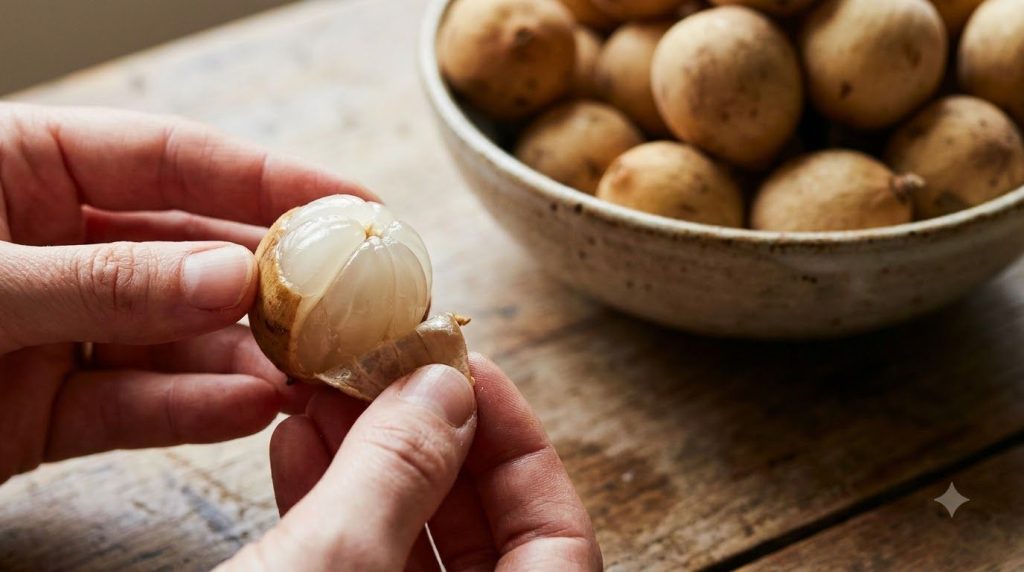 Peeling Langsat is straightforward, making it an easy snack.
Quick Tip
The bitter seeds are often found in one or two segments per fruit. If you accidentally bite into one, simply discard that part. It’s not harmful, just unpleasantly bitter.
How to Use
Langsat is best enjoyed fresh on its own as a healthy snack. It can also be incorporated into:
- Fruit Salads: Add peeled segments to tropical fruit salads for a burst of unique flavor.
- Smoothies: Blend the peeled fruit with other tropical fruits, yogurt, or coconut water.
- Desserts: Use as a topping for ice cream, puddings, or tarts.
- Juices: While a bit tedious to extract juice due to its small segments, it can be juiced.
How Often to Use
Langsat can be enjoyed daily as part of a balanced diet. Its moderate sweetness and good nutritional profile make it a guilt-free addition to your fruit intake.
How to Buy / How to Choose Ingredients
- Look for Yellowish-Brown Skin: Ripe Langsat has a uniform yellowish-brown color. Avoid green fruits, as they are unripe and will be very sour.
- Check for Softness: Gently press the fruit. It should yield slightly to pressure without being mushy. Hard fruits are likely unripe.
- Avoid Blemishes: Steer clear of fruits with dark spots, cuts, or signs of mold, as these indicate spoilage.
- Buy in Clusters: Langsat often comes in clusters on a stem. This is perfectly normal and indicates freshness.
- Source Locally When Possible: If you live in a region where Langsat grows, buying directly from local markets often ensures the freshest and best-tasting fruit.
Storage
Proper storage helps maintain the freshness and flavor of Langsat:
- Room Temperature: Unripe or slightly ripe Langsat can be kept at room temperature for 2-3 days to ripen further.
- Refrigeration: Once ripe, store Langsat in the refrigerator in a perforated plastic bag or a breathable container. This can extend its shelf life to about 1-2 weeks.
- Avoid Freezing: Freezing Langsat is generally not recommended as it alters the texture and can make the flesh mushy upon thawing.
Did You Know?
The Langsat tree, also known as the “Duku” tree in some areas, is revered not only for its fruit but also for its wood in some traditional practices. Its fruit-bearing season can vary, making it a seasonal delight in many tropical countries.
Practical Tips
- Eat Promptly: Langsat is best eaten fresh shortly after purchase for optimal flavor and texture.
- Handle Gently: The skin is delicate, so handle the fruits with care to avoid bruising.
- Don’t Discard the Peel Too Fast: While not typically eaten, the peel contains a milky sap that can be slightly sticky. Be mindful when peeling to avoid getting it on your clothes. Some traditional uses involve the dried peel as an insect repellent (by burning it), but this is not for consumption.
Common Mistakes
- Eating Unripe Fruit: Unripe Langsat is extremely sour and can be an unpleasant experience. Always wait for the skin to turn yellowish-brown and for the fruit to soften slightly.
- Biting into the Seed: Many segments contain a bitter seed. While not harmful, biting into it can ruin the flavor of the fruit. Carefully eat around them or remove them.
- Improper Storage: Leaving ripe Langsat out at warm temperatures for too long will lead to rapid spoilage. Refrigeration is key for extending its shelf life.
- Washing Too Early: Only wash the fruits right before you intend to eat them. Washing and then storing can promote mold growth.
Cautions / Who Should Avoid It
Langsat is generally safe for most people to consume. However, like with any fruit, moderation is key. There are no widely recognized contraindications or common allergies associated with Langsat.
- Diabetics: While a natural sugar, those monitoring blood sugar levels should consume Langsat in moderation, as with all fruits.
- Individual Sensitivities: Though rare, if you experience any adverse reactions after consuming Langsat, discontinue use.
- Seeds: While not toxic, the seeds are bitter and woody. Avoid ingesting large quantities, especially for children.
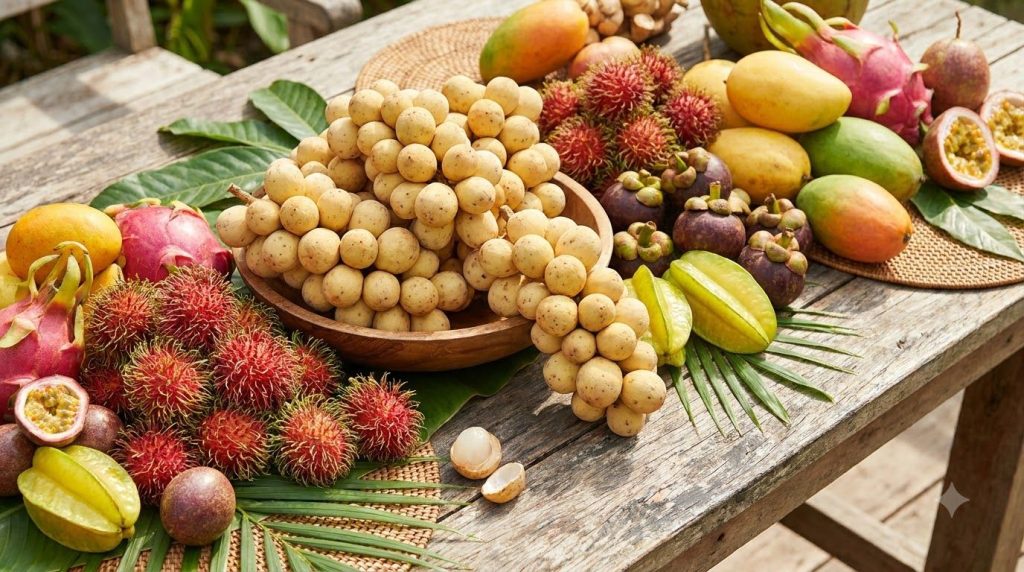 Langsat pairs well with other tropical delights.
Quick Summary
Langsat is a delightful and nutritious tropical fruit that offers a sweet to tart flavor. Best enjoyed fresh, it’s rich in vitamins and minerals. Choose ripe fruits with yellowish-brown skin and a slight softness. Store them in the refrigerator to prolong freshness and avoid freezing. Peel carefully to avoid the bitter seeds, and enjoy as a snack or in various recipes.
FAQ
- Can I use fresh or dried Langsat?
- For consumption and nutritional benefits, fresh Langsat is highly recommended. Dried parts are less common for eating.
- How long does fresh Langsat last?
- When stored in the refrigerator, ripe Langsat can last for 1-2 weeks. At room temperature, only 2-3 days.
- Can I refrigerate Langsat?
- Yes, refrigeration is the best way to extend the shelf life of ripe Langsat.
- How often should I eat Langsat?
- You can enjoy Langsat daily as part of a balanced diet, consuming a handful of fruits per serving.
- What part of the Langsat is best to eat?
- The translucent, juicy flesh is the primary edible part. The skin is usually discarded, and the seeds are bitter.
- Are Langsat seeds harmful?
- No, they are not considered harmful, but they are very bitter and woody, so it’s best to avoid biting into them.
- When should I avoid Langsat?
- There are no general reasons to avoid Langsat unless you have a specific allergy or are advised otherwise by a healthcare professional.
Conclusion
The Langsat fruit may not be as globally recognized as some of its tropical counterparts, but its delicate flavor and nutritional profile make it a worthy addition to your diet. By understanding how to select, prepare, and store this fruit, you can easily integrate its unique benefits into your daily routine. So next time you’re at the market, don’t overlook this small, unassuming fruit. Give Langsat a try and experience a truly tropical delight that supports your well-being.