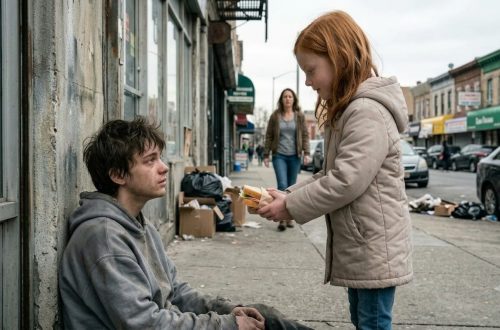
In a bustling world filled with constant noise and distractions, it’s easy to overlook the quiet struggles unfolding right before our eyes. A single tear, a downcast gaze, or a slumped posture can hold a universe of unspoken stories, pleas that echo silently amidst the urban clamor. This reality is starkly brought to light when we encounter moments that tug at our heartstrings, urging us to pause and truly see beyond the surface.
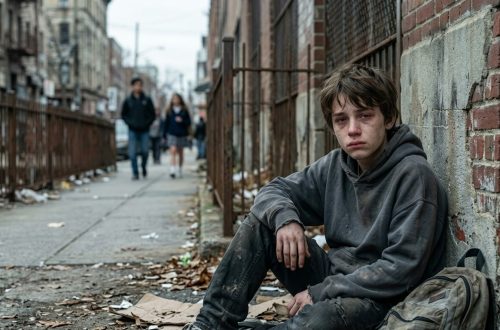
Consider the profound impact of a young boy’s eyes, brimming with tears, against the backdrop of an indifferent street. His silent plea speaks volumes, a stark reminder that sometimes, the quietest struggles are the loudest to those willing to listen with their hearts.
A Glimpse into a World of Hurt
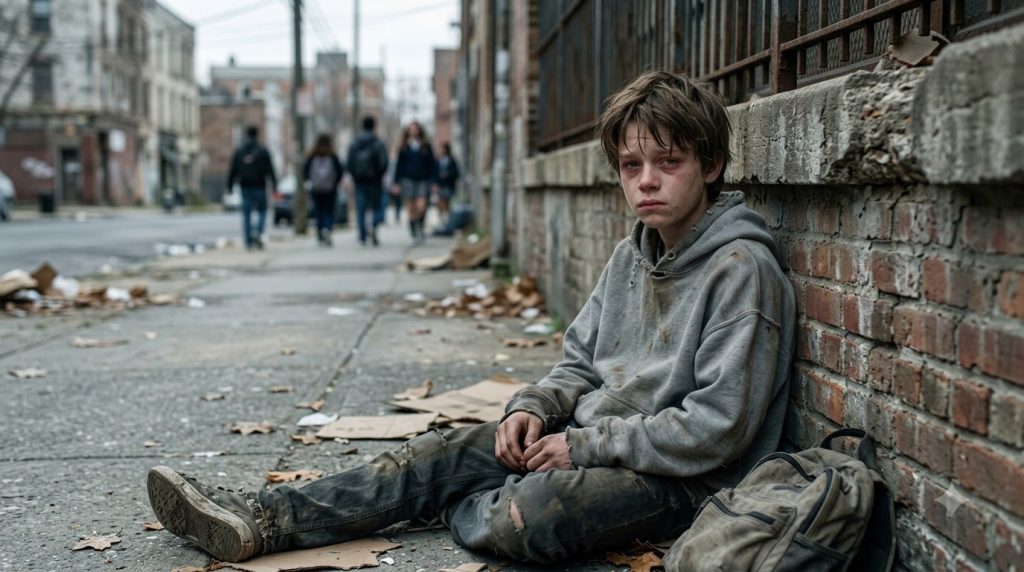
The image of a young boy, sitting disheveled and distressed against a cold brick wall, paints a vivid picture of vulnerability. His dirty, torn hoodie and jeans speak of hardship, while his messy hair and tear-filled, red eyes convey an overwhelming sense of sadness and possible despair. A worn backpack, his sole companion, rests beside him, suggesting a journey or a lack of a stable home. The ground beneath him, littered with cardboard and dried leaves, adds to the desolate atmosphere of his immediate surroundings.
What makes this scene particularly poignant is the blurred background, where other figures walk past on a busy street. This visual contrast amplifies the boy’s isolation, highlighting how unnoticed suffering can be in a world that often rushes by. Every detail, from his posture to the condition of his clothes, serves as a non-verbal communication, a profound narrative unfolding without a single spoken word.
The Weight of Unspoken Stories
Why do so many struggles remain silent? Often, it’s a complex interplay of factors. Fear of judgment, shame, or the belief that no one will truly understand can prevent individuals from voicing their pain. For children, this can be even more pronounced, as they may lack the words, the agency, or the safe spaces to express their deepest fears and needs. The weight of these unspoken stories can be immense, leading to a profound sense of loneliness and hopelessness.
In many cases, individuals might also feel that their problems are insignificant in the grand scheme of things, or that they are a burden to others. Societal pressures to appear strong or resilient can further push people to conceal their vulnerabilities, creating a dangerous cycle of isolation where help is desperately needed but never sought.
Cultivating Empathy: How We Can Respond
The silent plea of this young boy is a powerful call for empathy and awareness. It challenges us to look beyond the superficial and engage with the humanity of those around us. Cultivating empathy means actively choosing to observe, to listen with our hearts, and to acknowledge the potential struggles that may not be immediately apparent.
What can we do? Simple acts of kindness, a non-judgmental gaze, or a genuine offer of help can make an enormous difference. Creating safe spaces where people feel comfortable sharing their stories, without fear of reprisal or dismissal, is crucial. It’s about building communities that prioritize connection and compassion, where no one feels utterly alone in their battles. By being present and attentive, we can begin to bridge the gap between spoken and unspoken words, offering a lifeline to those who might otherwise feel invisible.
A Call to Action: What Message Do You See?
Every individual carries a unique story, a complex tapestry of experiences, joys, and struggles. The image of the boy on the sidewalk serves as a universal symbol of the hidden burdens that exist within our societies. It urges us to foster a more compassionate world, one where silent pleas are not only heard but met with understanding and support.
We invite you to pause and reflect on the powerful message conveyed through his tear-filled eyes. What story do you see unfolding? How does it inspire you to connect with the humanity around you? Let this silent plea be a catalyst for greater empathy and action in your own life and community. We all have a role to play in ensuring that no one’s struggles remain entirely unheard.