Most people walk past them without a second thought, seeing only scattered nuts on the ground. But for centuries, the humble acorn wasn’t just forest fodder; it was a staple, a nutrient-rich food source, and, surprisingly, a deeply satisfying coffee alternative. If you’ve ever wondered how to tap into nature’s forgotten pantry for a warm, comforting beverage, you’re in the right place. One small preparation mistake, however, can turn this wholesome brew into a bitter disappointment – here’s how to get it right.

What is Acorn Coffee?
Acorn coffee isn’t coffee in the traditional sense, but rather a caffeine-free beverage brewed from roasted and ground acorns. Historically, it served as a wartime substitute for coffee when beans were scarce, and it remains a popular choice for those seeking a natural, sustainable, and caffeine-free hot drink. Its flavor profile can range from earthy and nutty to slightly chocolatey, depending on the type of acorn and the roasting process.
Ingredients for Acorn Coffee
- Fresh acorns (from oak trees – ensure they are free from mold or damage)
- Water (for leaching and brewing)
- Optional additions: Milk, sweetener, spices (cinnamon, nutmeg)
Approximate Measurements
The beauty of acorn coffee is its flexibility. A good starting point for a batch of roasted acorn ‘grounds’ is about 2-3 cups of shelled, chopped acorns. This will yield enough for several servings of coffee, depending on desired strength. For each cup of brewed coffee, you’ll typically use 1-2 tablespoons of ground, roasted acorns.
Formula / Recipe Overview
Making acorn coffee involves several crucial steps to transform raw acorns into a drinkable brew:
- Gathering and Selecting: Collect fresh, healthy acorns.
- Shelling: Remove the hard outer shells.
- Chopping: Break the acorns into smaller pieces for efficient leaching.
- Leaching: Remove bitter tannins through repeated soaking. This is the most critical step.
- Drying: Prepare the leached acorns for roasting.
- Roasting: Develop flavor and aroma.
- Grinding: Create the ‘coffee grounds.’
- Brewing: Make your drink.
Step-by-Step Method: Preparing Your Acorns
Here’s the part most people skip or misunderstand, leading to a truly awful cup.
1. Gathering and Selection
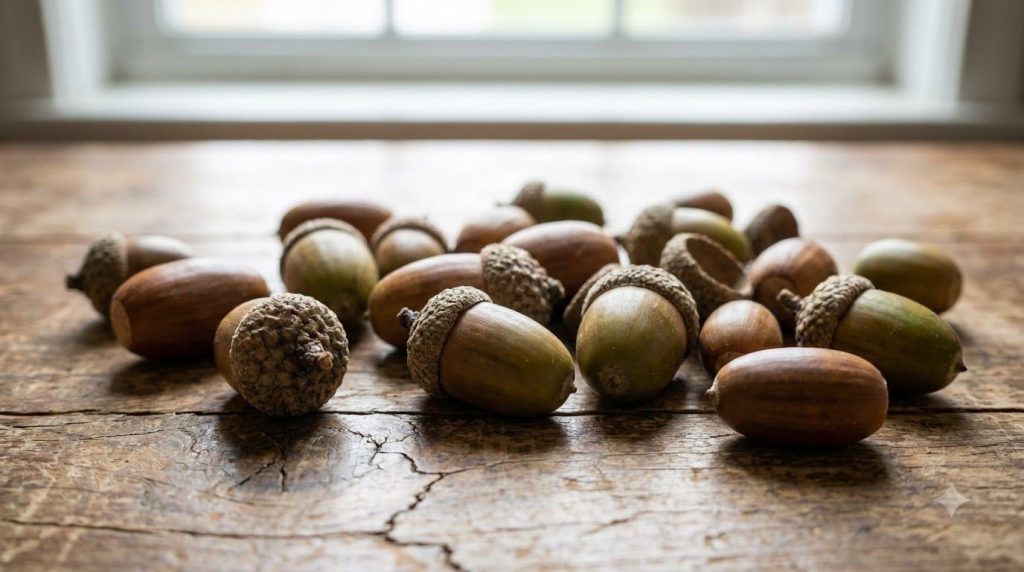
Collect acorns in late summer to early fall. Look for acorns that are plump, firm, and free of holes (a sign of weevils) or mold. Avoid green acorns; they need to mature. The best acorns fall naturally from the tree.
2. Shelling
Crack the shells using a nutcracker or a hammer. Discard any acorns that are discolored inside or have signs of insect damage.
3. Chopping
Chop the shelled acorns into small pieces, about ½ inch or smaller. This increases the surface area for more effective tannin removal.
4. Leaching (Removing Tannins)
Tannins are what make raw acorns incredibly bitter and can cause stomach upset. This step is non-negotiable.
- Cold Leaching (Preferred for flavor): Place chopped acorns in a large pot or bowl and cover with cold water. The water will turn brown as tannins are released. Change the water every few hours (or at least twice a day) until the water runs clear, and the acorns no longer taste bitter. This can take anywhere from a few days to a week.
- Hot Leaching (Faster but can alter flavor): Bring chopped acorns to a boil in a pot of water. Drain and rinse, then repeat with fresh water until the acorns are no longer bitter. This is quicker but can sometimes impart a slightly different flavor.
Quick Tip: Taste a small piece of acorn after leaching. If it’s still bitter, continue the process.
5. Drying
Once leached, spread the acorns in a single layer on a baking sheet. Air dry them for a day or two, or use a very low oven (around 150°F / 65°C) for several hours until completely dry. This prevents mold and ensures even roasting.
6. Roasting
Preheat your oven to 350°F (175°C). Spread the dried acorn pieces on a baking sheet and roast for 20-40 minutes, stirring occasionally, until they are dark brown and fragrant, similar to coffee beans. Be careful not to burn them, as this will result in a harsh, bitter flavor.
7. Grinding
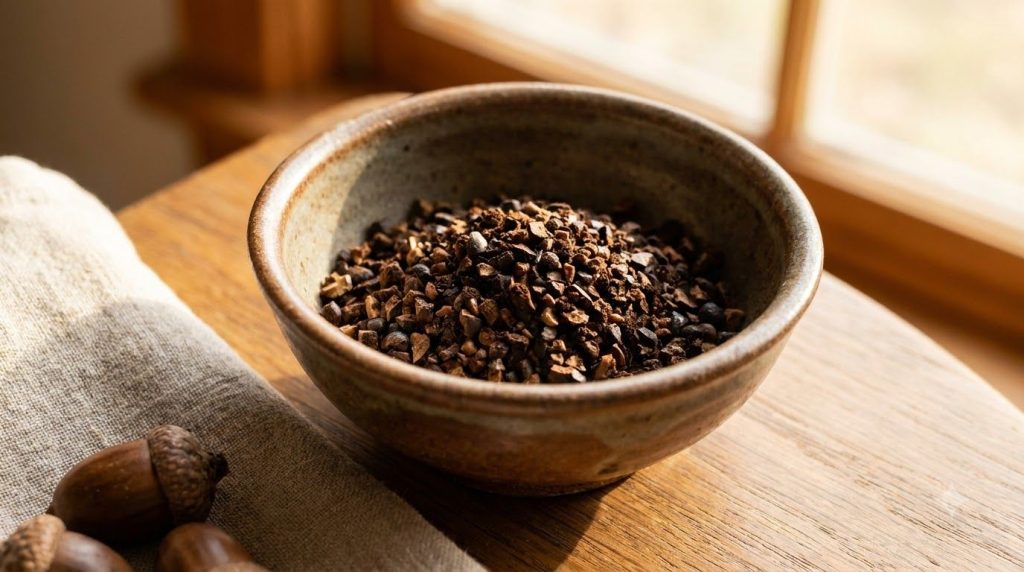
Allow the roasted acorns to cool completely. Grind them in a coffee grinder or a powerful blender until they reach a coarse to medium grind, similar to ground coffee.
How to Use Acorn Coffee
You can brew acorn coffee much like regular coffee:
- French Press: Add 1-2 tablespoons of ground acorns per cup of hot water. Steep for 5-10 minutes, then press.
- Percolator: Use in a percolator as you would coffee grounds.
- Boil & Strain: Simply simmer the grounds in water for 5-10 minutes, then strain through a fine-mesh sieve or coffee filter.
How Often to Use
Acorn coffee is caffeine-free and can be enjoyed daily. Its earthy, grounding qualities make it a pleasant morning beverage or a soothing evening drink.
How to Choose / Forage for Acorns
The best acorns come from red oaks (more tannins, often smaller) or white oaks (fewer tannins, often larger). While all acorns are edible after proper leaching, white oak acorns are often preferred for their slightly milder flavor. Always ensure you are foraging from an area free of pesticides or pollutants. Identify the oak species before collecting, as some can be slightly more challenging to process due to higher tannin content.
Storage
Once leached and dried, raw acorn pieces can be stored in an airtight container in a cool, dark place for several months, or in the freezer for up to a year. Roasted and ground acorns should be stored in an airtight container in a cool, dark place, much like coffee grounds, to maintain freshness. They are best used within a few weeks of grinding.
Practical Tips for a Better Brew
- Patience with Leaching: Don’t rush this step. It’s the key to a non-bitter cup.
- Roast to Your Liking: A darker roast will yield a bolder, more coffee-like flavor, while a lighter roast will be milder and nuttier.
- Experiment with Grind Size: Finer grinds extract more flavor but can lead to sediment. Coarser grinds are cleaner but might be weaker.
- Blend with Spices: A pinch of cinnamon, cardamom, or even a tiny bit of chicory can enhance the flavor.
Common Mistakes to Avoid
- Skipping or Rushing Leaching: The number one reason for bitter acorn coffee.
- Using Moldy or Damaged Acorns: Can introduce harmful molds and off-flavors.
- Over-roasting: Burnt acorns taste acrid and bitter.
- Under-drying: Leads to mold growth and poor roasting.
- Using Too Little Acorn: Results in a weak, watery drink.
Cautions / Who Should Avoid It
The primary caution with acorn coffee is ensuring complete tannin removal through proper leaching. Unleached acorns can cause digestive upset. While rare, some individuals may have allergies to tree nuts, including acorns. If you have nut allergies, consult with a healthcare professional before consuming. Pregnant or nursing women, or individuals with pre-existing medical conditions, should also consult a doctor.
Acorn Coffee vs. Regular Coffee: Quick Comparison
| Feature | Acorn Coffee | Regular Coffee |
|---|---|---|
| Caffeine | None | High |
| Flavor Profile | Earthy, nutty, slightly smoky/chocolatey | Bitter, acidic, robust, varied |
| Preparation Effort | High (foraging, leaching, roasting, grinding) | Low (grinding, brewing) |
| Digestive Impact | Gentle (if properly leached) | Can cause jitters, acid reflux |
| Cost | Free (foraging) | Varies (bean cost) |
Quick Summary
Acorn coffee is a rewarding, caffeine-free beverage alternative. The best preparation involves thorough leaching to remove tannins, followed by careful roasting to a dark brown, and grinding to your desired consistency. It offers an earthy, nutty flavor and is best enjoyed as a soothing daily drink. Avoid bitter results by never skipping the leaching process.
Related remedy: DIY Chicory Root Coffee Substitute
FAQ
- Can I use fresh or dried acorns? You’ll start with fresh acorns, then dry them after leaching and before roasting.
- How long does the leaching process take? Cold leaching can take 3-7 days, while hot leaching is faster, often a few hours.
- How will I know if all the tannins are gone? The water will run clear, and a small piece of acorn will taste bland, not bitter or astringent.
- Can I reuse the acorn grounds? No, once brewed, the flavor has been extracted.
- What part of the acorn is best? Only the inner kernel, after the shell is removed, is used.
- Can I freeze leached acorns? Yes, leached and dried acorns can be frozen for extended storage before roasting.
- When should I avoid acorn coffee? Avoid if you have nut allergies, or if you haven’t properly leached the acorns, as un-leached acorns can cause digestive issues.
You may also like: Herbal Tea Blends for Energy Without Caffeine
Conclusion
Embracing acorn coffee is more than just making a drink; it’s a connection to traditional foraging and a mindful approach to what we consume. By following these practical steps, you can transform a common forest find into a unique, healthy, and satisfying beverage that warms the body and calms the mind. It’s a testament to nature’s abundance and the simple rewards of a truly forgotten brew.