Dealing with head lice can be a challenge, but natural home remedies offer a gentle approach to manage these unwelcome guests and soothe an itchy scalp. This simple DIY treatment uses accessible ingredients to help you tackle lice and nits effectively.
Quick Recipe
Prep time: 5-10 minutes
Best for: Head lice, nits, itchy scalp
Use type: Liquid treatment
Main ingredients:
- Hair Conditioner
- Tea Tree Oil
- Apple Cider Vinegar
Ingredients
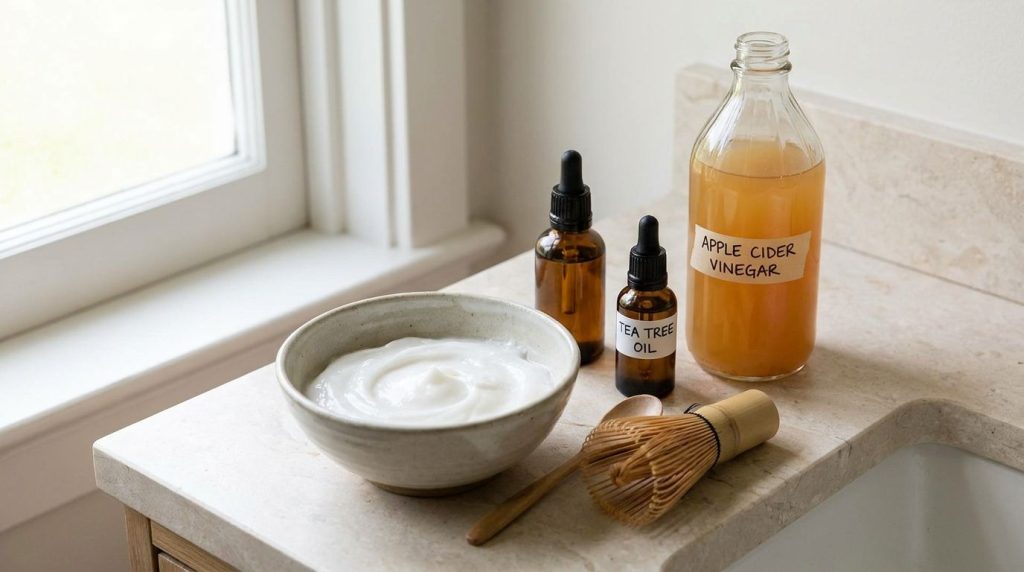
- ½ cup regular hair conditioner (white or light-colored, cream-based)
- 10-15 drops pure tea tree essential oil
- ¼ cup apple cider vinegar
- Fine-tooth nit comb
- Shower cap or plastic wrap
How to Make It
- In a non-metallic bowl, combine the ½ cup of hair conditioner and 10-15 drops of tea tree essential oil. Stir well until the oil is fully integrated into the conditioner.
- Slowly add the ¼ cup of apple cider vinegar to the mixture, stirring continuously. The mixture should remain a creamy liquid consistency. Adjust the amount of apple cider vinegar slightly if needed to achieve a pourable but not too watery consistency.
- Ensure all ingredients are thoroughly blended before application.
How to Use It
- Prepare Hair: Start with dry, untangled hair. Section the hair into manageable parts, especially if it’s long or thick.
- Apply Treatment: Apply the entire mixture generously to the hair and scalp, ensuring every strand from root to tip is thoroughly saturated. Pay special attention to the areas behind the ears and at the nape of the neck, as these are common spots for lice and nits.
- Cover and Wait: Once hair is fully coated, cover the head with a shower cap or plastic wrap. Leave the treatment on for at least 30 minutes, or up to 1 hour. This helps to smother the lice and loosen the nits.
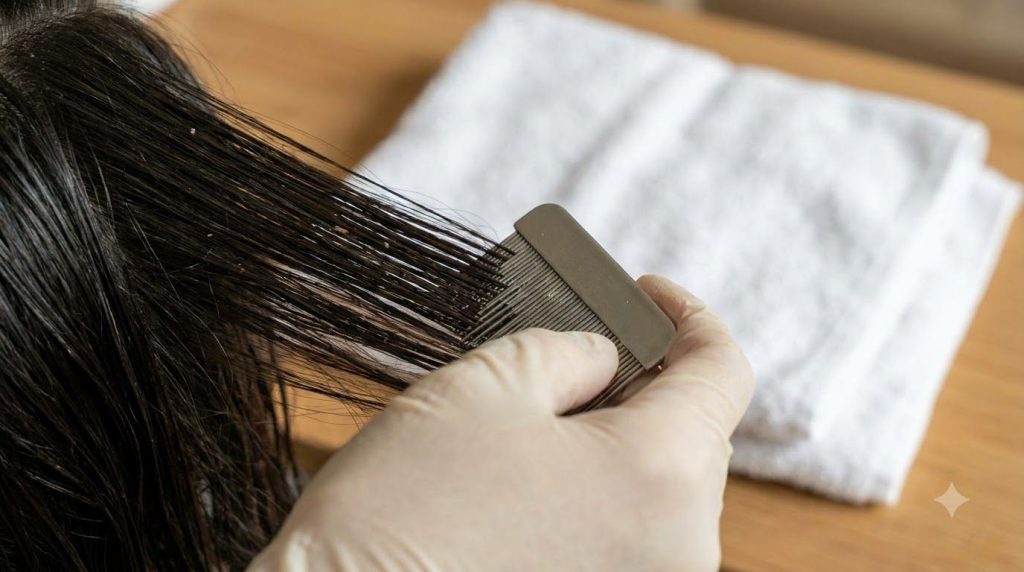
- Comb Out: After the waiting period, remove the shower cap. While the hair is still coated with the treatment, use a fine-tooth nit comb to systematically comb through small sections of hair, starting from the roots and working down to the ends. Wipe the comb on a paper towel after each stroke to remove any lice or nits.
- Rinse Hair: Once you have thoroughly combed through all sections, rinse the hair with warm water until all the treatment and any remaining debris are washed out.
How Often to Use It
For best results, this treatment should be repeated every 7-10 days for at least two to three cycles. This ensures that any newly hatched lice are also caught before they can lay more eggs. Consistent combing is crucial between treatments.
Why These Ingredients Are Used
Hair Conditioner
Regular hair conditioner acts as a base for this remedy. Its thick, creamy texture helps to coat and effectively smother live head lice, making it difficult for them to move or breathe. It also lubricates the hair, making it easier to comb through and physically remove nits and lice without causing damage or pulling.
Tea Tree Oil
Tea tree essential oil is widely recognized in natural remedies for its potential insecticidal and repellent properties. When properly diluted, it’s believed to help deter lice and may contribute to their demise. Its natural scent is often disliked by lice, making it a valuable addition to a preventative or treatment blend.
Apple Cider Vinegar
Apple cider vinegar (ACV) is acidic, and this acidity can help to dissolve the glue-like substance that nits use to attach themselves to hair shafts. This makes nits easier to dislodge and comb out, significantly improving the effectiveness of the nit removal process. It also helps to balance the pH of the scalp.
What Results to Expect
With consistent application and thorough combing, you can expect to see a significant reduction in both live lice and nits. Your scalp may feel soothed due to the gentle nature of the ingredients, potentially alleviating some of the itchiness associated with an infestation. This remedy can support clearer, healthier-looking hair and a calmer scalp.
Safety Notes
- Always perform a patch test on a small area of skin (e.g., inner arm) 24 hours before full application to check for any allergic reactions or sensitivities, especially with essential oils.
- Tea tree oil can be potent; ensure it is properly diluted as direct application of undiluted essential oils can cause irritation.
- Avoid getting the mixture into the eyes. If contact occurs, rinse thoroughly with water.
- Use gently and avoid vigorous scrubbing that could irritate the scalp.
- Stop using it if any discomfort, redness, or irritation occurs.
- This natural remedy is generally considered safe for children, but adult supervision is essential during application and combing. Always consult with a healthcare professional for infants or individuals with severe skin conditions.
- While this remedy can be effective, it is not a guaranteed medical cure for severe infestations. If the problem persists, consult a doctor or pharmacist for professional advice and treatment options.
FAQ
Is this remedy safe for children?
Yes, this remedy is generally considered safe for children over 3 years old, provided a patch test is done and essential oils are properly diluted. Always supervise application and ensure the mixture does not get into their eyes.
How long does it take to work completely?
Complete eradication of lice and nits requires persistence. While the initial treatment helps, repeating the process every 7-10 days for 2-3 cycles, along with diligent nit combing, is crucial to break the life cycle of lice and achieve full results.
Can I prevent future lice infestations with this remedy?
While tea tree oil may have some repellent properties, consistent use of this treatment is more for managing an active infestation. Regular checks, avoiding head-to-head contact, and not sharing personal items like combs or hats are key to prevention. A dilute tea tree oil spray can be used as a daily deterrent.
Final Thoughts
Tackling head lice naturally can be a manageable process with the right approach and consistent effort. This DIY remedy offers a gentle yet effective way to help eliminate lice and nits while soothing an irritated scalp. Remember that thorough combing is just as important as the treatment itself. Have you tried any natural remedies for lice or an itchy scalp? Share your experiences in the comments below!