Are slow-draining showers and stubborn grime around your drain getting you down? Before you reach for harsh chemical cleaners, consider a simple, natural, and effective solution. This DIY method uses common household ingredients—baking soda and white vinegar—to help tackle minor clogs and refresh your shower drain, leaving it sparkling clean.
It’s an affordable and less abrasive approach than many commercial products, making it a great option for regular maintenance and those looking for eco-friendlier cleaning alternatives.
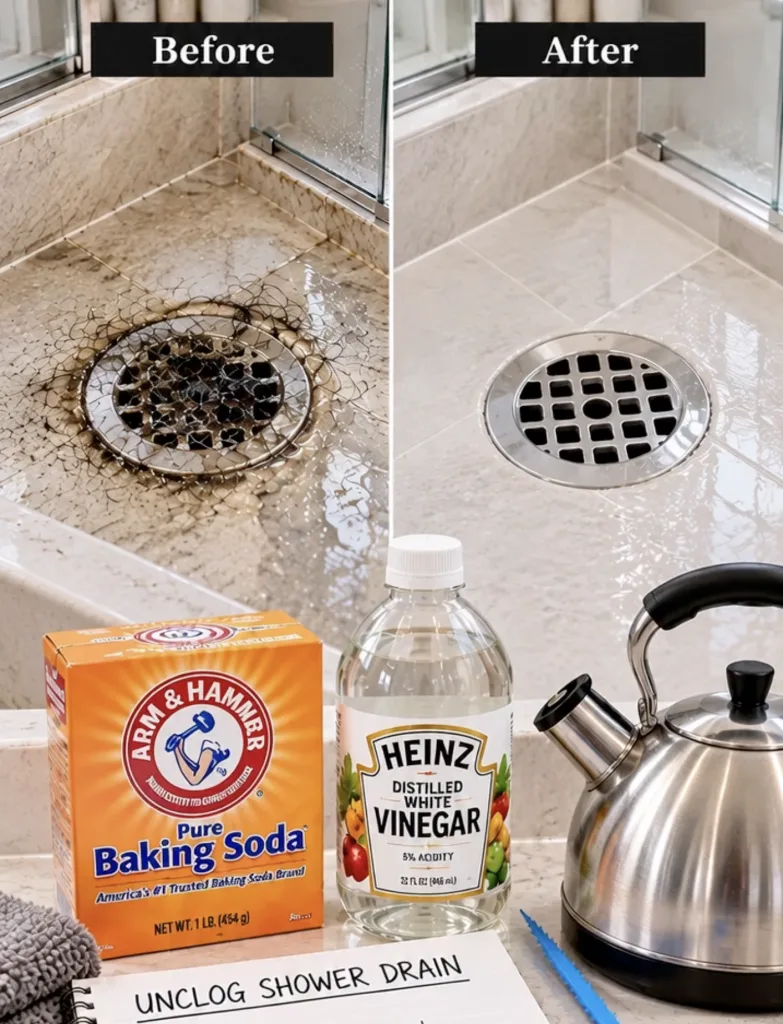 See the incredible transformation with simple ingredients.
What You’ll Need
- 1/2 cup to 1 cup baking soda (Arm & Hammer Pure Baking Soda is pictured)
- 1 to 2 cups white vinegar (Heinz Distilled White Vinegar is pictured)
- An electric kettle or pot for boiling water
- A scrubbing brush or old toothbrush
- Rubber gloves (optional, but recommended for hygiene)
Why This DIY Can Be Useful
The magic in this DIY comes from the reaction between baking soda and white vinegar. Baking soda (sodium bicarbonate) is a mild abrasive and a natural deodorizer. When combined with white vinegar (acetic acid), it creates a fizzy, bubbling reaction that helps to break down grease, soap scum, and other organic matter that can contribute to clogs and odors in your drain. The hot water then helps to flush away the loosened debris, leaving your drain clearer and fresher.
How to Use It
- Boil Water: Fill your electric kettle or a pot with water and bring it to a rolling boil. Be cautious when handling hot water.
- Clear Debris: If possible, remove any large clumps of hair or debris from the drain opening by hand (wearing gloves can make this more pleasant).
- Apply Baking Soda: Carefully pour 1/2 cup to 1 cup of baking soda directly down the shower drain. Try to get as much of it into the drain opening as possible.
- Add Vinegar: Slowly pour 1 to 2 cups of white vinegar down the drain, right after the baking soda. You will immediately notice a fizzing and bubbling reaction. This is the mixture working to loosen grime.
- Wait: Allow the mixture to sit and work its magic for at least 30 minutes to an hour. For tougher clogs or very dirty drains, you can let it sit overnight.
- Flush with Hot Water: After the waiting period, carefully pour the boiling water down the drain to flush away the baking soda, vinegar, and any loosened debris.
- Scrub (Optional): If there’s any visible grime or residue around the drain cover or surrounding tiles, use your scrubbing brush with a little more baking soda or vinegar to clean the area thoroughly. Rinse again with hot water.
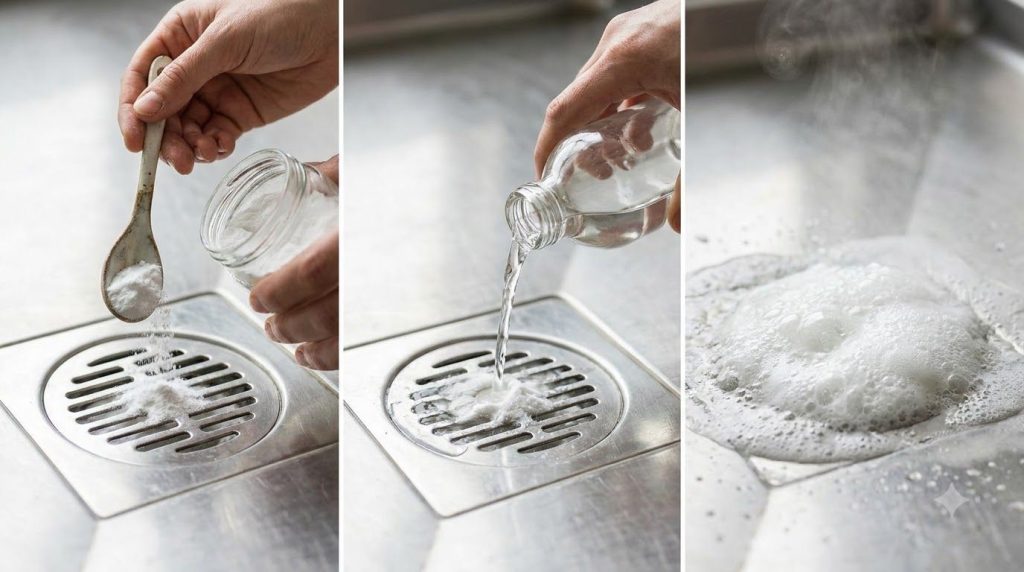 The fizzing action of baking soda and vinegar helps break down grime.
What to Expect
After following these steps, you should notice a significant improvement in your shower drain. The drain should appear much cleaner, free from visible grime and soap scum. If you had a slow-draining issue due to minor buildup, the water should now drain more efficiently. You may also notice a reduction in any unpleasant odors coming from the drain. This method is highly effective for maintenance and minor clogs but may not resolve severe or deep-seated blockages.
Helpful Tips
- Regular Maintenance: To prevent future clogs and keep your drain fresh, repeat this DIY method once a month or as needed.
- Hair Catcher: Consider installing a hair catcher in your shower drain to prevent hair from going down and causing blockages.
- Pre-Cleaning: Always try to remove any visible hair or large debris before starting the process to allow the baking soda and vinegar to work more effectively on the smaller buildup.
- Ventilation: While natural, ensure your bathroom is well-ventilated during and after the process, especially when using boiling water.
Important Notes / Safety
- Boiling Water Caution: Always handle boiling water with extreme care to avoid burns.
- Not for Severe Blockages: This method is best for minor clogs and routine cleaning. For severe, persistent blockages, you may need to use a drain snake or call a professional plumber.
- Do Not Mix with Other Cleaners: Never mix vinegar or baking soda with commercial drain cleaners or bleach, as this can create dangerous chemical reactions.
- Surface Sensitivity: While generally safe for most plumbing and surfaces, if you have very old or delicate fixtures, you may want to test a small, inconspicuous area first, especially when scrubbing.
- Storage: Store baking soda and vinegar in their original containers in a cool, dry place, out of reach of children and pets.