Most people rush to crack open a walnut for its delicious, brain-shaped nut, completely overlooking the powerful secrets held within its outer green hull. This part, often discarded without a second thought, is a hidden treasure many herbalists and natural remedy enthusiasts actively seek out. It’s not just a protective casing; the walnut hull, particularly from black walnuts, packs a punch of beneficial compounds that deserve your attention. Skipping this crucial part means missing out on some of nature’s most versatile and potent natural remedies.

What Exactly Are Walnut Hulls?
Walnut hulls are the fleshy, green outer casings of walnuts. Before the nuts ripen and fall, these hulls protect the developing kernel. While all walnut varieties have hulls, the black walnut (Juglans nigra) hull is particularly prized in traditional remedies for its unique composition, including compounds like juglone, tannins, and other beneficial phytochemicals. As the walnut ripens, the hull will blacken and soften, eventually falling away to reveal the hard inner shell containing the nut.
Ingredients for a Simple Walnut Hull Tincture
For a potent and shelf-stable remedy, a walnut hull tincture is often the preferred method. Here’s what you’ll need:
- Fresh, green black walnut hulls (unblemished and free from pesticides)
- High-proof alcohol (e.g., 80-100 proof vodka or grain alcohol)
- Clean glass jar with a tight-fitting lid
- Fine-mesh strainer or cheesecloth
- Dark glass dropper bottles for storage
Approximate Measurements
- Fresh Walnut Hulls: Enough to loosely fill your chosen jar
- Alcohol: Enough to cover the hulls completely, plus about an inch more
The ratio isn’t exact for fresh hulls, as their water content varies. The key is to ensure they are fully submerged to prevent mold and extract compounds effectively.
Formula / Recipe: Black Walnut Hull Tincture
Making a tincture allows you to concentrate the beneficial compounds from the hulls into an easily administrable form. This process typically takes several weeks, but the result is a long-lasting remedy.
Step-by-Step Method
- Harvest Hulls: Gather fresh, green black walnut hulls. Ideally, pick them before they start to turn black, as this is when their active compounds are thought to be most potent. Avoid hulls that have fallen and started to decompose.
- Clean & Chop: Rinse the hulls thoroughly under cold water. Using gloves (walnut hulls can stain skin and surfaces), chop the hulls into smaller pieces. This increases the surface area for extraction.
- Fill Jar: Loosely pack the chopped hulls into your clean glass jar.
- Add Alcohol: Pour the high-proof alcohol over the hulls, ensuring they are completely submerged. Leave about an inch of headspace at the top of the jar.
- Seal & Shake: Seal the jar tightly with the lid. Shake the jar vigorously.
- Infuse: Store the jar in a cool, dark place for 4-6 weeks, shaking it daily or every other day.
- Strain: After the infusion period, strain the liquid through a fine-mesh strainer or several layers of cheesecloth into a clean bowl. Press the solids firmly to extract as much liquid as possible.
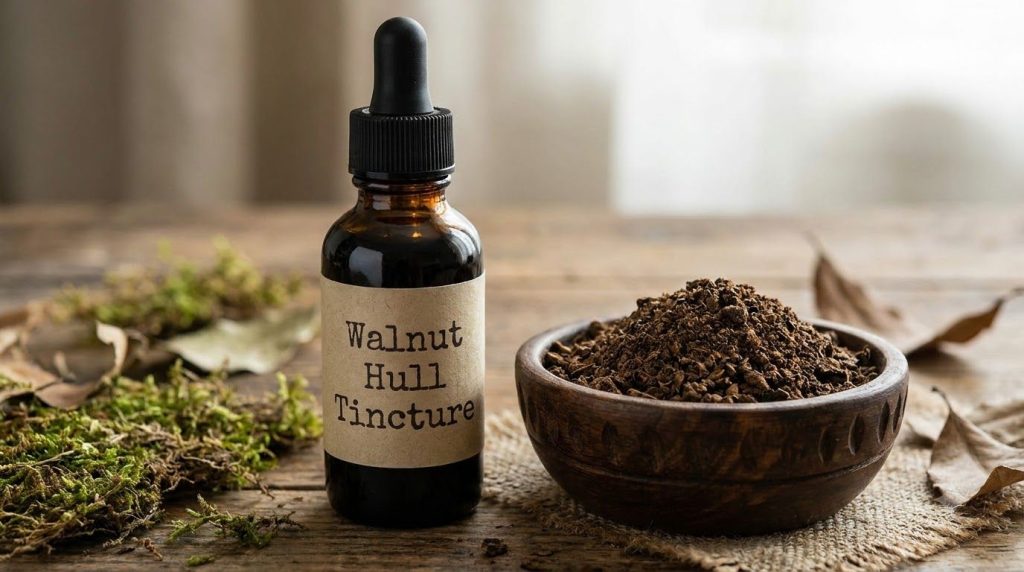
- Bottle: Transfer the finished tincture into dark glass dropper bottles. Label clearly with the contents and date.
How to Use Your Tincture
Walnut hull tinctures are traditionally used for internal and external purposes. Internally, a common practice involves taking small doses diluted in water. Externally, it can be applied topically to the skin. Always consult a healthcare professional before starting any new herbal remedy.
How Often to Use
For internal use, a typical recommendation might be 5-10 drops, 1-3 times a day, diluted in a small amount of water. For topical application, it can be applied directly to the affected area once or twice daily. Adjust frequency based on individual needs and always start with a lower dose to assess tolerance.
Quick Tip: Walnut hulls are known for their strong staining properties. Always wear gloves when handling them and protect your work surfaces to avoid permanent discoloration.
How to Buy / How to Choose Ingredients
The best way to obtain walnut hulls is often to harvest them yourself from black walnut trees that you know are not treated with pesticides or herbicides. If buying, look for reputable suppliers of organic, fresh green black walnut hulls or dried powdered hull. Ensure the source is reliable and the product is clearly labeled.
Storage
Store your finished walnut hull tincture in dark glass bottles in a cool, dark place, away from direct sunlight and heat. Properly stored, tinctures can last for several years, often 3-5 years or even longer, due to the preserving action of the alcohol.
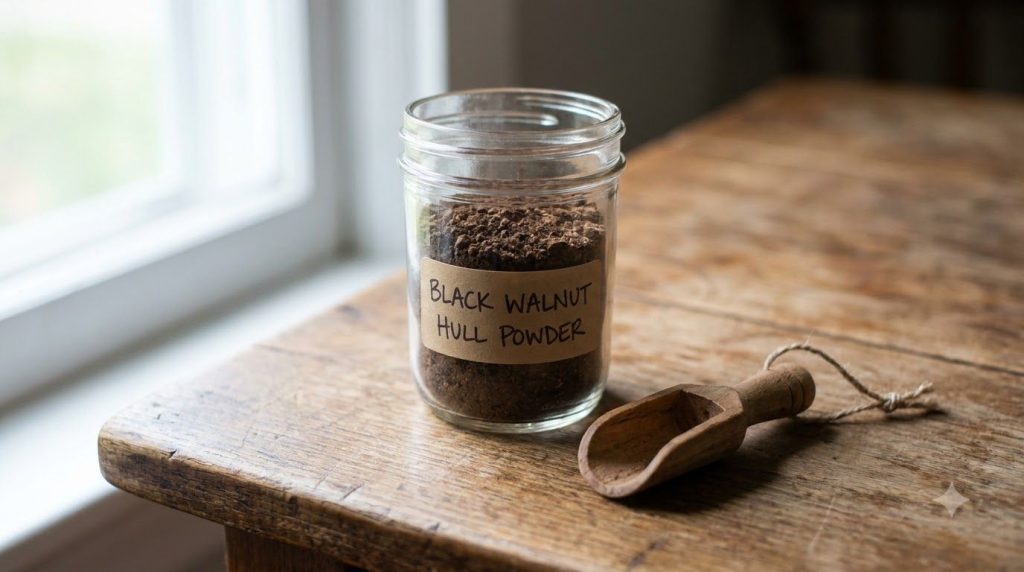
Dry walnut hull powder should be stored in an airtight container in a cool, dark place to maintain potency.
Practical Tips
- Wear Gloves: As mentioned, walnut hulls will stain your skin brown for days. Protect your hands!
- Start Small: When using the tincture internally, always begin with the lowest recommended dose and gradually increase if needed, observing your body’s response.
- Source Carefully: If foraging, be certain the trees are black walnuts (Juglans nigra) and free from chemical sprays.
- Consider the Season: Hulls are best harvested when they are green and firm, usually late summer to early fall, before they begin to soften and blacken.
You may also like: Read more about making other herbal tinctures at home.
Common Mistakes
- Using Ripe/Black Hulls: While still usable, the green hulls are considered to have a higher concentration of beneficial compounds. Blackened, soft hulls may have degraded potency.
- Not Submerging Hulls: If the hulls are not fully covered by alcohol, they can mold, spoiling the entire batch.
- Incorrect Alcohol Proof: Using alcohol that is too low in proof might not extract all the desired compounds effectively and reduces shelf life. Aim for at least 80 proof (40% alcohol by volume).
- Improper Storage: Exposure to light and heat can degrade the tincture’s potency over time.
- Ignoring Staining: Many first-time users underestimate the staining power of walnut hulls, leading to stained hands, clothing, and countertops.
Comparison: Fresh Hulls vs. Dried Hulls
| Feature | Fresh Hulls | Dried Hulls (Powder) |
|---|---|---|
| Potency | Generally considered more potent due to higher juglone content. | Still potent, but some volatile compounds may diminish during drying. |
| Preparation | Ideal for tinctures and fresh applications. Requires immediate processing. | Used for teas, capsules, or adding to topical pastes. Easier to store long-term. |
| Availability | Seasonal (late summer/early fall). | Available year-round, often found in herbal supply stores. |
| Storage | Must be processed immediately. | Store in airtight containers in a cool, dark place for 1-2 years. |
| Staining | Very high, requires gloves. | Lower risk, but still possible with concentrated powder. |
Cautions / Who Should Avoid It
Walnut hulls are potent, and certain precautions are necessary:
- Pregnancy and Breastfeeding: Avoid use during pregnancy and breastfeeding due to insufficient safety data.
- Children: Consult a healthcare professional before giving to children.
- Nut Allergies: Individuals with nut allergies, especially to walnuts, should avoid walnut hull products.
- Medication Interactions: Walnut hulls may interact with certain medications, including blood thinners. Always consult your doctor if you are on medication.
- Prolonged Use: Extended internal use of black walnut hull is not generally recommended without professional guidance.
- Skin Irritation: Perform a patch test before extensive topical application, as some individuals may experience skin irritation.
Quick Summary
Black walnut hulls are a powerful, often-discarded part of the walnut tree, rich in beneficial compounds. They are best prepared as a tincture using fresh, green hulls and high-proof alcohol, allowing for long-term storage and versatile use. Remember to handle with care to avoid staining and always consult a healthcare provider, especially if pregnant, breastfeeding, or on medication.
FAQ
- Can I use fresh or dried walnut hulls for a tincture? Fresh green hulls are generally preferred for tinctures due to their higher concentration of active compounds, but dried hulls can also be used.
- How long does walnut hull tincture last? When stored properly in dark glass bottles in a cool, dark place, a tincture can last 3-5 years or even longer.
- Can I refrigerate the tincture? While not strictly necessary due to the alcohol content, refrigerating can help prolong its potency, especially in very warm climates.
- How often should I use the tincture? Start with 5-10 drops 1-3 times daily, diluted in water, and adjust as needed, or follow a healthcare professional’s advice.
- What part of the walnut is best for remedies? For specific traditional uses, the green outer hull of the black walnut (Juglans nigra) is most commonly used.
- Can I reuse the hulls after making a tincture? No, the hulls have already released most of their beneficial compounds into the alcohol.
- When should I avoid using walnut hull remedies? Avoid if pregnant, breastfeeding, have nut allergies, or are on certain medications like blood thinners. Always consult a doctor first.
Related remedy: Explore our full guide to making your own herbal teas.
Conclusion
The green walnut hull, especially from the black walnut tree, is a testament to nature’s overlooked bounty. Moving beyond simply enjoying the nut, understanding and utilizing the hull unlocks a world of traditional remedies. With careful preparation and mindful use, this hidden treasure can become a valuable addition to your natural wellness toolkit. Don’t let these powerful natural resources go to waste!