Do you ever feel frustrated by stubborn streaks or cloudy spots on your mirrors, no matter how much you wipe them? Achieving that perfectly clear, reflective surface can seem like a challenge. But what if there was a simple, natural, and cost-effective DIY method that could transform your mirrors from smudged to sparkling?
This homemade mirror cleaner is designed to tackle grime and leave your mirrors flawlessly clear, enhancing the brightness and spaciousness of any room. It’s a practical solution that helps you maintain a pristine home environment without relying on harsh chemicals.
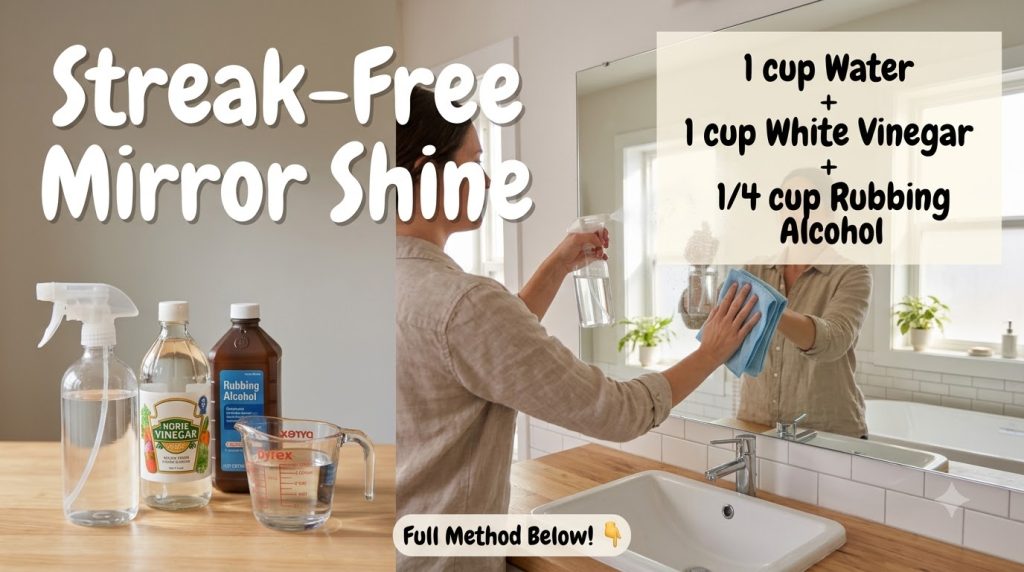
What You’ll Need
- 1 part white vinegar (e.g., 1 cup)
- 1 part distilled water (e.g., 1 cup)
- 1 empty spray bottle
- 2-3 clean microfiber cloths (or lint-free cloths/newspaper)
Why This DIY Can Be Useful
This simple cleaning solution leverages the natural power of white vinegar. Vinegar is a mild acid that effectively cuts through grease, grime, and hard water spots that often cause streaks on glass and mirror surfaces. Pairing it with distilled water is key because tap water can contain minerals that, once dried, leave behind their own residue and streaks.
By using distilled water, you eliminate the mineral content, allowing the vinegar to do its job without interference. The result is a cleaner that removes existing marks without adding new ones, leading to truly streak-free results.
How to Make It
- Take your clean, empty spray bottle.
- Pour in one part white vinegar. For example, if you want to make a smaller batch, use 1 cup.
- Add an equal amount of distilled water to the spray bottle. If you used 1 cup of vinegar, add 1 cup of distilled water.
- Secure the spray nozzle tightly and gently shake the bottle to mix the two liquids.
How to Use It
For best results, try to clean your mirrors on a cloudy day or when the sun isn’t directly hitting the glass. Direct sunlight can cause the solution to dry too quickly, potentially leading to streaks.
- Spray the Mirror: Lightly mist the entire surface of the mirror with your homemade cleaning solution. You don’t need to saturate it; a fine, even spray is enough.
- Wipe in Sections: Using one clean microfiber cloth, wipe the mirror from top to bottom in overlapping sections. For larger mirrors, work in smaller squares or rectangles to ensure you don’t miss any spots.
- Buff for Shine: Immediately after wiping, take a second, dry microfiber cloth (or crumpled newspaper) and buff the mirror in circular motions. This step is crucial for removing any lingering moisture and achieving a truly streak-free shine. Use a fresh, dry part of the cloth for each buffing pass.
- Check Your Work: Step back and examine the mirror from different angles to ensure there are no missed spots or remaining streaks. If you see any, give those areas another quick spray and buff with a clean, dry cloth.
What to Expect
You can expect your mirrors to be visibly cleaner, clearer, and free of streaks. The reflection should appear sharp and bright, significantly improving the look and feel of your space. While this method is highly effective, consistent application and proper buffing technique are key to achieving the best results.
Helpful Tips
- Newspaper for Buffing: If you don’t have microfiber cloths, crumpled black-and-white newspaper (avoid colored print, which can transfer ink) works remarkably well for buffing. The fibers in newspaper are excellent at absorbing residue without leaving lint.
- Work from Top to Bottom: Always start cleaning from the top of the mirror and work your way down. This prevents drips from running onto already cleaned areas.
- Don’t Over-Saturate: Using too much solution can make it harder to get a streak-free finish. A light mist is all you need.
- Clean Your Cloths Regularly: Ensure your microfiber cloths are clean and lint-free before each use. Washing them without fabric softener is best, as fabric softener can leave a residue that will streak your mirrors.
Important Notes / Safety
- While white vinegar is generally safe, avoid getting the solution on sensitive surfaces like marble, granite, or certain metal finishes, as its acidic nature could potentially etch or damage them over time.
- Ensure adequate ventilation when cleaning, especially in smaller spaces, although vinegar fumes are generally mild.
- Always perform a patch test on an inconspicuous area if you are unsure about a surface’s compatibility with vinegar.
- Store your homemade cleaner in a clearly labeled bottle out of reach of children and pets.

