Welcome, fellow garden enthusiasts! Trees are majestic, long-lived members of our landscapes, providing shade, beauty, and even fruit. But just like any cherished plant, they thrive with a little care and attention. One of the most important practices for a tree’s health and longevity is proper pruning. It might seem daunting at first, but with the right techniques, you can prune like a pro and ensure your trees flourish for years to come!
Understanding how and when to prune is key to preventing disease, encouraging strong growth, and maintaining the aesthetic appeal of your garden. Let’s dive into the essential techniques that will help your trees heal naturally and grow vigorously.
Why Prune Your Trees? More Than Just Aesthetics!
Pruning isn’t just about making your trees look neat; it’s vital for their overall health, safety, and productivity. Here are the main reasons to grab your pruning shears:
- Health: Removing dead, diseased, or damaged branches prevents the spread of infection and allows the tree to direct its energy towards healthy growth.
- Structure: Proper pruning encourages a strong framework, reducing the risk of branches breaking in storms or under heavy loads. It also improves air circulation and sunlight penetration.
- Safety: Eliminating weak, overhanging, or crossing branches reduces hazards to people and property.
- Aesthetics: Shaping a tree can enhance its natural form, complement your garden design, and improve its visual appeal.
- Fruit Production: For fruit trees, strategic pruning can increase yield and improve fruit quality by promoting better light exposure and air flow.
When is the Best Time to Prune? Timing is Everything!
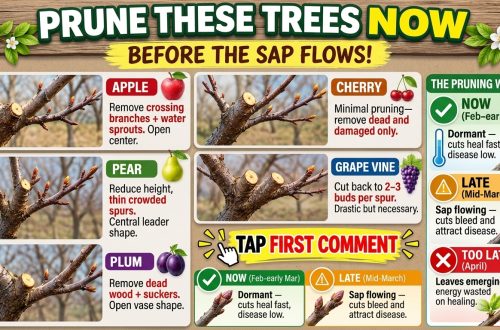
For most trees, the dormant season (late winter to early spring, before new growth appears) is the ideal time for major pruning. During dormancy:
- The absence of leaves allows for better visibility of the tree’s structure.
- Pests and diseases are less active, reducing the risk of infection.
- The tree is less stressed and will recover more easily once spring arrives.
However, there are exceptions. Flowering trees that bloom in early spring (e.g., dogwood, magnolia) should be pruned immediately after they finish flowering, as they bloom on old wood. Trees that bleed sap heavily (e.g., maple, birch) are often pruned in summer or fall to minimize sap loss. Dead or hazardous branches can, and should, be removed any time of year.
Essential Tools for Your Pruning Arsenal
Having the right tools makes a significant difference in the effectiveness and safety of your pruning efforts:
- Hand Pruners (Secateurs): Ideal for small branches up to 3/4 inch in diameter. Bypass pruners are generally preferred as they make clean cuts like scissors.
- Loppers: With long handles, loppers provide leverage for branches up to 1.5-2 inches thick.
- Pruning Saw: Essential for larger branches that are too thick for loppers. Look for saws with sharp, coarse teeth designed for live wood.
- Safety Gear: Always wear sturdy gloves, eye protection, and appropriate clothing. For overhead work, a hard hat is also recommended.
Mastering Basic Pruning Principles
Before making any cut, step back and observe your tree. Identify what needs to be removed based on these principles:
The “Ds”: Dead, Diseased, and Damaged
Start by removing any branches that are dead, showing signs of disease, or are physically damaged. These branches are liabilities to the tree’s health and safety.
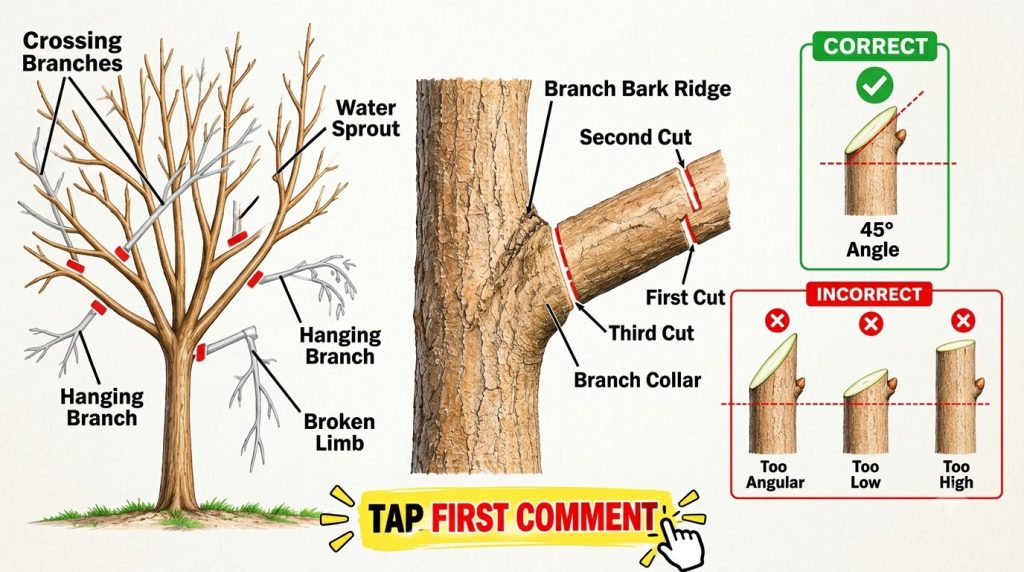
Crossing and Rubbing Branches
Branches that rub against each other can create wounds, making the tree vulnerable to pests and diseases. Identify and remove one of the conflicting branches, usually the weaker or less desirable one.
Suckers and Watersprouts
Suckers are shoots that grow from the base of the tree or its roots, while watersprouts grow vertically from existing branches. Both are often weak, take energy from the main tree, and should be removed.
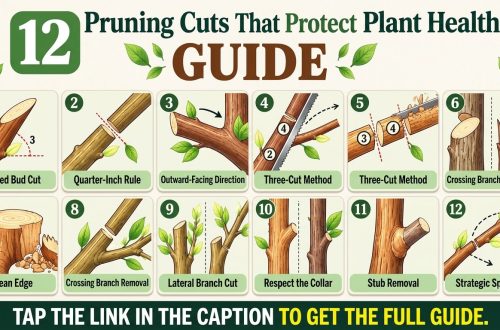
The Three-Cut Method for Larger Branches
Removing large branches incorrectly can cause bark tearing, which severely damages the tree. The three-cut method prevents this and ensures a clean cut that promotes healing:
- Undercut: About 6-12 inches away from the trunk (or the branch collar, if visible), make a cut about one-third of the way through the bottom of the branch. This prevents the branch from tearing down the trunk.
- Top Cut: Move a few inches further out on the branch from your undercut and make a complete cut from the top, allowing the branch to fall cleanly.
- Final Cut: Now that the weight of the branch is gone, make your final cut just outside the branch collar. The branch collar is the swollen area where the branch meets the trunk; it contains protective cells that help the tree heal. Do not cut flush with the trunk, as this removes the collar and hinders healing.
Making the Right Cut: Angle and Location
Precision in your cuts is crucial. Always aim to make cuts just outside the branch collar, which is the slightly swollen area at the base of the branch. This area contains specialized tissue that helps the tree compartmentalize and seal off the wound. Cutting too close (flush with the trunk) or too far away (leaving a stub) can both inhibit healing and create entry points for disease.
For smaller branches, a clean cut at a 45-degree angle, just above an outward-facing bud or side branch, is often recommended. This angle prevents water from pooling on the cut surface, reducing the risk of rot, and directs new growth outwards, improving the tree’s shape.
Safety First: Pruning Guidelines
- Ladder Safety: If using a ladder, ensure it is stable and positioned correctly. Never overreach.
- Power Tools: Use chainsaws or other power tools only if you are trained and comfortable. Otherwise, hire a professional arborist.
- Protect Yourself: Wear appropriate safety gear at all times.
- Know Your Limits: If a job seems too large or dangerous, don’t hesitate to call a certified arborist. They have the expertise and equipment to prune large trees safely and effectively.
Embrace Healthy Tree Care
Pruning is an art and a science that, when done correctly, contributes immensely to the beauty and health of your garden. By following these guidelines, you’ll not only enhance the life of your trees but also create a safer and more beautiful environment for everyone to enjoy. Happy pruning!