Ever wondered about the secret to glowing skin, strong joints, and a vibrant feeling from within? The answer often lies in collagen, the most abundant protein in your body. It’s the structural framework that gives your skin elasticity, supports healthy bones, and keeps your connective tissues robust.
As we age, our natural collagen production slows down. This can lead to visible signs like fine lines, wrinkles, and less flexible joints. But here’s the good news: you can actively support your body’s collagen levels through the foods you eat! In this guide, we’ll explore delicious, evidence-based foods that can help you unlock more youthful skin and a healthier body. Get ready to nourish yourself from the inside out!
The Amazing Benefits of Collagen
Collagen isn’t just about looking good; it’s vital for many bodily functions. Boosting your collagen intake or production can offer a wide range of health benefits:
- Skin Health: Collagen provides strength and elasticity to your skin. Adequate levels can help reduce the appearance of wrinkles and improve skin hydration, leading to a more youthful complexion.
- Joint Support: It forms the cartilage that cushions your joints, helping them move smoothly. Supplementing with collagen may help reduce joint pain and stiffness.
- Bone Health: Collagen is a major component of your bones, giving them structure and helping to keep them strong. It may help reduce the risk of bone loss.
- Hair and Nail Strength: Some research suggests that collagen can support stronger hair and nails, reducing brittleness and promoting growth.
- Gut Health: Collagen contains amino acids like glycine and glutamine, which may support the lining of your digestive tract.
Top Foods to Boost Your Collagen
While you can’t eat collagen directly from plants, certain foods provide the building blocks and cofactors your body needs to produce its own collagen.
Foods Rich in Amino Acids (Collagen Building Blocks)
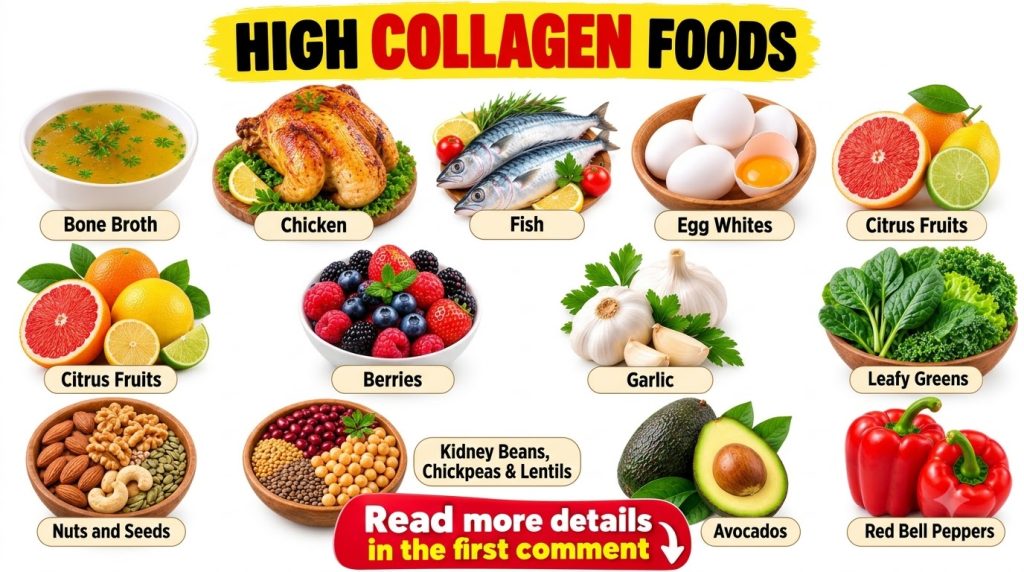
- Bone Broth: Made by simmering animal bones, bone broth is rich in collagen itself, along with amino acids like glycine, proline, and hydroxyproline. It’s a fantastic way to get these building blocks directly.
- Chicken: Poultry contains connective tissue that provides dietary collagen. It’s also a good source of amino acids like proline.
- Fish and Shellfish: Fish, especially the skin and bones, are rich in collagen. Fish collagen is particularly beneficial as it’s easily absorbed.
- Eggs: Egg whites are abundant in proline, an amino acid essential for collagen production.
Image: A steaming bowl of bone broth with herbs, next to a plate of roasted chicken and some grilled fish.
Foods High in Vitamin C (Collagen Cofactor)
Vitamin C is absolutely crucial for collagen synthesis. Without enough of it, your body can’t form collagen properly.
- Citrus Fruits: Oranges, grapefruits, lemons, and limes are packed with vitamin C.
- Berries: Strawberries, blueberries, raspberries, and blackberries are not only delicious but also excellent sources of vitamin C and antioxidants.
- Leafy Greens: Spinach, kale, and other dark leafy greens provide significant amounts of vitamin C, along with other vitamins and minerals.
- Bell Peppers: Especially red and yellow bell peppers, are incredibly high in vitamin C.
Image: A vibrant bowl of mixed berries and sliced citrus fruits, showcasing their colorful goodness.
Foods Containing Zinc and Copper (Essential Minerals)
These trace minerals play a supportive role in collagen formation.
- Nuts and Seeds: Cashews, almonds, pumpkin seeds, and chia seeds offer zinc and copper.
- Legumes: Beans, lentils, and chickpeas are good plant-based sources of these minerals.
- Shellfish: Oysters are particularly rich in zinc and copper.
Best Ways to Eat Collagen-Boosting Foods
Incorporating these foods into your daily meals can be simple and delicious:
- Start with Broth: Use bone broth as a base for soups, stews, or simply sip it warm with a pinch of salt and herbs.
- Lean Proteins: Include chicken, fish, or eggs in your main meals. Think grilled salmon, baked chicken breast, or scrambled eggs for breakfast.
- Fruit Power: Add berries to your oatmeal, yogurt, or smoothies. Squeeze fresh lemon juice into your water throughout the day.
- Veggie Boost: Load up on leafy greens and bell peppers in salads, stir-fries, or as a side dish.
- Snack Smart: Grab a handful of nuts or seeds as a healthy snack, or sprinkle them over your salads.
Potential Considerations
While collagen-boosting foods are generally safe and beneficial, consider these points:
- Allergies: If you have food allergies (e.g., to fish or eggs), choose alternative collagen-supporting foods.
- Plant-Based Diets: If you’re vegetarian or vegan, focus on vitamin C-rich foods, zinc, and copper sources, and plant-based proteins to provide the necessary amino acids for your body to produce its own collagen.
Practical Tips for a Collagen-Rich Diet
- Eat the Rainbow: Focus on a wide variety of colorful fruits and vegetables to ensure you’re getting ample vitamin C and antioxidants.
- Prioritize Protein: Make sure each meal includes a good source of protein to supply the necessary amino acids.
- Stay Hydrated: Drinking enough water is essential for skin health and overall collagen integrity.
- Cook Smart: Gentle cooking methods can help preserve the nutritional value of your foods.
- Limit Sugar: High sugar intake can contribute to processes that degrade collagen, so try to reduce added sugars.
FAQs About Collagen and Food
Q: Can I get enough collagen from food alone?
A: Yes, with a balanced diet rich in the right nutrients, your body can produce and maintain healthy collagen levels naturally. Supplements can be an option, but whole foods provide a wider array of benefits.
Q: How long does it take to see results from a collagen-rich diet?
A: Changes can vary by individual. Consistency is key, and you might start noticing improvements in skin hydration and joint comfort within a few weeks to a few months.
Q: Are plant-based foods truly collagen-rich?
A: Plant-based foods don’t contain collagen itself, as collagen is an animal protein. However, they are vital for providing the vitamins (like vitamin C) and minerals (like zinc and copper) that your body needs to *produce* its own collagen.
Q: Is bone broth the best source of collagen?
A: Bone broth is an excellent source because it contains collagen directly. However, a variety of amino acid-rich foods and those high in cofactors like vitamin C are also crucial for overall collagen health.
Q: Do I need to buy expensive collagen supplements?
A: While supplements are popular, focusing on a wholesome diet packed with collagen-boosting foods is a highly effective and natural approach. Always consult a healthcare professional before starting any new supplement regimen.
Q: Can a high-sugar diet negatively impact collagen?
A: Yes, high sugar intake can lead to a process called glycation, which can damage collagen and elastin, making them less flexible and more prone to damage.
Conclusion
Nourishing your body with collagen-boosting foods is a delicious and effective way to support healthy, youthful-looking skin, strong joints, and overall vitality. By incorporating a variety of lean proteins, vitamin C-rich fruits and vegetables, and essential minerals into your daily diet, you’ll be giving your body the best tools to produce and maintain its most abundant protein.
Remember, consistency is key, and enjoying a balanced, wholesome diet is truly the foundation for a healthy lifestyle. Explore our other articles for more tips on healthy eating and delicious recipes!
This content is for educational purposes only and should not be considered medical advice. Consult a qualified healthcare professional for personalized dietary recommendations.

