When it comes to healthy eating, fats often get a bad rap. However, not all fats are created equal! Understanding the difference between ‘good’ fats and ‘bad’ fats is crucial for maintaining a healthy heart and overall well-being. This article will help you navigate the world of dietary fats, so you can make informed choices for a healthier you.
You’ll learn which fats to embrace, which to limit, and how to incorporate heart-healthy options into your daily meals. Get ready to nourish your heart from the inside out!
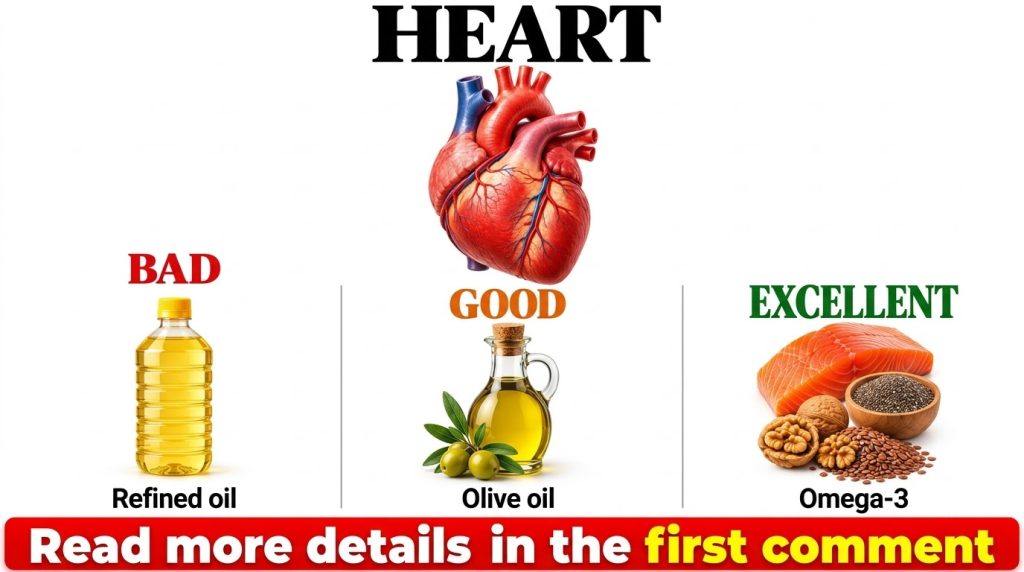
Understanding Dietary Fats
Fats are an essential part of our diet, playing vital roles in energy storage, vitamin absorption, and hormone production. However, their impact on your heart health varies greatly depending on their type. Let’s break down the main categories.
Bad Fats: The Ones to Limit
These fats can negatively affect your cholesterol levels and increase your risk of heart disease.
- Trans Fats: These are the worst culprits for heart health. They raise your LDL (“bad”) cholesterol and lower your HDL (“good”) cholesterol. Often found in partially hydrogenated oils, fast food, fried items, and many commercially baked goods.
- Saturated Fats: Found primarily in animal products like red meat, butter, and full-fat dairy, as well as some tropical oils like coconut and palm oil. While not as harmful as trans fats, excessive intake can raise LDL cholesterol.
Good Fats: Embrace These for Heart Health
These fats can help improve cholesterol levels, reduce inflammation, and protect your heart.
- Monounsaturated Fats (MUFAs): Known for their ability to lower LDL cholesterol while potentially increasing HDL cholesterol. Excellent sources include olive oil, avocados, and many nuts.
- Polyunsaturated Fats (PUFAs): These fats are essential, meaning your body can’t make them, so you must get them from food. They are further divided into Omega-3 and Omega-6 fatty acids.
- Omega-3 Fatty Acids: Particularly beneficial for heart health. They can reduce triglycerides, lower blood pressure, and decrease inflammation. Found in fatty fish (salmon, mackerel, sardines), flaxseeds, chia seeds, and walnuts.
- Omega-6 Fatty Acids: Also essential, found in vegetable oils (soybean, corn, sunflower) and some nuts. While necessary, a high intake relative to omega-3s can sometimes promote inflammation. A balanced intake is key.
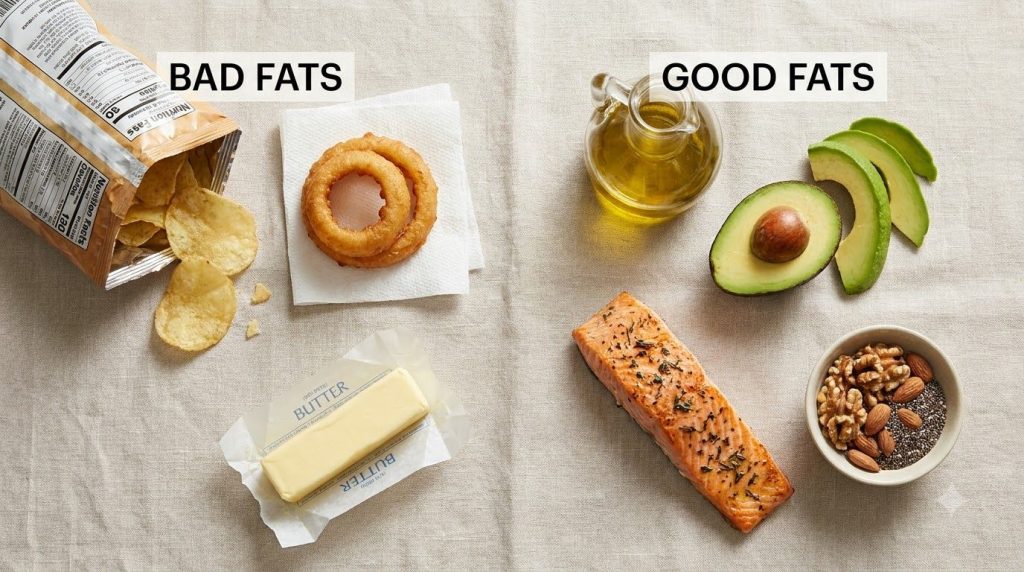
Nutrition Comparison: Good vs. Bad Fats
Here’s a quick comparison of different fat types and their general impact on your cardiovascular health.
| Fat Type | Main Sources | Impact on Heart Health |
|---|---|---|
| Trans Fat | Hydrogenated oils, fried foods, baked goods, fast food | Raises LDL (bad) cholesterol, lowers HDL (good) cholesterol, increases heart disease risk |
| Saturated Fat | Red meat, butter, cheese, full-fat dairy, coconut oil, palm oil | Can raise LDL (bad) cholesterol, especially when consumed in excess |
| Monounsaturated Fat | Olive oil, avocado, almonds, cashews, peanuts | Can lower LDL (bad) cholesterol, may raise HDL (good) cholesterol, reduces inflammation |
| Polyunsaturated Fat (Omega-3) | Fatty fish (salmon, mackerel), flaxseeds, chia seeds, walnuts | Reduces triglycerides, lowers blood pressure, anti-inflammatory, improves blood vessel function |
| Polyunsaturated Fat (Omega-6) | Soybean oil, corn oil, sunflower oil, walnuts, sunflower seeds | Essential for body functions; balanced intake with Omega-3s is important to avoid pro-inflammatory effects |
Making Healthier Choices: Practical Tips
Integrating more good fats and fewer bad fats into your diet is simpler than you might think.

Embrace Good Fats
- Cook with Olive Oil: Use extra virgin olive oil for dressings, dips, and low-heat cooking.
- Snack on Nuts and Seeds: A handful of almonds, walnuts, or chia seeds can provide healthy fats, fiber, and protein.
- Include Avocados: Add sliced avocado to salads, sandwiches, or make a delicious guacamole.
- Eat Fatty Fish: Aim for at least two servings of salmon, mackerel, or sardines per week.
- Choose Whole Foods: Opt for whole, unprocessed foods as much as possible, as they naturally contain healthier fat profiles.
Limit Bad Fats
- Read Labels: Check food labels for “partially hydrogenated oils” — a sign of trans fats — and choose products with lower saturated fat content.
- Reduce Processed Foods: Limit intake of fast food, fried snacks, and commercially baked goods, which are often high in unhealthy fats.
- Choose Lean Proteins: Select leaner cuts of meat, poultry without skin, and trim visible fat.
- Dairy Choices: Opt for low-fat or fat-free dairy products if you are monitoring saturated fat intake.
FAQs About Fats and Heart Health
Q1: Is coconut oil good or bad for heart health?
Coconut oil is high in saturated fat, which can raise LDL (“bad”) cholesterol. While some research suggests its impact may be complex, it’s generally advised to consume it in moderation and favor unsaturated fats for heart health.
Q2: Can I completely avoid all saturated fats?
It’s difficult, and not entirely necessary, to completely avoid saturated fats, as they are found in many healthy foods. The goal is to moderate intake and replace excessive amounts with healthier unsaturated fats.
Q3: What are the best cooking oils for heart health?
For everyday cooking, extra virgin olive oil, avocado oil, and canola oil are good choices due to their high monounsaturated and polyunsaturated fat content. Choose oils appropriate for your cooking temperature.
Q4: How much omega-3 should I consume daily?
General recommendations suggest around 250-500 mg of combined EPA and DHA (the key omega-3s in fatty fish) per day for healthy adults. You can achieve this through diet or supplements, consulting a healthcare professional.
Q5: Are plant-based fats always healthier than animal fats?
Generally, plant-based fats (like those in avocados, nuts, seeds, and olive oil) tend to be higher in unsaturated fats and offer more heart benefits. However, some plant oils (like coconut and palm oil) are high in saturated fat, and some animal fats (like omega-3s in fatty fish) are very beneficial. It’s about the type of fat, not just the source.
Q6: Does eating healthy fats cause weight gain?
Fats are calorie-dense, but healthy fats in moderation are crucial for satiety and nutrient absorption. They don’t necessarily cause weight gain if consumed as part of a balanced diet and within your daily calorie needs. In fact, they can help you feel fuller and reduce overall calorie intake.
Conclusion
Embracing good fats and limiting bad fats is one of the most impactful steps you can take for your heart and overall health. By choosing nutrient-rich sources like olive oil, avocados, nuts, and fatty fish, you’re not just eating well; you’re actively protecting your cardiovascular system. Start making these simple dietary swaps today and feel the difference!
This content is for educational purposes only and should not be considered medical advice. Consult a qualified healthcare professional for personalized dietary recommendations.
Explore More Heart-Healthy Content:
- Foods That Boost Your Energy Naturally
- Delicious High Protein Breakfast Ideas
- Understanding the Mediterranean Diet for Longevity