Ever wonder if what you eat truly impacts how you think and feel? The answer is a resounding yes! Just like any other part of your body, your brain thrives on proper nourishment.
Fueling your brain with the right foods can enhance memory, sharpen focus, improve mood, and even protect against cognitive decline as you age. This article will guide you through eight essential ‘Brain Food Basics’ that are packed with healthy fats, proteins, and crucial nutrients. Get ready to discover simple, delicious ways to nourish your mind and boost your overall well-being!
The Power of Brain-Boosting Foods
Our brains are incredibly complex organs that require a steady supply of energy and specific nutrients to function optimally. From forming new memories to regulating emotions, every cognitive process relies on what we consume.
When we eat foods rich in antioxidants, omega-3 fatty acids, vitamins, and minerals, we provide our brains with the building blocks they need to perform at their best. These nutrients can help reduce inflammation, protect brain cells from damage, and support the intricate communication networks within our minds.
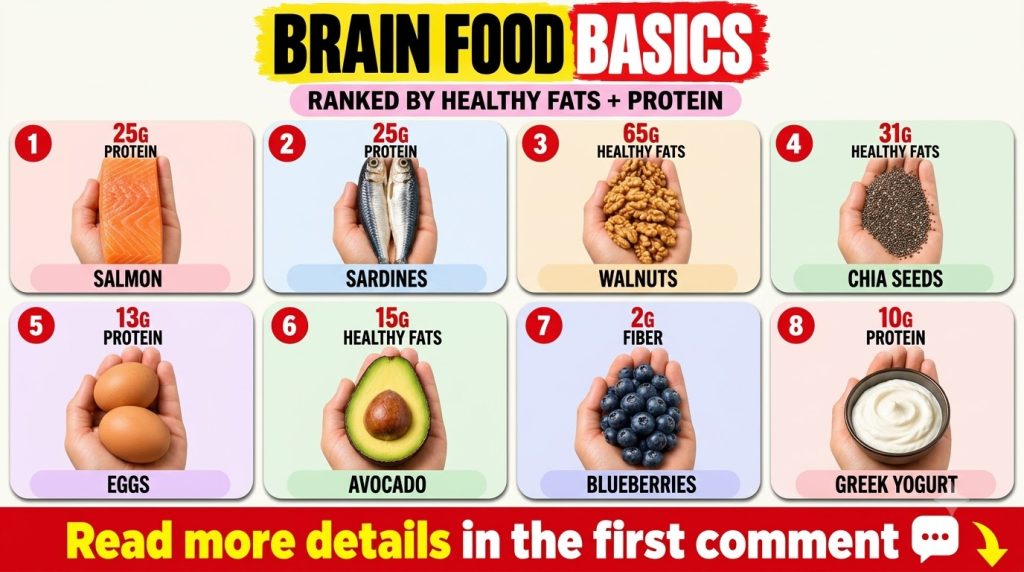
Top 8 Brain-Boosting Foods You Need to Know
1. Fatty Fish (Salmon & Sardines)
Nutrition Facts:
- Rich in Omega-3 fatty acids (DHA and EPA).
- Good source of protein and B vitamins.
Scientific Explanation:
Omega-3s are vital for brain health. DHA, in particular, makes up about 25% of the total fat in your brain and is crucial for the structure and function of brain cells. EPA helps reduce inflammation throughout the body, including the brain, which may help protect against neurodegenerative diseases. Regular consumption is associated with improved memory and mood.
Best Ways to Eat:
Enjoy grilled salmon, baked sardines, or add flaked fish to salads and sandwiches a few times a week.
2. Walnuts
Nutrition Facts:
- High in alpha-linolenic acid (ALA), a plant-based omega-3 fatty acid.
- Packed with antioxidants, vitamin E, and polyphenols.
Scientific Explanation:
Walnuts have a unique combination of beneficial compounds that may support brain health. The antioxidants help combat oxidative stress, while ALA is converted into DHA and EPA in the body, contributing to brain cell health and reducing inflammation. Research suggests walnuts can improve cognitive function.
Best Ways to Eat:
Snack on a handful, add to oatmeal, yogurt, salads, or sprinkle over roasted vegetables.
3. Chia Seeds
Nutrition Facts:
- Excellent source of ALA omega-3s, fiber, and protein.
- Contains essential minerals like magnesium and phosphorus.
Scientific Explanation:
Like walnuts, chia seeds provide ALA, which supports brain health. Their high fiber content helps stabilize blood sugar, providing a steady energy supply to the brain. Magnesium is also crucial for nerve function and neurotransmitter regulation.
Best Ways to Eat:
Make chia pudding, add to smoothies, sprinkle on yogurt, or use as an egg substitute in baking.
4. Eggs
Nutrition Facts:
- Rich in choline, B vitamins (B6, B12, folate), and protein.
- Contains lutein and zeaxanthin (antioxidants).
Scientific Explanation:
Choline is a precursor to acetylcholine, a neurotransmitter critical for memory and mood regulation. B vitamins play key roles in brain function, including reducing levels of homocysteine, an amino acid associated with cognitive decline. The antioxidants may also help protect brain cells.
Best Ways to Eat:
Scrambled, boiled, poached, or as an omelet for breakfast. Add to salads for extra protein.
5. Avocado
Nutrition Facts:
- High in monounsaturated fats, vitamin K, folate, and vitamin C.
- Good source of potassium and B vitamins.
Scientific Explanation:
The healthy monounsaturated fats in avocados contribute to healthy blood flow, which is essential for delivering oxygen and nutrients to the brain. Vitamin K and folate may help prevent blood clots in the brain and improve cognitive function, particularly memory and concentration.
Best Ways to Eat:
Add to toast, salads, smoothies, or make guacamole.
6. Blueberries
Nutrition Facts:
- Packed with antioxidants, especially anthocyanins.
- Good source of vitamin C and K, and fiber.
Scientific Explanation:
Often called

