Most people immediately think of the sweet, vibrant fruit when they hear “prickly pear.” But what if we told you the real power, the part many herbalists and home remedy enthusiasts keep a close eye on, lies not in the fruit, but in the thick, succulent pads? Often overlooked and sometimes discarded, these green segments of the cactus hold a fascinating lore of wellness, offering practical applications beyond just a tasty snack.
Ignoring the pads is a common mistake that could mean missing out on some of nature’s most accessible home remedies. Let’s delve into how you can tap into the surprising benefits of prickly pear cactus pads for your home healing needs.
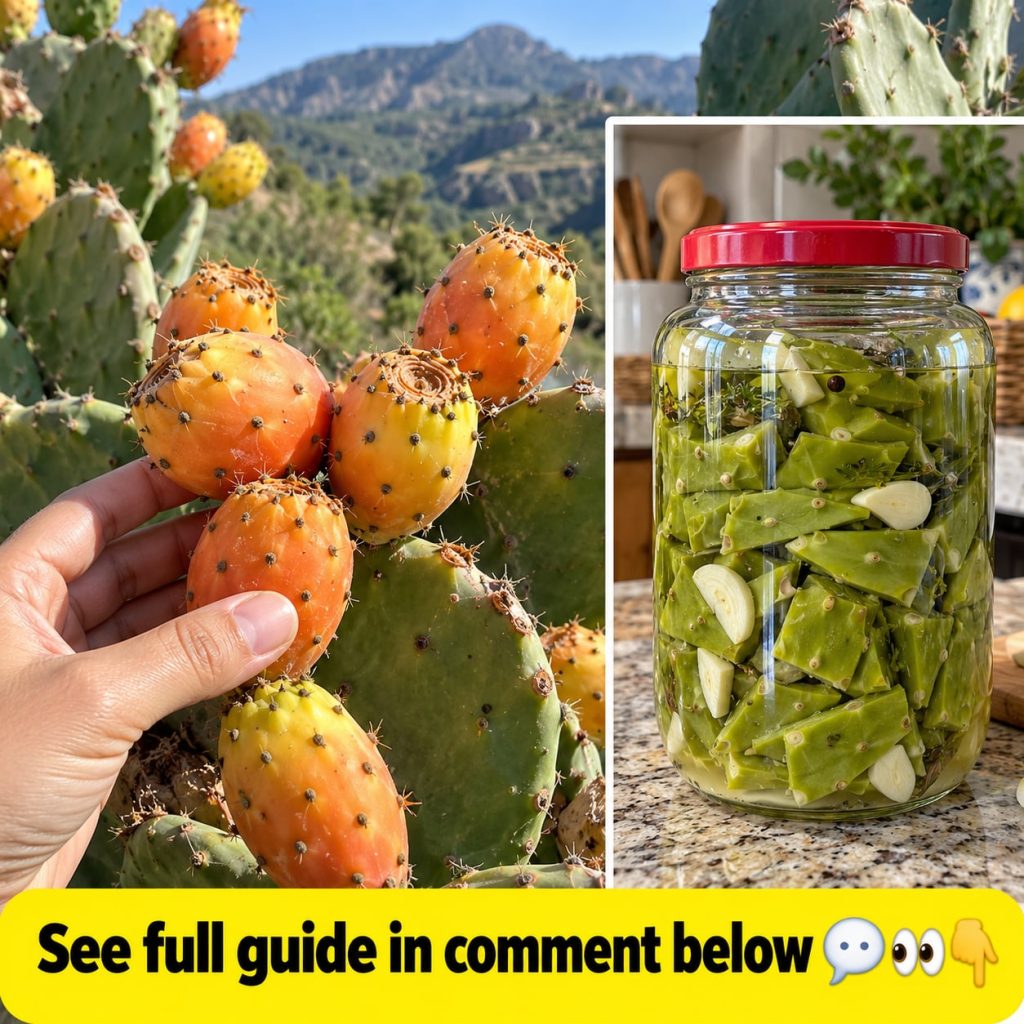 The prickly pear cactus offers benefits beyond its fruit, primarily from its nutrient-rich pads.
What are Prickly Pear Cactus Pads?
Prickly pear cactus pads, known scientifically as Opuntia ficus-indica, are the flattened, fleshy stems of the cactus plant. They are typically green, sometimes with a reddish tint, and covered with spines or glochids (tiny, hair-like prickles). These pads are edible and have been a staple in traditional diets and medicine across various cultures, especially in Mesoamerica. They are rich in fiber, antioxidants, vitamins (especially C and A), and minerals like calcium and magnesium. Their gel-like consistency makes them excellent for soothing preparations.
Prickly Pear Pad Elixir: A Simple Remedy Base
This basic elixir provides a versatile base that can be used topically or consumed, harnessing the pads’ soothing and nutritive properties. We’ll focus on a simple juice, and then discuss how to integrate optional ingredients like garlic (as seen in the image) for specific benefits.
Ingredients
- 1-2 medium-sized fresh prickly pear cactus pads (nopal)
- 1-2 cups filtered water
- (Optional for enhanced benefits: 1 clove garlic, peeled and sliced thin)
Approximate Measurements
- For topical use: 1 pad per 1 cup water
- For internal use: 1-2 pads per 2 cups water
- Garlic: 1 thin slice per pad if adding
Formula / Recipe: Prickly Pear Pad Juice
This method extracts the beneficial mucilage and nutrients from the pads.
Step-by-Step Method
- Harvest and Clean: Carefully select fresh, firm pads. Using tongs and a knife, remove the pads from the plant. Scrape off all visible spines and glochids under running water. A vegetable peeler can help remove the tough outer skin if desired, though it’s not strictly necessary if thoroughly de-spined.
- Chop: Dice the cleaned pads into small 1-inch pieces. The smaller the pieces, the easier they are to blend.
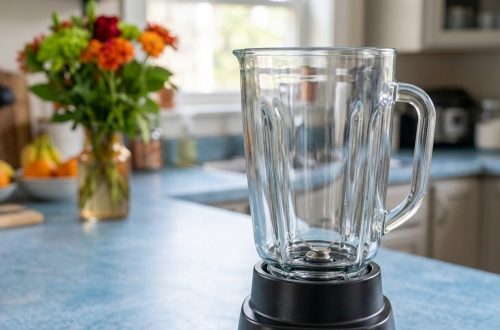
- Blend: Place the chopped pads into a blender with 1-2 cups of filtered water. Blend until smooth. The mixture will be thick and somewhat slimy due to the mucilage.
- Strain (Optional but Recommended): For a smoother elixir, strain the mixture through a fine-mesh sieve or cheesecloth to remove any remaining fibrous bits. This is particularly important if consuming internally.
- Optional Garlic Infusion: If adding garlic for its antibacterial properties (useful for topical applications), you can either blend a thin slice of garlic with the pads or simply add a thin slice to the strained liquid and let it infuse for an hour before use.
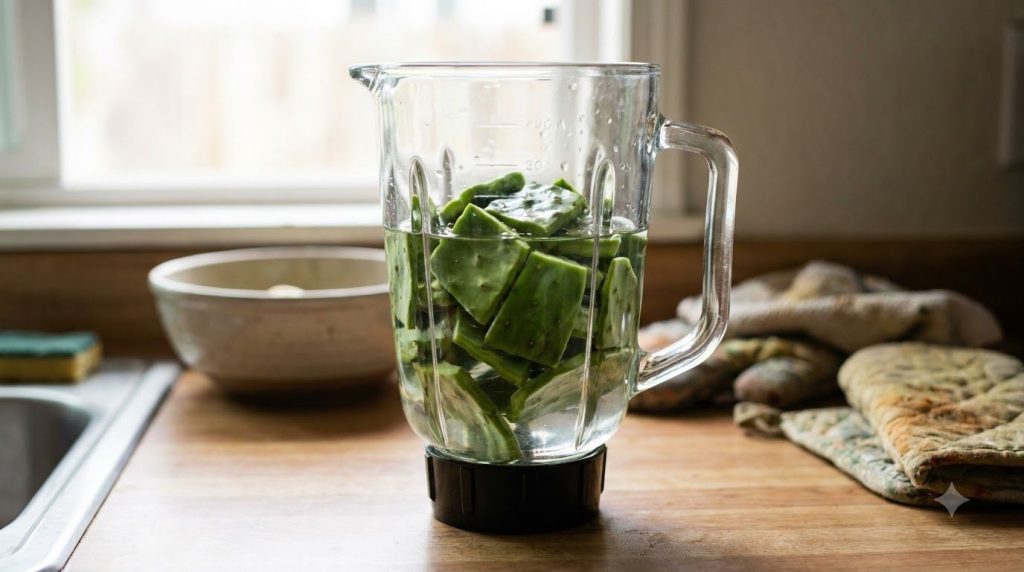 Blending prickly pear pads with water helps extract their soothing mucilage and nutrients.
How to Use
- Topical Soother: Apply the strained liquid directly to skin irritations, minor burns, insect bites, or areas needing hydration. It can act as a natural compress or a soothing face mask. Leave on for 15-20 minutes, then rinse.
- Digestive Aid: For internal use, consume 1/4 to 1/2 cup of the strained juice daily. It’s known to support digestive health and help regulate blood sugar levels.
How Often to Use
- Topical: 1-2 times daily as needed.
- Internal: Once daily. Start with a smaller amount to assess tolerance.
Practical Tips for Best Results
- Freshness is Key: Always use fresh, firm pads. Avoid any that are soft, discolored, or show signs of decay.
- Thorough Cleaning: The glochids are irritating. Take extra care to remove all of them. Wearing gloves is highly recommended.
- Consistency: The juice can be thick. Adjust water content to achieve your desired consistency.
- Combine with Garlic: For an enhanced anti-inflammatory or antimicrobial poultice for skin issues, gently warm a piece of a cleaned pad, mash it, and mix with a tiny bit of minced garlic before applying. This combination is inspired by traditional uses for wound care.
Quick Tip: Fresh vs. Dried
While fresh pads are ideal for their high water content and mucilage, dried and powdered prickly pear pads are available. These can be reconstituted with water, but the fresh version offers superior soothing properties, especially for topical applications. Dried powder is often preferred for internal supplements due to convenience.
Common Mistakes to Avoid
- Incomplete Cleaning: Not removing all glochids can lead to skin irritation or discomfort when consumed. Always double-check.
- Using Old or Damaged Pads: Compromised pads may harbor bacteria or have reduced efficacy.
- Boiling Too Long: If making a decoction, excessive boiling can degrade some heat-sensitive nutrients. Gentle simmering is best if heat is needed.
- Overuse Internally: While beneficial, large quantities can sometimes cause digestive upset. Always start small.
Cautions / Who Should Avoid It
Prickly pear pads are generally safe for most people. However, individuals with allergies to cacti should avoid them. If consuming internally, monitor blood sugar levels, especially if you have diabetes, as prickly pear can lower blood glucose. Consult a healthcare professional before making significant dietary changes or using remedies, especially if pregnant, breastfeeding, or on medication.
Quick Summary
- Best Preparation: Freshly blended and strained juice/elixir.
- Best Use-Case: Topical relief for skin irritations, minor burns, or internally for digestive support and blood sugar management.
- Storage: Refrigerate fresh juice for up to 3 days.
- When to Use: As needed for topical issues; daily for internal benefits.
- What to Avoid: Uncleaned pads, old/damaged pads, excessive internal consumption without prior tolerance testing.
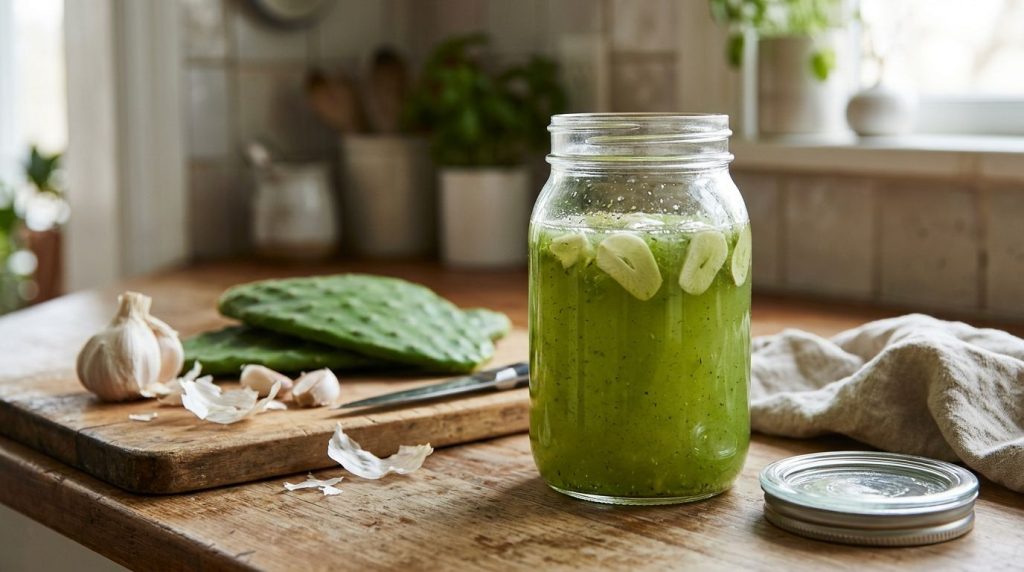 Store your prickly pear pad elixir in a sealed jar in the refrigerator.
Frequently Asked Questions
- Can I use fresh or dried prickly pear pads? Fresh pads are best for remedies, especially for their gel-like mucilage. Dried powder is more concentrated and often used in supplements.
- How long does the fresh juice last? Refrigerated in an airtight container, it lasts up to 3 days.
- Can I freeze the pads or juice? Yes, you can freeze cleaned and chopped pads for later blending, or freeze the prepared juice in ice cube trays.
- How often should I use it topically? Apply 1-2 times daily as needed for relief.
- What part of the pad is best for remedies? The inner flesh and gel are most beneficial. Ensure all spines are removed from the surface.
- Can I reuse the fibrous bits after straining? While less potent, the strained pulp can be added to compost or even used as a very rough exfoliant for tougher skin areas like heels, if finely ground.
- When should I avoid internal use? If you are on blood sugar-lowering medication or are pregnant/breastfeeding, consult a doctor before consuming.
Conclusion
The humble prickly pear cactus pad, often overshadowed by its more famous fruit, is a powerhouse of natural goodness waiting to be rediscovered. By understanding how to properly prepare and use these succulent segments, you can unlock a range of traditional home remedies that are both practical and effective. Embrace the unseen potential of the nopal and integrate this desert treasure into your wellness routine.