Are you looking for a more natural, budget-friendly, and eco-conscious way to keep your clothes clean? Commercial laundry detergents can often be expensive and contain ingredients you might prefer to avoid. Making your own liquid laundry soap is a simple and rewarding DIY project that can help you reduce your household chemical exposure and save money.
This homemade detergent uses basic ingredients, creating a solution that’s effective for everyday laundry without harsh additives. It’s an easy step towards a more sustainable home.
What You’ll Need
Ingredients
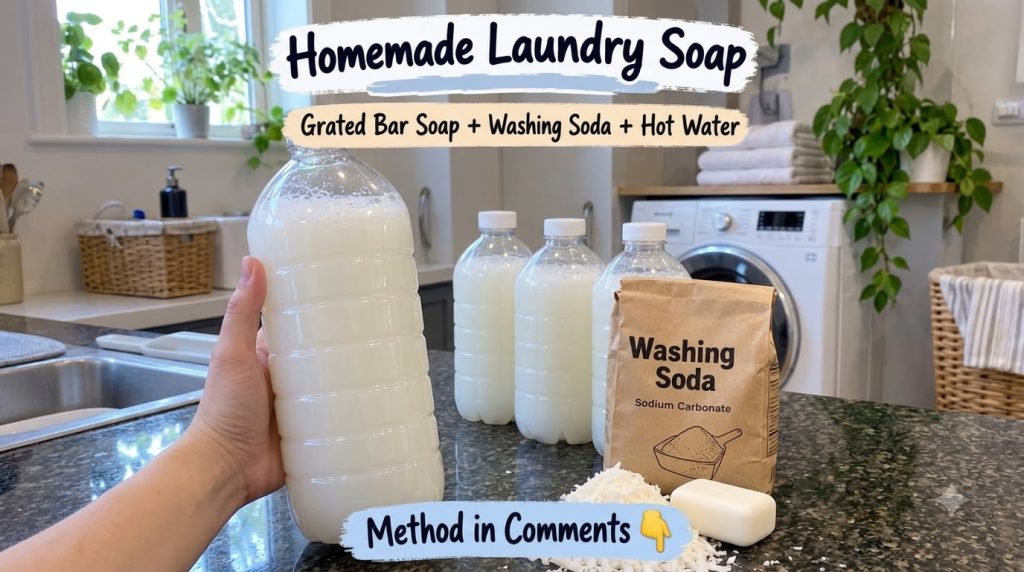
- 1 bar (approx. 5-6 oz or 140-170g) white laundry soap (such as Fels-Naptha, Zote, or a basic laundry bar)
- 1 gallon (approx. 3.78 liters) hot water
Tools
- Cheese grater
- Large pot (at least 2-gallon capacity)
- Sturdy spoon for stirring
- Funnel
- Clean plastic bottles or repurposed detergent containers for storage
Why This DIY Can Be Useful
The main ingredient, bar soap, is a time-tested cleaning agent known for its ability to cut through dirt and grease. When dissolved and used in laundry, it effectively cleans fabrics without the need for complex chemical formulations found in many store-bought detergents. By making it yourself, you control the ingredients, avoid unnecessary dyes and fragrances, and significantly reduce the cost per load, making it both a practical and environmentally friendlier choice.
How to Make It
- Grate the Soap: Using your cheese grater, carefully grate the entire bar of laundry soap. Finer gratings will dissolve faster.
- Heat the Water: Pour 1 gallon of hot water into your large pot and place it on the stove over medium heat.
- Dissolve the Soap: Add the grated soap to the hot water. Stir continuously with your sturdy spoon until all the soap is completely dissolved. This may take several minutes.
- Cool and Thicken: Remove the pot from the heat and let the mixture cool completely. It’s best to let it sit overnight. As it cools, the mixture will thicken into a gel-like consistency.
- Stir and Bottle: Once cooled and thickened, give the mixture a good stir to break up any large clumps and achieve a more uniform consistency. Use a funnel to carefully pour the finished liquid laundry soap into your clean storage bottles.
How to Use It
- For Top-Load Washers: Add 1/2 cup of the homemade laundry soap directly to the washing machine drum before adding clothes.
- For Front-Load Washers: Add 1/4 cup of the homemade laundry soap to the detergent dispenser.
- Adjust as Needed: For heavily soiled loads or larger wash cycles, you may use a bit more detergent, up to 3/4 cup for top-loaders and 1/2 cup for front-loaders.
- Wash as Usual: Proceed with your regular wash cycle and water temperature settings.
What to Expect
You can expect your clothes to come out clean and fresh. The homemade laundry soap effectively removes dirt and everyday grime. Keep in mind that this detergent might not produce as much suds as conventional detergents, but a lack of suds doesn’t mean it’s not working. Your laundry will have a clean, neutral scent, or a faint, clean smell from the soap bar you used, rather than an overpowering artificial fragrance.
Helpful Tips
- Shake Before Use: The soap may separate slightly or thicken over time. Give your bottle a good shake before each use to ensure consistency.
- Adjust Consistency: If your soap is too thick for your liking, you can thin it out by adding a small amount of hot water to the bottle and shaking well.
- Essential Oil Boost (Optional): For a subtle scent, you can add 10-20 drops of your favorite essential oil (like lavender or tea tree) to each full bottle of finished laundry soap before shaking. Add this after the mixture has cooled.
Important Notes / Safety
- Patch Test: Before using on delicate or expensive items, consider doing a small patch test on an inconspicuous area of the fabric to ensure compatibility.
- Storage: Store your homemade laundry soap in a cool, dry place, away from direct sunlight. Keep it out of reach of children and pets.
- Foaming: If you notice excessive sudsing in your machine, especially high-efficiency (HE) models, reduce the amount of detergent used in subsequent washes. While this recipe is generally low-sudsing, some bar soaps may produce more foam.