Most people think magnificent Christmas Amaryllis blooms are reserved for experienced gardeners or expensive florists. The truth? Cultivating these vibrant, festive flowers at home is surprisingly simple, even if you’ve never potted a plant before. The secret isn’t a green thumb, but understanding a few straightforward steps – and getting your timing just right. Imagine your living room adorned with these stunning, trumpet-shaped blossoms, radiating holiday cheer, all grown by you.
What is Christmas Amaryllis?
Amaryllis (scientifically known as Hippeastrum) is a striking, large-flowered bulb plant, popular for its dramatic winter blooms, especially around the Christmas season. It’s known for its ease of growth and impressive size, making it a perfect indoor plant to add a splash of color when the outside world is dreary. With proper care, these bulbs can produce multiple flower stalks, each bearing several spectacular, trumpet-shaped blossoms.
Ingredients and Materials
Gathering the right supplies is the first step towards a thriving Amaryllis.
- Amaryllis bulb (choose a large, firm, healthy one)
- Pot (6-8 inches in diameter, with drainage holes)
- Potting mix (well-draining, high-quality)
- Water
- Optional: Small stones or pottery shards for extra drainage
Approximate Measurements
- Pot Size: Choose a pot that is only about 1-2 inches wider than the bulb itself. For most bulbs, this is a 6-8 inch diameter pot. A snug fit encourages better blooming.
- Potting Mix: Enough to fill the pot, leaving 1-2 inches from the rim to prevent overflow when watering.
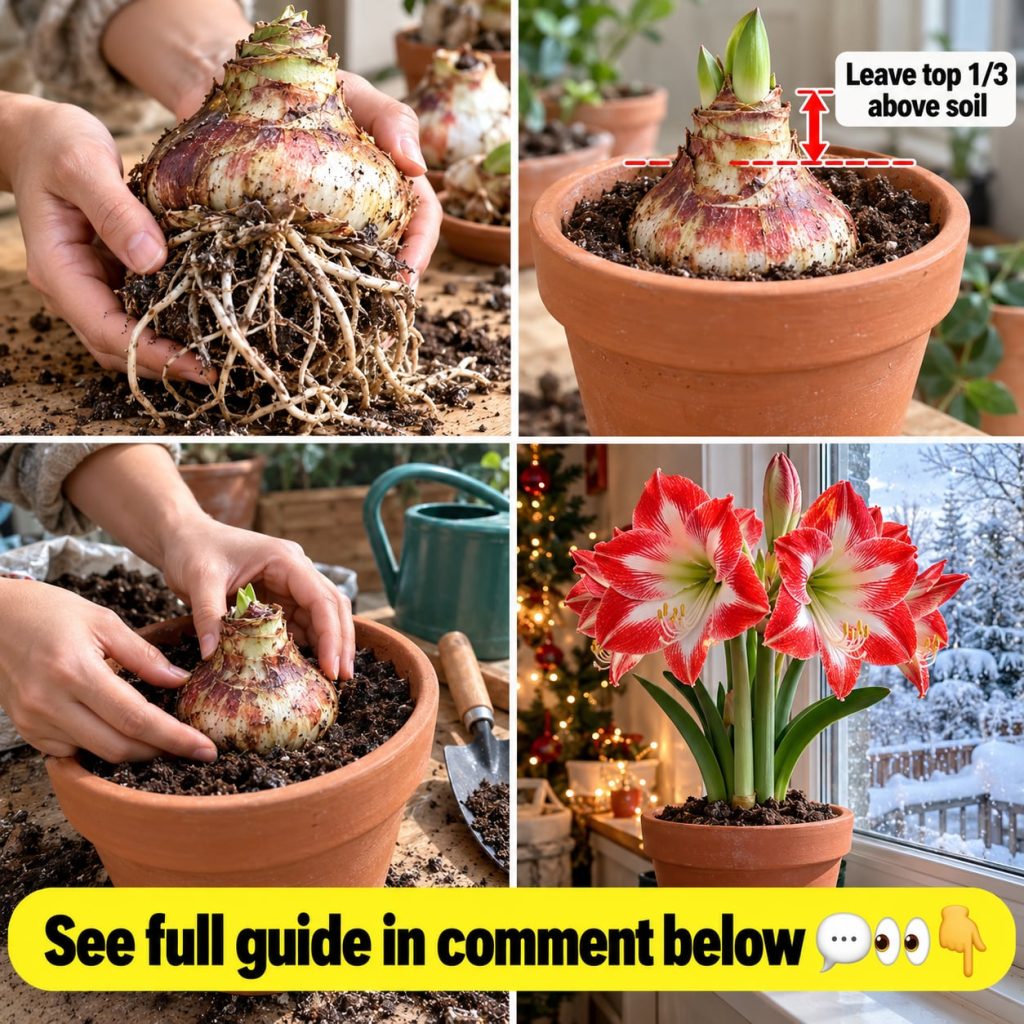
- Bulb Placement: Plant the bulb so the top one-third of it remains above the soil line.
Formula / Recipe (Planting Method)
The key to a successful Amaryllis bloom is proper planting and initial care. This “recipe” ensures your bulb has the best start for a stunning display.
Step-by-Step Method
- Choose Your Pot: Select a heavy pot with good drainage. Terra cotta pots are excellent as they prevent the plant from tipping over once it grows tall.
- Add Drainage: Place a layer of small stones or pot shards at the bottom of the pot to ensure good drainage. This prevents waterlogging, which can rot the bulb.
- Partial Fill: Fill the pot about halfway with fresh, well-draining potting mix. Create a small mound in the center.
- Position the Bulb: Place the Amaryllis bulb on top of the mound. The roots should spread downwards.
- Add Soil: Carefully add more potting mix around the bulb, gently firming it. Ensure that the top one-third of the bulb remains exposed above the soil line. This is crucial for preventing rot.
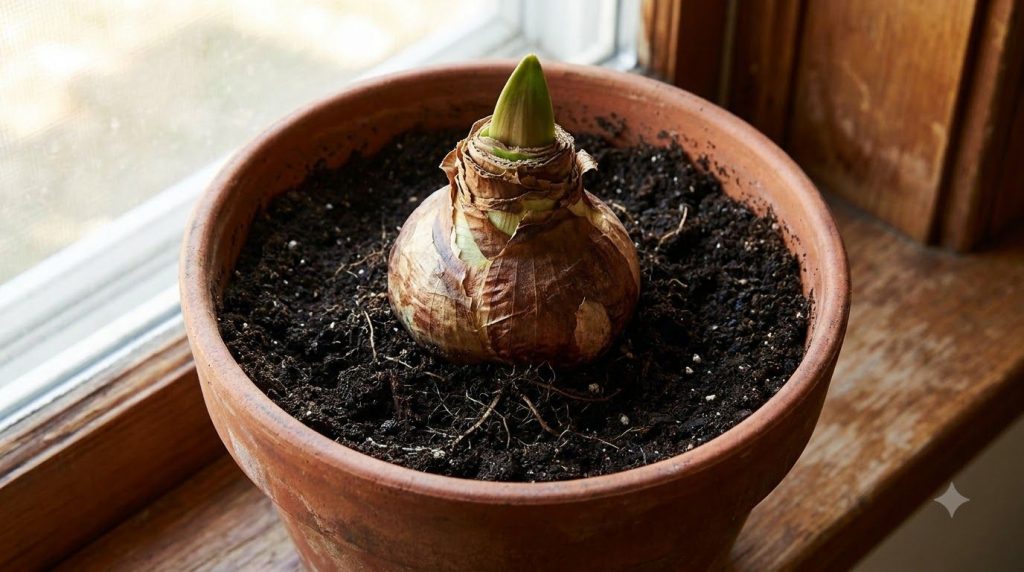
- Initial Watering: Water thoroughly until water drains from the bottom of the pot.
- Placement: Place the potted bulb in a warm spot (around 70-75°F or 21-24°C) with bright, indirect light. A sunny window is ideal.
How to Use (Ongoing Care)
Once planted, Amaryllis bulbs require minimal but consistent care to thrive.
- Watering: After the initial watering, do not water again until you see a green shoot emerge from the bulb. Once the shoot appears, water sparingly, only when the top inch of soil feels dry to the touch. Avoid overwatering, which is a common cause of bulb rot.
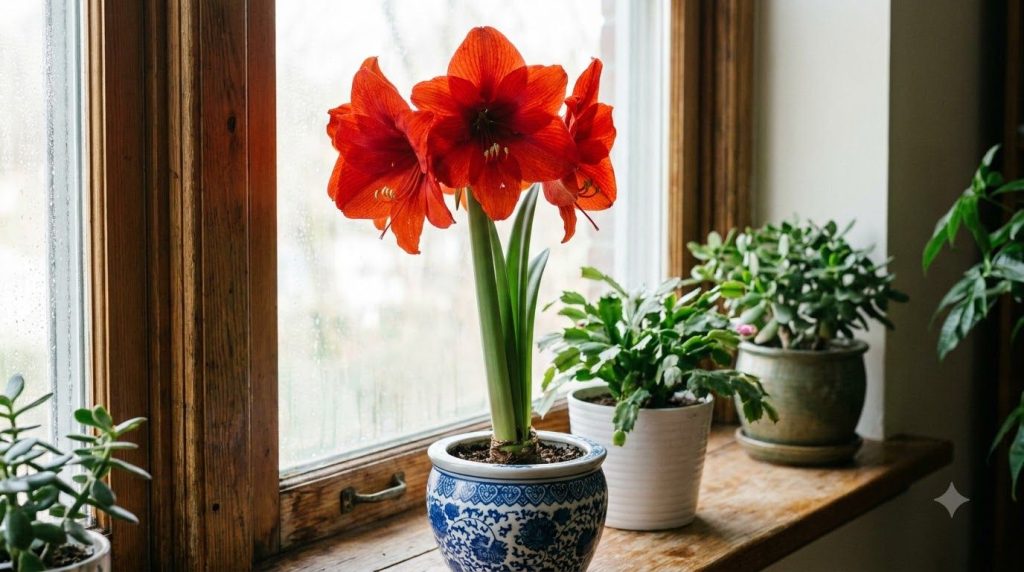
- Light: As the stalk grows, ensure it receives plenty of bright, indirect light. Rotate the pot occasionally to prevent the stalk from leaning towards the light source.
- Temperature: Maintain a consistent room temperature between 65-75°F (18-24°C).
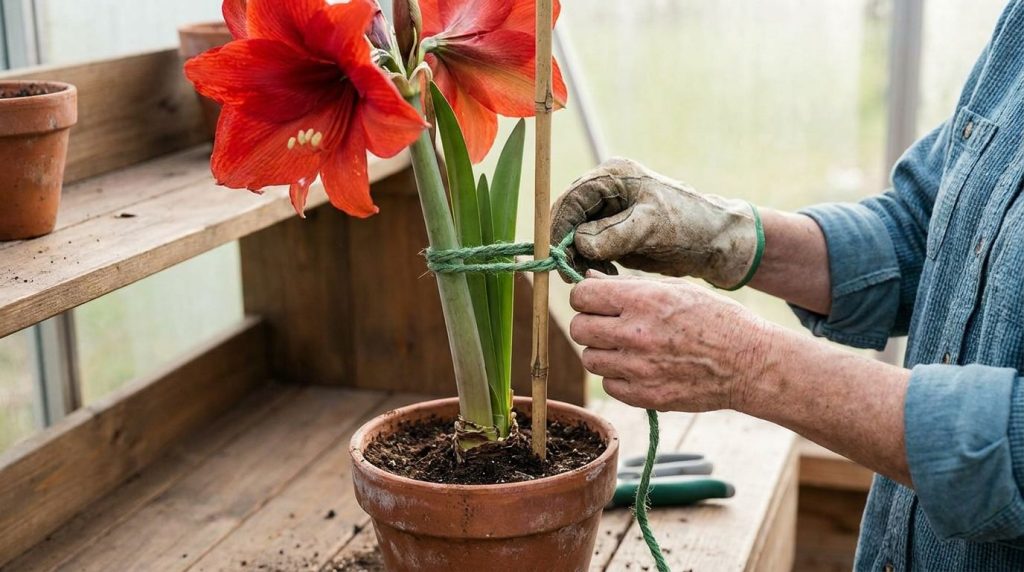
- Support: As the flower stalk grows taller and the heavy blooms emerge, it may become top-heavy. Provide a stake for support if needed to prevent tipping or breakage.
How Often to Use (Watering & Feeding Schedule)
- Watering Frequency:
- Post-planting, pre-shoot: Once, then wait for growth.
- Shoot emerges: Every 5-7 days, or when the top inch of soil is dry.
- Blooming: Increase slightly, keeping soil consistently moist but not waterlogged.
- Feeding: Amaryllis bulbs store a lot of energy, so they don’t always need fertilizer in their first year. For subsequent blooms, you can start feeding a balanced liquid houseplant fertilizer (e.g., 10-10-10) at half strength every 2-4 weeks after the flower stalk has emerged and leaves are actively growing, stopping when the plant goes dormant.
How to Buy / How to Choose Ingredients
The quality of your Amaryllis bulb significantly impacts your success.
- Choose Large Bulbs: Larger bulbs (typically 26-28 cm circumference or more) produce more flower stalks and larger blooms.
- Firmness: The bulb should be firm and heavy for its size. Avoid any bulbs that feel soft, mushy, or have visible mold.
- Healthy Skin: Look for bulbs with intact, papery skin. Some minor blemishes are normal, but significant damage or deep cuts should be avoided.
- Early Purchase: Buy your bulbs in early fall (October-November) to ensure a Christmas bloom, as they typically take 6-10 weeks from planting to flowering.
Did You Know?
The “Amaryllis” we commonly grow indoors is technically Hippeastrum. True Amaryllis is a different genus, native to South Africa, with distinct characteristics. However, the name Amaryllis has become widely accepted for these magnificent bulbs!
Storage
- Before Planting: Store unplanted bulbs in a cool, dark, dry place (like a pantry) at around 50-60°F (10-15°C) until you’re ready to plant, but ideally, plant them as soon as you get them.
- After Flowering (for reblooming):
- Deadhead: Once the flowers fade, cut the flower stalk back to about an inch above the bulb. Do not cut the leaves.
- Growth Period: Continue watering and feeding as the leaves grow. Place the plant in a sunny spot outdoors during summer if possible, allowing the leaves to photosynthesize and replenish the bulb’s energy.
- Dormancy: In late summer/early fall, stop watering and feeding. Allow the leaves to yellow and die back naturally. Place the pot on its side in a cool, dark place (50-55°F or 10-13°C) for 8-10 weeks. This dormancy period is crucial for reblooming.
- Replant/Repot: After dormancy, bring the bulb back out, remove any dead leaves, refresh the topsoil or repot, and begin the planting process again.
Practical Tips
- Stagger Planting: If you want continuous blooms through the holiday season, plant bulbs every 1-2 weeks.
- Group Planting: For a more dramatic display, plant 2-3 bulbs in a larger, wider pot.
- Warm Water: Use lukewarm water for watering, especially during the initial stages, as cold water can shock the bulb.
- Rotate Regularly: Rotate your pot every few days to encourage straight growth of the flower stalk and prevent it from leaning towards the light source.
Common Mistakes
- Overwatering: This is the most frequent mistake. Amaryllis bulbs are susceptible to rot if the soil remains waterlogged.
- Planting too Deep: Planting the entire bulb beneath the soil can lead to rot and inhibit flowering.
- Insufficient Light: Not enough light can result in a leggy, weak stalk and smaller blooms.
- Cutting Leaves Prematurely: The leaves are essential for replenishing the bulb’s energy for next year’s blooms. Don’t cut them until they naturally yellow.
- Skipping Dormancy: For reblooming, a period of dormancy is vital. Without it, the bulb may produce only leaves or weak flowers.
Comparison Table: Bulb Size vs. Bloom Potential
| Bulb Size (Circumference) | Typical Flower Stalks | Bloom Size/Number | Ideal For |
|---|---|---|---|
| 20-22 cm | 1 | Smaller/Fewer | Small pots, single bloom focus |
| 24-26 cm | 1-2 | Medium/Good | Standard home display |
| 28-30 cm | 2-3 | Large/Abundant | Dramatic displays, experienced growers |
| 30+ cm | 3+ | Very Large/Luxurious | Showpiece plants, maximum impact |
Cautions / Who Should Avoid It
- Toxicity: Amaryllis plants (especially the bulbs) are toxic if ingested by humans or pets. Keep them out of reach of children, cats, and dogs. Symptoms can include vomiting, diarrhea, depression, and tremors.
- Plant Sap: The sap can be a mild irritant to skin for some sensitive individuals, so it’s wise to wear gloves when handling bulbs or cutting stalks.
Quick Summary
- Best Preparation: Plant firm, large bulbs in a snug pot with good drainage, leaving one-third of the bulb exposed.
- Best Use-Case: Enjoy indoors for festive Christmas blooms.
- Storage: Store unplanted bulbs cool and dark; induce dormancy for reblooming.
- When to Use: Plant in late October/early November for Christmas blooms.
- What to Avoid: Overwatering, deep planting, cutting leaves early, skipping dormancy, and ingestion by pets.
FAQ
- Can I use fresh or dried bulbs? You will typically purchase dormant (dried) bulbs. Ensure they are firm and healthy.
- How long does it take for Amaryllis to bloom after planting? Generally 6-10 weeks, depending on the variety and growing conditions.
- How often should I water my Amaryllis? Sparingly at first (after initial watering, wait for a shoot), then when the top inch of soil is dry, about once a week.
- Can Amaryllis rebloom? Yes! With proper care, including a summer growth period and a dormancy period, they can rebloom for many years.
- What if my Amaryllis isn’t blooming? Ensure it had enough light, a proper dormancy period, and wasn’t overwatered.
- Why are the flower stalks bending or falling over? This often means the plant isn’t getting enough light (reaching for the sun) or the heavy blooms need staking for support.
- Is Amaryllis safe around pets? No, Amaryllis is toxic to pets if ingested. Keep it out of their reach.
Conclusion
Growing Amaryllis for Christmas is a rewarding experience that adds a touch of natural elegance to your holiday decor. With these beginner-friendly tips, you’re well-equipped to nurture stunning blooms that will impress your guests and bring warmth to your home. Don’t let the idea of growing your own festive flowers intimidate you – the simple joy of watching these magnificent bulbs unfurl is well worth the minimal effort.
You may also like: Winter Gardening: Keeping Your Indoor Plants Thriving
Read more: DIY Christmas Decor Ideas for a Festive Home
Continue with: The Complete Guide to Forcing Spring Bulbs Indoors
