A dirty mattress can be an unwelcome sight and an uncomfortable thought. Whether it’s from accidental spills, general wear, or just the passage of time, stubborn stains can make you feel like your mattress is beyond saving. Before you consider replacing it, try this simple and effective DIY cleaning hack. It’s an affordable way to refresh your mattress, tackle those unsightly spots, and potentially extend its life, making your sleeping environment feel much cleaner.
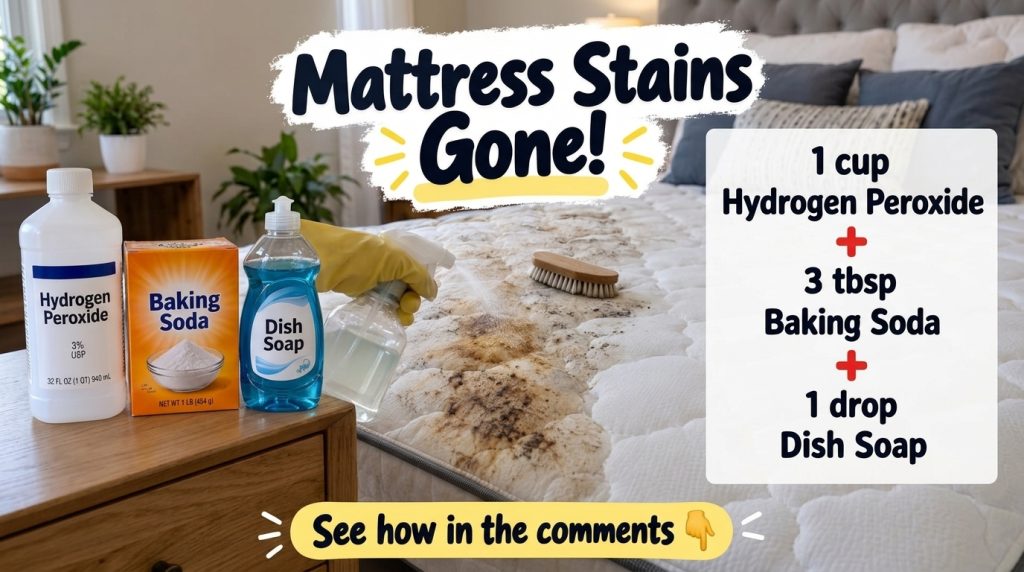
What You’ll Need
- 1 cup hydrogen peroxide (3%)
- 3 tablespoons baking soda
- 1-2 drops liquid dish soap (optional, but recommended for oily stains)
- Empty spray bottle
- Soft-bristled brush or clean cloth
- Vacuum cleaner (with upholstery attachment)
- Clean, dry towels or cloths
Why This DIY Can Be Useful
This simple cleaning solution combines ingredients known for their cleaning and deodorizing properties. Hydrogen peroxide acts as a mild bleaching agent and disinfectant, helping to break down organic stains and kill bacteria. Baking soda is a natural deodorizer and a gentle abrasive that helps lift dirt and absorb moisture. Adding a tiny bit of liquid dish soap can enhance its ability to cut through greasy or oily residues, making it a powerful trio for many common mattress stains.
How to Make It
- Carefully pour 1 cup of 3% hydrogen peroxide into your empty spray bottle.
- Add 3 tablespoons of baking soda to the bottle.
- If you’re dealing with particularly stubborn or oily stains, add 1-2 drops of liquid dish soap.
- Gently swirl the bottle to mix the ingredients until the baking soda mostly dissolves. Avoid shaking vigorously, as the mixture can foam.
How to Use It
- Prepare Your Mattress: Start by vacuuming your entire mattress thoroughly using the upholstery attachment. This will remove any loose dirt, dust mites, and debris before you apply any liquid.
- Target Stains: Spray the cleaning solution directly onto the stained areas. Don’t oversaturate the mattress; a light mist that covers the stain is usually enough.
- Let it Work: Allow the solution to sit on the stains for 5-10 minutes. For very tough stains, you might let it sit a bit longer, up to 30 minutes, but avoid letting it dry completely.
- Gently Scrub: Using a soft-bristled brush or a clean cloth, gently scrub the stained areas in small circular motions. This helps to lift the stain from the fibers.
- Blot Clean: Dampen a clean cloth with plain water and blot the treated areas to remove any remaining cleaning solution and lifted grime. Follow up with a dry towel to absorb as much moisture as possible.
- Dry Thoroughly: Let the mattress air dry completely. If possible, open windows to ensure good ventilation. You can also use a fan or a hairdryer on a cool setting to speed up the drying process.
- Vacuum Again: Once completely dry, give the mattress another quick vacuum to remove any lingering baking soda residue.
What to Expect
You can expect a significant improvement in the appearance of most stubborn mattress stains. While older, deeply set stains might not disappear entirely, they should be considerably faded and less noticeable. This method is excellent for refreshing your mattress and removing common culprits like sweat, urine, or drink spills. Your mattress should feel and smell much cleaner after this treatment.
Helpful Tips
- Patch Test: Always test the solution on an inconspicuous area of your mattress first to ensure it doesn’t cause discoloration or damage.
- Don’t Oversaturate: Mattresses can take a long time to dry, and excess moisture can lead to mold and mildew. Apply the solution sparingly.
- Act Quickly: For fresh spills, blot up as much liquid as possible immediately before applying the cleaning solution.
- Sunlight Boost: If possible, let your mattress air dry in direct sunlight. Sunlight is a natural disinfectant and can help further break down stains and odors.
- Regular Maintenance: To prevent future stains, consider using a waterproof mattress protector.
Important Notes / Safety
- Ventilation: Work in a well-ventilated area to ensure the mattress dries properly and to avoid inhaling fumes from the hydrogen peroxide.
- Hydrogen Peroxide: While 3% hydrogen peroxide is relatively mild, it can have a slight bleaching effect on some colored fabrics. Always patch test. Avoid contact with eyes.
- Drying is Key: Ensure your mattress is completely dry before making your bed to prevent mold and mildew growth. This can take several hours or even a full day.
- Storage: Do not store the mixed solution in the spray bottle for long periods. Baking soda reacts with hydrogen peroxide, and the bottle could build pressure and burst over time. Make a fresh batch each time you clean.