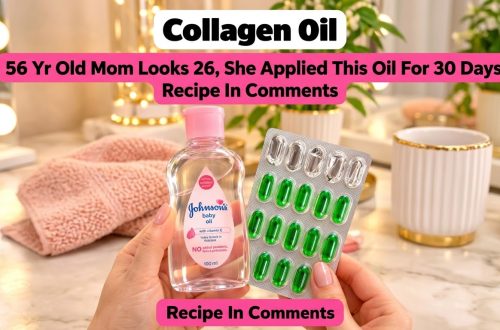
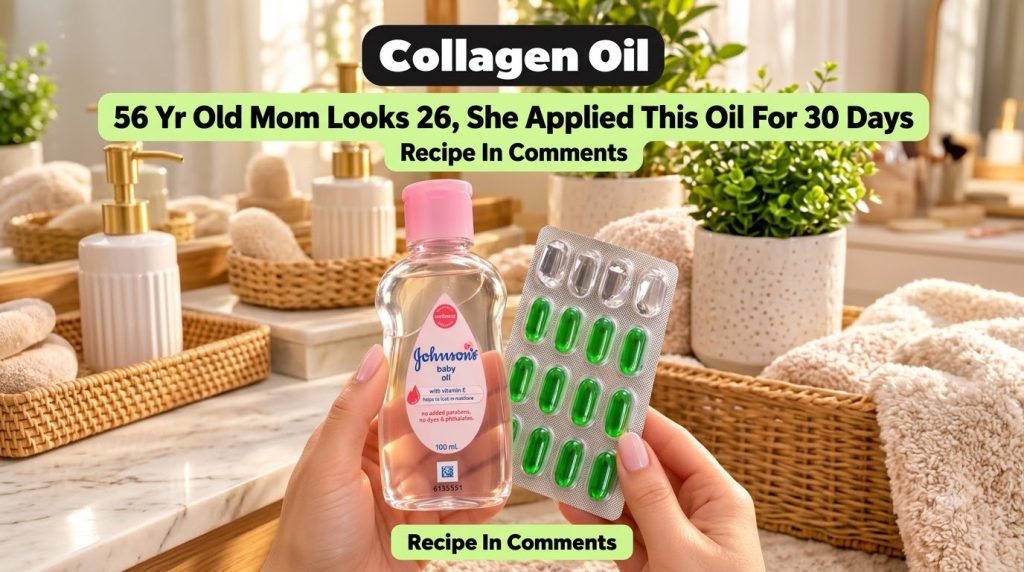
You’ve likely scrolled past it on social media: a captivating image of baby oil mixed with a vibrant green capsule, promising a magical elixir for youthful, glowing skin. This beauty hack, often dubbed ‘collagen oil,’ has caught the eye of many looking for simple, affordable anti-aging solutions. It looks glossy, feels luxurious, and seems almost too good to be true, right?
While the idea of transforming everyday products into a powerful skincare treatment is tempting, there’s one crucial detail we need to check before dropping that capsule into your baby oil: what exactly is inside that green capsule, and is it truly intended for use on your skin?
First, Identify the Green Capsule
The images often circulating show green softgel capsules, but they rarely provide enough readable product information to confirm their contents, concentration, or directions for use. A capsule’s color alone isn’t enough to identify what it contains or how it’s meant to be used. Without clear information, it’s impossible to know if it’s a vitamin, an herbal supplement, or something else entirely.
Before even considering any mixture for your skin, it is absolutely essential to check the original packaging of the capsule. Look for the product name, a complete list of ingredients, its strength, and most importantly, its intended use. Do not assume that a capsule designed to be swallowed as a dietary supplement is interchangeable with a topical skincare product. This distinction is vital for your skin’s safety and health.
Why the Distinction Matters for Your Skin
Cosmetic safety depends heavily on several factors: the specific ingredients used, their precise amounts or concentrations, and how the finished product is intended to be applied and used. Just because an ingredient is safe for consumption or present in a commercial topical product doesn’t automatically make it safe or effective when mixed at home and applied to the skin.
- Formulation Differences: Ingredients in supplements are formulated to be absorbed through the digestive system, not through the skin. They might be in a form or concentration that isn’t stable, absorbable, or even safe for direct skin application.
- Allergic Reactions & Irritation: Applying an unknown substance, or a substance in an inappropriate concentration, to your skin can lead to irritation, redness, allergic reactions, or breakouts. Your skin is your largest organ, and it deserves careful consideration.
- Effectiveness Concerns: Even if an ingredient is beneficial, it needs to be in a suitable vehicle (like a cream or serum) and a specific molecular size to penetrate the skin and deliver its intended benefits. Simply crushing a pill or dissolving a capsule might not achieve this, leading to disappointing results or potential harm.
The “Collagen Oil” Claim: What to Know
Many variations of this hack are promoted as ‘collagen oil.’ While collagen is indeed a vital protein for skin elasticity and youthfulness, the way it’s presented in this hack can be misleading. Ingested collagen supplements (like many green capsules containing collagen peptides) work by being broken down in the gut and then used by the body to support various tissues, including skin.
Topical collagen, on the other hand, typically consists of molecules that are too large to deeply penetrate the skin’s surface. Instead, it works wonders as a humectant, drawing moisture into the skin and creating a plumping effect that can temporarily reduce the appearance of fine lines and provide a smoother look. So, while a ‘collagen oil’ might offer some hydration, it’s unlikely to provide the same deep anti-aging benefits as collagen that’s properly absorbed and utilized by the body internally.
Build a Safer, Simpler Moisturizing Routine
You don’t need to guess about ingredients to achieve a healthy, moisturized glow. There are many tried-and-true natural ingredients and simple DIY methods that are known to be safe and effective for topical use:
- Pure Baby Oil (or Mineral Oil): If you love the feel of baby oil, use it directly! It’s an excellent occlusive moisturizer, meaning it creates a barrier on the skin to lock in existing moisture. Apply a thin layer to damp skin after showering for best results.
- Natural Oils: Consider other skin-friendly natural oils like almond oil, jojoba oil, or rosehip oil. These are rich in vitamins and antioxidants and are commonly used in skincare. Always do a patch test first!
- Vitamin E Oil: If you’re looking for the benefits of Vitamin E, many pure Vitamin E oils are available that are specifically formulated for topical application. These can be mixed with your favorite moisturizer or applied directly to target areas. Look for products designed for skin use.
- Homemade Moisturizers: Explore simple DIY creams using ingredients like shea butter, coconut oil (for body, not always face), and essential oils (diluted properly). Always ensure your ingredients are cosmetic grade and suitable for skin application.
Ultimately, the secret to radiant, healthy-looking skin lies in consistency and using products that are known to be safe and effective for topical application. Before trying any viral beauty hack, always pause, identify your ingredients, and ensure they are intended for skin use. Your skin will thank you for being an informed beauty enthusiast!