Chicken is a staple in many diets around the world, loved for its versatility, protein content, and relatively affordable price. From a quick weeknight meal to a celebratory feast, chicken can be prepared in countless ways. However, not all chicken preparations are created equal when it comes to their nutritional impact. Understanding the differences between raw, cooked, and processed forms of chicken is key to making informed choices for your health and wellness journey.
This guide will help you navigate the nutritional landscape of chicken, comparing raw, grilled, and fried options to highlight how preparation methods can significantly alter the calorie, protein, fat, and carbohydrate content.
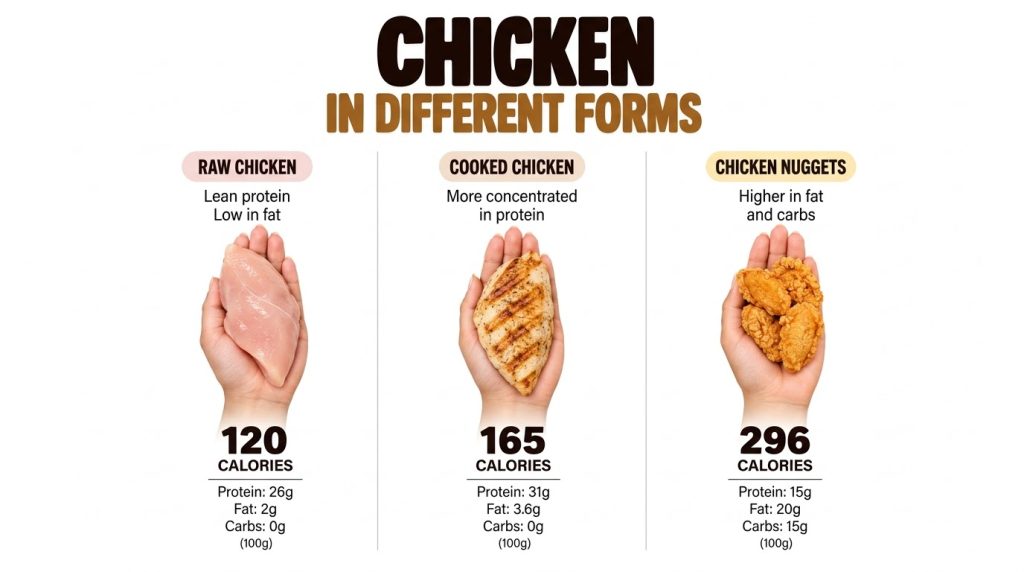
Understanding Chicken Nutrition: Raw, Cooked, and Fried Differences
At its core, raw chicken is a lean protein source. However, it’s crucial to remember that raw poultry should never be consumed due to the risk of bacterial contamination (like Salmonella or Campylobacter). The nutritional values discussed typically refer to its potential before any changes occur during cooking.
The Healthful Choice: Grilled Chicken
Grilled chicken is often lauded as one of the healthiest ways to consume this protein. When chicken is grilled, especially without excessive oil or skin, it retains much of its lean protein content while minimizing added fats. The cooking process often causes some fat to render and drip away, further reducing the overall fat content.
- Calories: Generally lower compared to fried options.
- Protein: High, as grilling preserves the protein effectively.
- Fat: Low, particularly if skinless chicken is used and minimal oil is added.
- Carbohydrates: Virtually none, as chicken itself does not contain carbohydrates.
Grilling is a simple method that can help support weight management and muscle maintenance due to its high protein and low fat profile. It’s an excellent choice for meal prep and everyday healthy eating.
The Indulgent Option: Fried Chicken and Nuggets
On the other end of the spectrum, fried chicken and chicken nuggets represent preparations that significantly alter the nutritional profile of the meat. The process of deep-frying involves submerging chicken in hot oil, often after it has been coated in breading or batter.
- Calories: Significantly higher due to the absorption of cooking oil and the addition of breading.
- Protein: While still present, the protein content per serving might be diluted by the added fats and carbohydrates from the breading.
- Fat: Much higher, primarily from the cooking oil. This often includes unhealthy trans fats or saturated fats depending on the oil used and reuse.
- Carbohydrates: Present due to the breading or batter, which is typically made from flour or starches.
While delicious, fried chicken and nuggets are generally associated with higher calorie intake, which may contribute to weight gain if consumed regularly. They also tend to be higher in sodium and unhealthy fats, which are important considerations for heart health.
Key Takeaways for Your Plate
Making informed choices about your chicken intake doesn’t mean you have to give up your favorite foods entirely. It’s about balance and understanding the impact of different cooking methods:
- Prioritize Lean Preparations: Opt for grilled, baked, roasted, or broiled chicken with minimal added fats and no skin whenever possible to maximize protein and minimize unhealthy fats.
- Watch Portion Sizes: Even healthy foods can contribute to excess calories if portion sizes are too large.
- Be Mindful of Additions: Sauces, marinades, and breadings can quickly add hidden sugars, sodium, and fats. Read labels and choose wisely.
- Cook at Home: Preparing chicken at home gives you full control over ingredients and cooking methods, allowing for healthier choices.
Choosing how you prepare your chicken can have a substantial effect on its nutritional value. By understanding these differences, you can better align your chicken consumption with your overall health and wellness goals.
Important Disclaimer
The information provided in this article is for educational and informational purposes only, and does not constitute medical advice. Always consult with a qualified healthcare professional before making any decisions about your diet or health. This content is not intended to diagnose, treat, cure, or prevent any disease.