Lemon isn’t just for lemonade or adding a zesty kick to your meals! This amazing fruit is a natural powerhouse for tackling those stubborn kitchen messes and bringing a sparkling shine to your countertops without relying on harsh chemicals. Imagine achieving a truly clean kitchen with ingredients you likely already have in your pantry. Who knew a simple lemon could do so much?
Why Lemon and Dish Soap Are Your Kitchen’s Best Friends
Before we dive into the ‘how-to,’ let’s understand the magic behind this dynamic duo. The combination of lemon juice and dish soap creates a formidable, yet gentle, cleaning agent perfect for a variety of kitchen challenges.
The Power of Lemon: Nature’s Degreaser and Freshener
Lemon juice is rich in citric acid, a natural alpha-hydroxy acid that acts as a powerful degreaser and mild disinfectant. Its acidic nature helps to break down grease, cut through grime, and dissolve mineral deposits, making it excellent for tackling tough stains. Beyond its cleaning prowess, lemon leaves behind a wonderfully fresh, natural scent that effectively neutralizes odors, leaving your kitchen smelling clean and vibrant, not chemically.
The Magic of Dish Soap: The Grease Fighter
Your everyday dish soap plays a crucial role by acting as a surfactant. Surfactants work by reducing the surface tension of water, allowing it to better penetrate and lift away dirt and grease. When combined with lemon’s acidity, dish soap’s ability to emulsify oils and grime is amplified, ensuring that grease and food residue are thoroughly lifted and rinsed away.
DIY Lemon & Dish Soap Cleaner: Your Step-by-Step Guide
Ready to create your own effective, eco-friendly kitchen cleaner? Here’s how to whip up a batch:
Ingredients & Tools You’ll Need:
- ½ cup fresh lemon juice (from about 2-3 lemons, or bottled)
- 1 tablespoon liquid dish soap (your preferred brand)
- 1 cup warm water
- A clean spray bottle (for general cleaning) or a small bowl (for concentrated scrubbing)
- A soft cloth or sponge
Instructions:
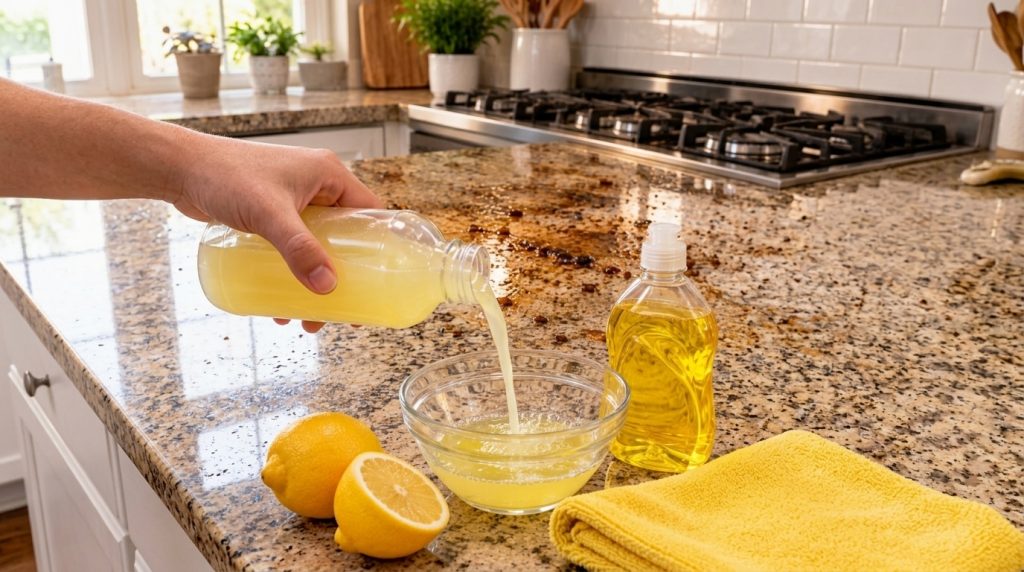
- Prepare Your Mixture: If using a spray bottle, combine the lemon juice, dish soap, and warm water directly in the bottle. Secure the cap and gently shake to mix. If preparing a concentrated scrub, simply combine the lemon juice and dish soap in a small bowl.
- Apply the Cleaner: For general cleaning, spray the solution directly onto the surface you wish to clean. For tougher spots, apply the concentrated mixture directly onto the stain.
- Let it Work: Allow the cleaner to sit for 5-10 minutes, especially on stubborn grease or dried-on food. This gives the lemon’s acid and the soap time to break down the grime.
- Scrub Away: Use a soft cloth or sponge to scrub the treated area. You’ll notice how easily the dirt and grease lift away.
- Wipe and Rinse: Wipe the surface clean with a damp cloth to remove any residue. For food-contact surfaces, a quick rinse with clean water is recommended.
- Buff for Shine: Finish by buffing with a dry, clean cloth to reveal a sparkling, streak-free shine.
Where to Use Your Lemon Fresh Cleaner
This versatile cleaner is ideal for many areas in your kitchen:
- Countertops: Perfect for laminate, tile, and sealed granite. It cuts through food stains and leaves a fresh scent.
- Sinks: Tackle water spots, grime, and soap scum in stainless steel or porcelain sinks.
- Stovetops: Effectively removes grease splatters and cooked-on food from glass-ceramic or gas stovetops.
- Cutting Boards: Use the concentrated scrub to clean and naturally deodorize wooden or plastic cutting boards.
- Microwave Interiors: Easily wipe away food splatters and unpleasant odors by spraying and wiping.
Tips for Best Results & Safety Notes
- Patch Test: Always test the cleaner on an inconspicuous spot first, especially on new or delicate surfaces, to ensure no discoloration or damage occurs.
- Avoid Marble and Unsealed Stone: Lemon juice is acidic and can etch or dull porous surfaces like unsealed marble, travertine, or other natural stone if left on for too long.
- Use Fresh or Bottled: Both fresh-squeezed and store-bought lemon juice work effectively.
- Storage: Store any leftover solution in a sealed spray bottle. While natural, it’s best to use it within a week or two for maximum potency.
By harnessing the simple power of lemon juice and dish soap, you can transform your kitchen cleaning routine into an eco-friendly, budget-friendly, and highly effective endeavor. Say goodbye to harsh chemicals and hello to a naturally sparkling, fresh-smelling home! Share your favorite lemon cleaning tip in the comments below!