Rusty garden tools are a common woe for any homeowner who loves to dig in the dirt. Pruning shears, trowels, and shovels often succumb to the elements, developing unsightly and performance-hindering rust. While chemical rust removers are an option, many of us prefer a more natural, budget-friendly approach. Good news: your kitchen pantry holds the secret to restoring your tools to their former glory! This simple hack using fresh lemon and coarse sea salt is an eco-friendly way to tackle rust and keep your gardening essentials in top shape.
The Science Behind the Shine: Why Lemon and Salt Work Wonders
This dynamic duo isn’t just for cooking; they’re a powerful cleaning team, especially against rust. Here’s how they tackle the tough stuff:
- Lemon (Citric Acid): Lemons are packed with citric acid, a natural, mild acid. When applied to rust (which is primarily iron oxide), the acid reacts with the iron oxides, helping to dissolve and loosen them from the metal surface.
- Coarse Sea Salt: The abrasive texture of coarse sea salt acts as a gentle yet effective scour. As you scrub, the salt granules physically lift away the rust particles that the lemon’s acid has started to break down. It’s like a natural sandpaper, but much kinder to your tools and the environment.
What You’ll Need
Gathering your supplies is easy – most of these are likely already in your home!
- 2-3 fresh lemons (or enough to cover the rusted areas)
- ½ cup coarse sea salt (or enough to create a paste/scrub)
- Stiff-bristled brush or an old toothbrush
- A small bucket or basin (optional, for soaking larger items)
- Clean cloths or old rags
- Protective gloves (recommended, especially if you have sensitive skin or cuts)
- Water for rinsing
- Mineral oil, tung oil, or a rust-preventative spray (for aftercare)
Step-by-Step Guide: Restoring Your Tools
Follow these simple steps to transform your rusty tools into gleaming, ready-to-use implements:
- Clean Off Loose Debris: Before you start, use a dry brush or cloth to wipe off any loose dirt, mud, or plant matter from your tools. This allows the lemon and salt to directly attack the rust.
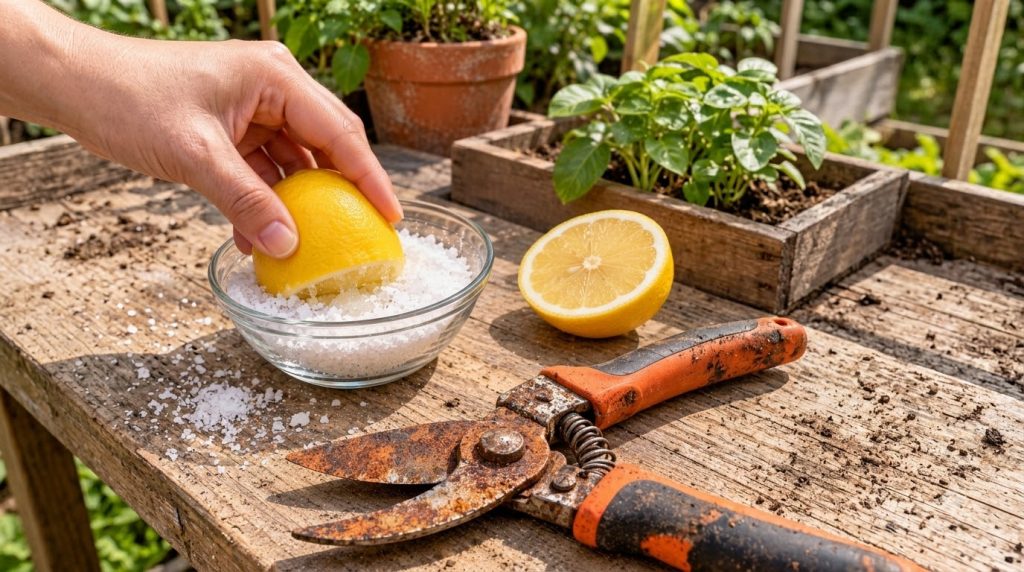
- Apply the Lemon and Salt: For smaller tools like pruning shears, slice a lemon in half. Sprinkle a generous amount of coarse sea salt onto the rusted areas. Then, use the cut lemon half as your applicator and scrubber. Press the lemon into the salt to pick up granules, then rub it vigorously over the rusty spots. The lemon juice will activate the salt and start the chemical reaction.
- For Larger Items (Optional Soaking): If you have larger rusted items, you can create a lemon-salt paste. Squeeze several lemons into a bowl, mix in the coarse salt to form a thick paste, and spread it liberally over the rust. For deeply rusted items, you might even consider soaking them in a bath of lemon juice overnight (ensure the metal is fully submerged and check for any adverse reactions on a small spot first).
- Let It Sit (and Do Its Job): Once applied, let the lemon and salt mixture sit on the rust for at least 15-30 minutes. For heavier rust, you can let it sit for a few hours. The longer contact time allows the citric acid to work its magic.
- Scrub Away the Rust: After the waiting period, use your stiff brush or old toothbrush to vigorously scrub the treated areas. You’ll notice the rust starting to lift and flake away. Reapply more lemon and salt as needed and continue scrubbing until the rust is gone or significantly reduced.
- Rinse Thoroughly: Rinse your tools under running water, ensuring all traces of lemon juice and salt are removed. This is crucial because lingering salt can attract moisture and lead to new rust, and acid can continue to corrode.
- Dry Completely: Immediately after rinsing, dry your tools thoroughly with a clean cloth. Any remaining moisture is an open invitation for rust to return.
- Protect Your Investment: Once completely dry, apply a thin layer of mineral oil, tung oil, or a rust-preventative spray to the metal parts of your tools. This creates a protective barrier against moisture and future rust.
Tips for Best Results & Tool Longevity
- Use Coarse Salt: Fine salt might dissolve too quickly and won’t provide the necessary abrasive power.
- Don’t Forget the Details: Use an old toothbrush to get into tight spots and hinges on shears.
- Regular Maintenance is Key: Cleaning your tools after each use, drying them, and applying a light coat of oil will prevent severe rust buildup in the first place.
- Proper Storage: Store your garden tools in a dry, covered area, away from humidity and direct exposure to rain or dew.
Beyond Garden Tools
This lemon and salt hack isn’t just for garden tools! You can also use it to safely remove rust from:
- Small metal kitchen utensils (test on an inconspicuous area first)
- Camping gear
- Old metal hardware (screws, bolts)
Always test on a small, hidden area first, especially with plated or delicate metals, to ensure no discoloration or damage occurs.
Safety First
While lemon and salt are natural, it’s always wise to take a few precautions:
- Wear Gloves: Lemon juice can be irritating to cuts or sensitive skin, and salt can be abrasive.
- Eye Protection: If you’re scrubbing vigorously, there’s a small chance of splash-back.
- Ventilation: While not producing harsh fumes, working in a well-ventilated area is always good practice.
Ready to Get Your Tools Gleaming?
Say goodbye to those rusty garden tools and hello to a shining, efficient set with this simple, natural, and effective lemon and salt hack. Not only is it kind to your wallet, but it’s also gentle on the environment. Give it a try and see the amazing results for yourself. Your garden (and your hands) will thank you for it!