Are your herb plants looking a little leggy or sparse? Do you dream of abundant, fragrant harvests right from your garden or windowsill? The secret to achieving lush, healthy, and productive herb plants often lies in one simple yet powerful technique: pruning! While it might feel counterintuitive to snip away parts of your beloved plants, strategic pruning is essential for encouraging bushier growth, preventing premature flowering, and extending your harvesting season. Today, we’re diving deep into the art of pruning two popular kitchen staples: Basil and Rosemary.
Understanding how and when to prune these herbs will transform your gardening experience and yield a bounty of fresh flavors for your culinary creations. Let’s get started!
Why Prune Your Herbs? The Benefits Are Abundant!
Pruning isn’t just about shaping your plants; it’s a vital practice that promotes the overall health and vigor of your herbs. Here’s why you should embrace it:
- Encourages Bushier Growth: When you snip off the top growth, the plant redirects its energy to produce new side shoots, resulting in a fuller, more compact plant.
- Increases Yield: More side shoots mean more leaves, leading to a more generous harvest.
- Prevents Bolting (Premature Flowering): For herbs like Basil, flowering signals the end of its leafy production phase, often making the leaves bitter. Pruning helps delay this process.
- Improves Air Circulation: Removing dense foliage can improve airflow, reducing the risk of fungal diseases.
- Rejuvenates Older Plants: Regular pruning can revitalize tired plants, encouraging new growth.
Pruning Basil: The Key to Continuous Harvests
Basil is a fast-growing, tender herb that absolutely thrives with consistent pruning. Without it, basil plants tend to shoot up a single tall stem, flower quickly, and then diminish in leaf production.
When to Prune Basil:
- Start pruning when your basil plant has at least two sets of true leaves (not the tiny starter leaves).
- Continue pruning regularly, about once a week or every two weeks, throughout the growing season.
How to Prune Basil:
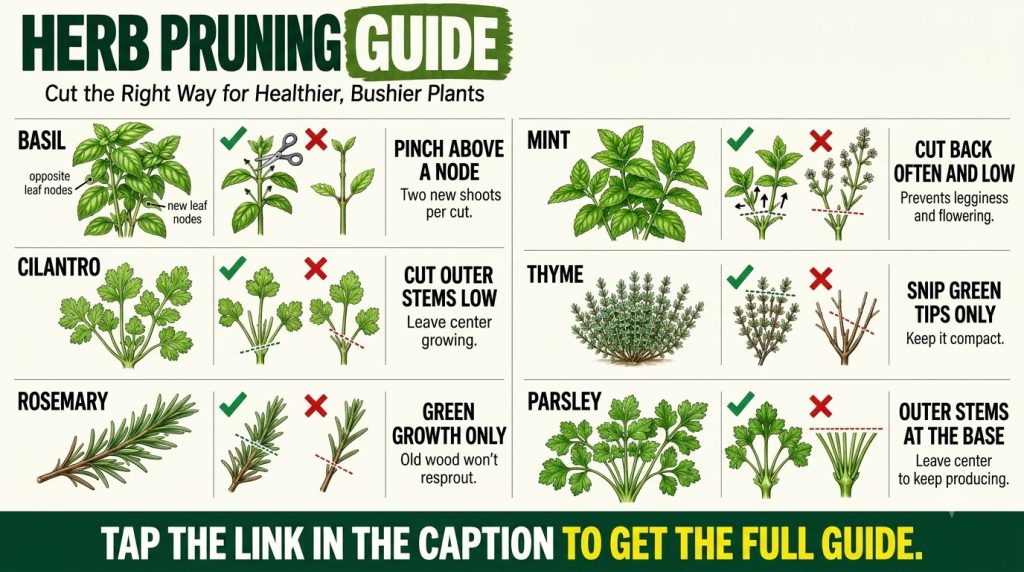
- Locate a Node: Look for the point where two new leaves or branches are emerging from the main stem. This is called a node.
- Snip Above the Node: Using clean scissors or your fingertips, pinch or snip off the main stem just above a set of healthy leaves (a node). Aim to remove about one-third of the plant’s height at a time.
- Focus on Top Growth: Always remove the top growth, especially any flower buds that start to form. This sends a signal to the plant to grow outwards instead of upwards.
- Harvest as You Prune: When you need basil for cooking, simply prune off the tops you’re going to use! This acts as regular maintenance.
Pruning Rosemary: Encouraging Woodiness and Fragrance
Rosemary is a woody herb that can grow quite large if left untamed. Proper pruning not only keeps it in shape but also encourages a healthier, more aromatic plant.
When to Prune Rosemary:
- The best time to prune rosemary is after it finishes flowering in late spring or early summer.
- You can also do light pruning throughout the year to shape the plant or harvest sprigs.
- Avoid heavy pruning in late autumn or winter in cold climates, as new growth might be damaged by frost.
How to Prune Rosemary:
- Light Pruning (Harvesting): For daily use, simply snip off individual sprigs from anywhere on the plant. Try to choose sprigs that are not too woody.
- Shaping and Encouraging Bushiness: For more significant pruning, use sharp pruners to cut back stems by about one-third of their length. Always cut just above a leaf node or a junction with another branch.
- Avoid Cutting into Old Wood: Unlike basil, rosemary doesn’t readily regrow from old, woody stems that have no leaves. Try to avoid cutting back into wood that doesn’t have any green growth, as this can stunt the plant.
- Maintain Airflow: Remove any dead or diseased branches, and thin out overcrowded areas, especially in the center of the plant, to improve air circulation.
General Tips for Herb Pruning
- Use Clean Tools: Always use sharp, clean scissors or pruning shears to make clean cuts and prevent the spread of diseases.
- Don’t Over-Prune: While pruning is beneficial, don’t remove more than one-third of the plant’s total foliage at once.
- Water After Pruning: A good drink of water after pruning can help your plants recover and encourage new growth.
- Compost or Use Cuttings: Don’t let your trimmings go to waste! Use them in cooking, dry them for later, or even propagate new plants from the cuttings.
By incorporating these simple pruning techniques into your gardening routine, you’ll soon be enjoying a bountiful supply of healthy, fragrant basil and rosemary. Happy gardening!