Do you love the satisfaction of growing your own herbs and flowers? What if you could extend that joy, season after season, without constantly buying new seeds? Welcome to the wonderful world of seed saving! It’s an ancient practice that’s not only incredibly rewarding but also a fantastic way to practice sustainable gardening and deepen your connection with nature.
Imagine enjoying fresh basil all summer long, then collecting its tiny seeds to plant again next year! Or marveling at vibrant calendula blooms, knowing you hold the promise of future flowers in your hands. Seed saving empowers you to cultivate your favorite varieties, adapt plants to your unique garden conditions, and even share your bounty with fellow gardening enthusiasts.
Why Save Your Own Seeds?
- Cost-Effective: Save money by not having to purchase new seeds every season.
- Sustainable: Reduce waste and promote biodiversity by keeping open-pollinated varieties alive.
- Adaptation: Over time, seeds saved from your garden will produce plants better suited to your local climate and soil.
- Connection: Experience the full life cycle of your plants and feel a deeper bond with your garden.
- Community: Share your saved seeds with friends and family, fostering a vibrant gardening community.
General Steps for Successful Seed Saving
1. Choose the Right Plants
For beginners, focus on open-pollinated (non-hybrid) varieties. Hybrid seeds (often labeled F1) may not grow true to the parent plant, giving unpredictable results. Most common herbs and many beloved flowers are excellent candidates for seed saving.
2. Know When to Collect
Timing is crucial! Seeds need to fully mature and dry on the plant before collection. This usually means waiting until the seed pods or heads turn brown, dry, and brittle. For many herbs, the flowers will have faded, and small seeds will be visible or easily dislodged.
3. The Collection Process
- For pods/heads: Once dry, gently snip off the seed pods or flower heads. Place them in a paper bag or on a tray to further dry.
- For individual seeds: Some plants, like calendula, have easily picked individual seeds. Others, like basil, require gentle tapping or shaking dried flower stalks over a container or piece of paper.
4. Drying Your Seeds Thoroughly
This is perhaps the most critical step to prevent mold and ensure viability. Spread your collected seeds in a single layer on a screen, paper plate, or coffee filter in a cool, dry, well-ventilated area away from direct sunlight. Allow them to dry for several days to a few weeks, depending on the seed type and humidity. They should be completely dry and brittle before storage.
5. Proper Storage
Once completely dry, store your seeds in airtight containers (glass jars, small envelopes, or Ziploc bags) in a cool, dark, and dry place. Label them clearly with the plant name and the date of collection. A refrigerator or freezer can extend seed viability significantly for many types.
Specific Tips for Herbs and Flowers from Our Guide
Basil
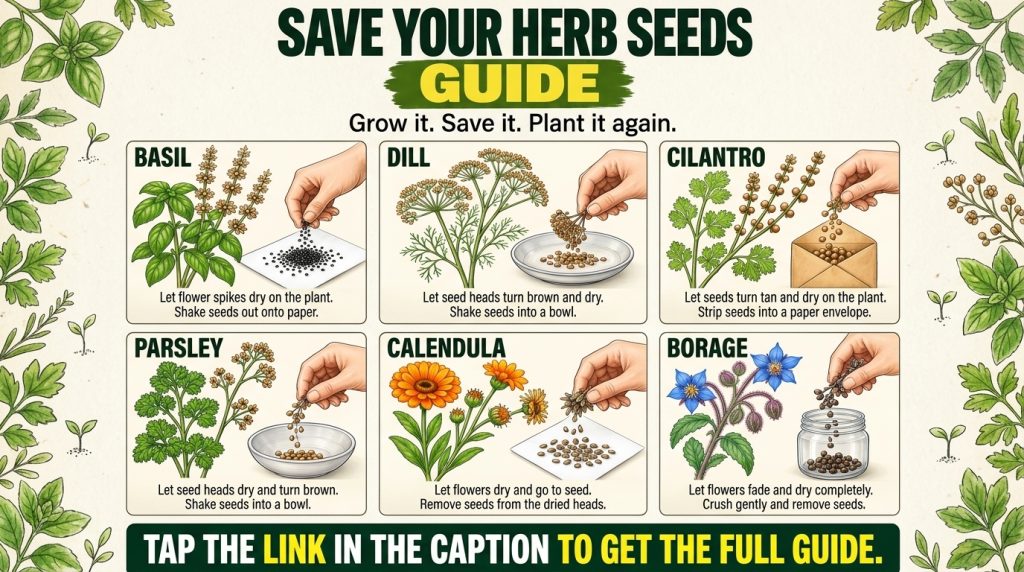
Allow basil plants to flower and let the flower stalks dry completely on the plant until they turn brown and brittle. Gently rub the dried flower heads between your fingers over a bowl or paper to release the tiny black seeds.
Dill & Cilantro (Coriander)
These members of the carrot family produce umbrella-like flower heads. Let the entire seed head dry on the plant until it turns brown and the seeds are firm and easily detached. Snip the heads and gently shake or rub the seeds into a container.
Parsley
Parsley, like its relatives, needs to be left to flower and set seed. The seed heads will dry and turn brown. Harvest these dried heads and separate the small, ribbed seeds.
Calendula
Wait for the calendula flowers to fade and the seed heads to become dry and crisp. The seeds are crescent-shaped and quite distinctive. You can easily pick them directly from the dried flower head.
Borage
Borage flowers will drop their small, dark seeds as they mature. You can either gently shake the plant over a clean sheet to catch the falling seeds or carefully pick them from the dried flower clusters.
Start Your Seed Saving Journey Today!
Seed saving is a simple yet profound way to engage with your garden and ensure a bountiful future. It takes a little patience and observation, but the rewards are immense. You’ll gain a deeper understanding of your plants’ life cycles and enjoy the satisfaction of knowing you’re growing a truly sustainable garden. So, next time your favorite herb or flower starts to fade, consider letting it go to seed. You might just start a beautiful new tradition!
Do you have any favorite seeds you love to save? Share your tips and experiences with us in the comments below!