Your kitchen range hood works hard to keep your air clean, silently trapping steam, smoke, and, most notably, grease. Over time, those filters can become clogged with a sticky, grimy buildup that not only looks unpleasant but also makes your hood less effective. If you’ve noticed a lingering cooking odor or simply want a fresher kitchen, it’s time to give those filters a deep clean.
This simple DIY method uses common household ingredients to cut through even the toughest grease, helping to restore your filters and improve your kitchen’s air quality. It’s an affordable and satisfying way to tackle a notoriously tricky cleaning task.
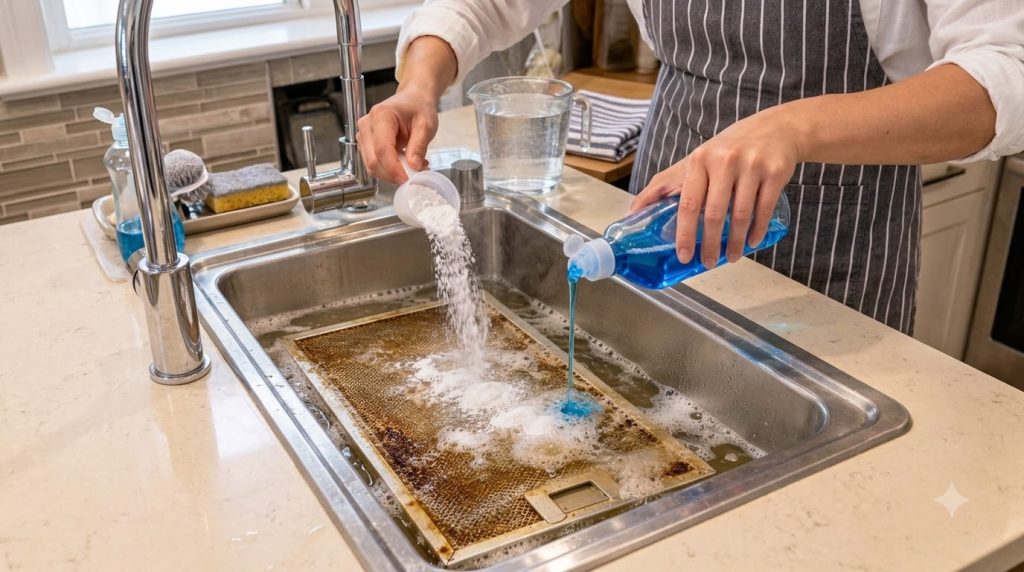
What You’ll Need
- 1/2 to 1 cup baking soda
- 1/4 cup grease-cutting dishwashing liquid (blue liquid shown)
- Plenty of very hot water
- Large sink or tub (big enough to submerge your filter)
- Stiff brush or heavy-duty sponge (with a scrubber side)
- Rubber gloves (optional, but recommended for hot water and grease)
Why This DIY Can Be Useful
This cleaning combination is effective because of the unique properties of its ingredients. Baking soda, a mild abrasive and alkaline compound, helps to break down acidic grease and neutralize odors. Its fine颗粒 can also gently scrub away grime without damaging the filter mesh. Dishwashing liquid, on the other hand, is specifically formulated to emulsify fats and oils, allowing them to mix with water and be rinsed away. Together, they create a powerful degreasing solution that tackles stubborn kitchen buildup.
How to Make It
- Carefully remove your range hood filters. Most filters have a latch or clip that allows them to be easily detached.
- Place the dirty filters into a large sink or tub. Make sure your sink is clean before you start.
- Sprinkle the baking soda generously over the filters, aiming for an even coating.
- Add several generous squirts of your grease-cutting dish soap directly onto the filters.
- Fill the sink or tub with very hot water, ensuring the filters are completely submerged. The hotter the water, the better it will help dissolve the grease.
How to Use It
- Allow the filters to soak in the hot, soapy baking soda solution for at least 30 minutes to an hour. For extremely greasy filters, you might let them soak for a few hours.
- As they soak, the water will likely become cloudy and discolored as the grease breaks down.
- Once soaked, put on your rubber gloves if using, and take a filter out. Using your stiff brush or heavy-duty sponge, gently scrub both sides of the filter, paying extra attention to any remaining sticky spots.
- Rinse each filter thoroughly under hot running water until all soap residue and loosened grease are gone.
- Shake off any excess water and allow the filters to air dry completely before placing them back into your range hood.
What to Expect
You can expect your range hood filters to be significantly cleaner, with much of the accumulated grease and grime removed. While heavily stained or aged filters may not look brand new, they will function much more efficiently, improving air circulation and odor removal in your kitchen. The result will be a noticeably fresher kitchen environment and a more effective range hood.
Helpful Tips
- For best results, clean your range hood filters every 1-3 months, depending on how frequently you cook greasy foods. Regular cleaning prevents extreme buildup.
- Before soaking, you can use a paper towel to wipe off any loose, excess grease from the filters to make the soaking solution last longer.
- If you don’t have a large enough sink, a utility tub or even your bathtub can work, just be sure to clean it thoroughly afterward.
- Always ensure filters are completely dry before putting them back to prevent rust or moisture-related issues.
Important Notes / Safety
- Always use rubber gloves when handling very hot water and cleaning solutions, especially when dealing with old grease, to protect your skin.
- Ensure good ventilation in your kitchen, especially if the hot water creates a lot of steam.
- Be careful when handling hot filters as they can retain heat.
- Never put wet filters back into the range hood; always allow them to dry completely to prevent electrical hazards and mold growth.