When it comes to healthy eating, choosing the right vegetables can make a big difference. Broccoli and green beans are two popular choices, often found on dinner plates and in healthy recipes. Both are packed with nutrients, but do you know which one offers a bigger nutritional punch?
In this article, we’ll dive deep into a head-to-head comparison of boiled broccoli and green beans. We’ll explore their nutritional values, key vitamins, and minerals, and discuss which might be better suited for different dietary goals. By the end, you’ll have all the information you need to make informed choices for a healthier diet.
Broccoli vs. Green Beans: A Nutritional Overview
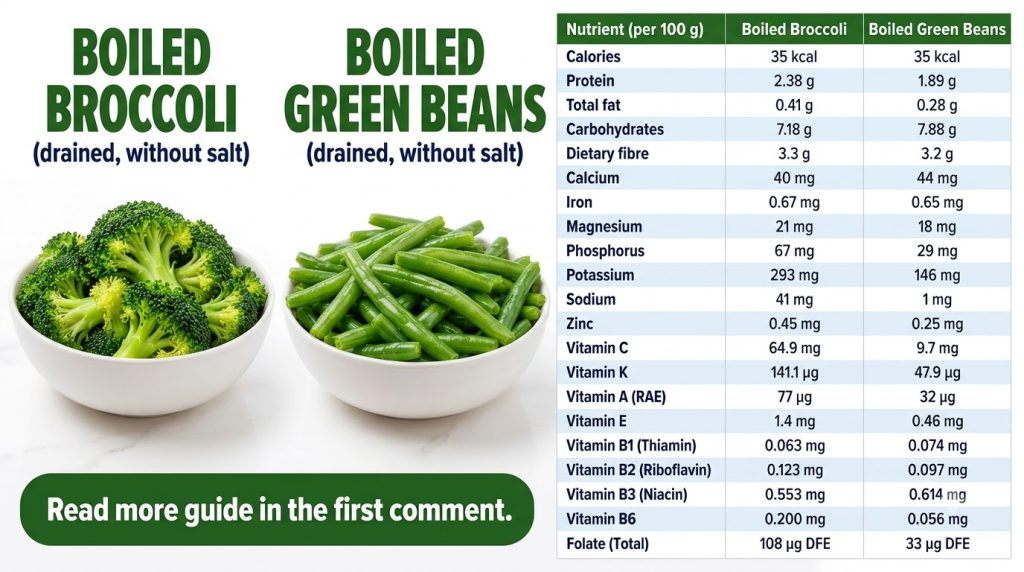
Let’s start with a direct comparison of their nutritional content. The values below are approximate for 100 grams of boiled, drained vegetables without added salt.
Nutrition Comparison Table (per 100g, boiled)
| Nutrient | Boiled Broccoli | Boiled Green Beans |
|---|---|---|
| Calories | 35 kcal | 31 kcal |
| Protein | 2.4 g | 1.8 g |
| Carbohydrates | 7.2 g | 7.0 g |
| Fiber | 3.3 g | 3.2 g |
| Fat | 0.4 g | 0.2 g |
| Vitamin C | 65 mg (72% DV) | 9.7 mg (11% DV) |
| Vitamin K | 102 mcg (85% DV) | 14.4 mcg (12% DV) |
| Folate | 108 mcg (27% DV) | 33 mcg (8% DV) |
| Potassium | 293 mg (6% DV) | 182 mg (4% DV) |
| Manganese | 0.2 mg (9% DV) | 0.1 mg (4% DV) |
Diving Deeper: Key Nutrient Differences
While both vegetables are healthy, their nutrient profiles highlight some distinct strengths.
Calories
Both broccoli and green beans are low in calories, making them excellent choices for weight management or simply adding volume to your meals without excess energy. Green beans are slightly lower in calories per 100 grams, but the difference is minimal.
Protein
Broccoli offers a bit more protein than green beans. While not a primary protein source, every gram adds up, especially for those focusing on plant-based protein intake.
Fat
Both vegetables are very low in fat, with green beans having a slightly lower content. This makes them ideal for heart-healthy diets.
Carbs & Fiber
Their carbohydrate content is quite similar. Both are rich in dietary fiber, which is crucial for digestive health, blood sugar control, and feeling full longer. The fiber content in both is very impressive.
Vitamins
- Vitamin C: Broccoli is a powerhouse of Vitamin C, providing a significant portion of your daily needs in just 100 grams. Vitamin C is essential for immune function and skin health.
- Vitamin K: Broccoli also stands out for its high Vitamin K content, vital for blood clotting and bone health. Green beans contain Vitamin K but in much smaller amounts.
- Folate: Broccoli is a much better source of folate (Vitamin B9), which is important for cell growth and function, especially during pregnancy.
- Vitamin A: While not as high as some other vegetables, green beans do contain some Vitamin A in the form of beta-carotene, which is good for vision and immune health.
Minerals
- Potassium: Both vegetables offer potassium, an electrolyte important for blood pressure regulation and nerve function. Broccoli provides a bit more.
- Manganese: Both contain manganese, a trace mineral involved in bone development and metabolism. Again, broccoli has a slight edge.
Taste & Texture
Beyond nutrition, taste and texture often play a role in our food choices.
- Broccoli: Known for its slightly bitter, earthy flavor and tender-crisp florets. It holds up well to various cooking methods and seasonings.
- Green Beans: Have a milder, slightly sweet flavor and a firmer, snappier texture. They are versatile and can be enjoyed raw, steamed, or sautéed.
Best For Different Dietary Needs
- Immune Support: Choose broccoli for its high Vitamin C content.
- Bone Health: Broccoli’s abundant Vitamin K makes it excellent for bone support.
- Digestive Health: Both are great sources of fiber, supporting a healthy gut.
- Weight Management: Both are low in calories and high in fiber, aiding satiety.
- Pregnancy: Broccoli’s higher folate content can be beneficial.
And the “Winner” Is…
There’s no single “winner” here, as both broccoli and green beans are incredibly healthy and deserve a spot on your plate! However, if we look purely at micronutrient density, broccoli generally offers a higher concentration of key vitamins like C, K, and folate per serving.
Green beans, while slightly lower in some vitamins, are still a fantastic source of fiber and essential minerals, and often preferred for their milder taste and versatile texture. The best approach is to enjoy both regularly to get a wide array of nutrients!
Practical Tips for Enjoying Both
- Steam or Roast: These methods retain more nutrients than boiling. If boiling, use minimal water for a short time.
- Add Healthy Fats: Drizzle with olive oil after cooking to enhance nutrient absorption of fat-soluble vitamins (like Vitamin K).
- Season Simply: A pinch of salt, a squeeze of lemon, or a sprinkle of garlic powder can elevate their natural flavors.
- Mix Them Up: Combine them in stir-fries, salads, or side dishes for a diverse nutrient boost.
- Batch Cook: Prepare a larger batch of steamed or roasted veggies at the beginning of the week for quick additions to meals.
FAQs
Are green beans considered a “superfood” like broccoli?
While broccoli is often lauded as a superfood due to its high antioxidant and vitamin content, green beans are also incredibly nutritious and contribute significantly to a healthy diet. They both deserve recognition!
Can I eat broccoli and green beans raw?
Green beans can be eaten raw in moderation, often added to salads for crunch. Broccoli florets can also be eaten raw, but some people find them easier to digest when lightly cooked.
Do cooking methods affect their nutritional value?
Yes, cooking methods can impact nutrient retention. Steaming and stir-frying are generally preferred over prolonged boiling, which can leach out water-soluble vitamins like Vitamin C and some B vitamins.
Which one is better for weight loss?
Both are excellent for weight loss due to their low calorie count and high fiber content, which helps promote fullness. The best choice depends on your personal preference and what you’ll enjoy eating consistently.
Are canned or frozen versions as nutritious?
Frozen broccoli and green beans are often just as nutritious, if not more so, than fresh ones, as they are typically frozen at peak ripeness. Canned vegetables can be healthy but often contain added sodium; rinsing them can help reduce this.
Can I substitute one for the other in recipes?
Yes, in many dishes, you can swap broccoli for green beans or vice versa, especially in stir-fries, casseroles, or as a simple side dish. Consider their slight differences in flavor and texture when making a substitution.
Conclusion
Both boiled broccoli and green beans are fantastic additions to a healthy diet, each bringing unique nutritional benefits to the table. Broccoli shines with higher amounts of Vitamin C, Vitamin K, and folate, while green beans offer a slightly lower calorie count and a different texture. Instead of choosing just one, aim to incorporate both into your meals to enjoy a broader spectrum of essential vitamins, minerals, and fiber. Your body will thank you for the diverse nutrition!
This content is for educational purposes only and should not be considered medical advice. Consult a qualified healthcare professional for personalized dietary recommendations.
Explore more healthy food content:
- Healthy Green Smoothie Recipes
- Top 10 High-Fiber Foods for Digestion
- Best Anti-Inflammatory Foods to Add to Your Diet
- Smart Grocery Shopping for Healthy Eating