Unlock Nature’s Tiny Treasures: Your Guide to Seed Superpowers!
In the vast world of healthy eating, it’s easy to overlook the small yet incredibly potent powerhouses known as seeds. While they may be tiny, these natural treasures are packed with an impressive array of nutrients that can significantly boost your daily wellness. From essential minerals to healthy fats and fiber, incorporating a variety of seeds into your diet is a simple yet effective way to enhance your nutritional intake.
Why Seeds Are Nutritional Powerhouses
Seeds are essentially the embryonic stage of a plant, containing all the concentrated nutrients needed to grow into a fully developed plant. This makes them incredibly nutrient-dense, offering a powerful combination of:
- Healthy Fats: Many seeds are excellent sources of monounsaturated and polyunsaturated fats, including omega-3 fatty acids, which are crucial for heart health and reducing inflammation.
- Fiber: High fiber content supports digestive health, helps regulate blood sugar levels, and can contribute to a feeling of fullness, aiding in weight management.
- Protein: Seeds provide a good plant-based source of protein, essential for muscle repair, growth, and overall body function.
- Vitamins and Minerals: They are rich in various vitamins like B vitamins and Vitamin E, and minerals such as magnesium, zinc, iron, calcium, and selenium.
- Antioxidants: Seeds contain antioxidants that help protect your cells from damage caused by free radicals.
Meet Your Seed Superheroes: Key Nutritional Benefits
While all seeds offer health benefits, each type brings its unique nutritional profile to the table. Let’s explore some of the most popular:
Flaxseeds: The Omega-3 Champions
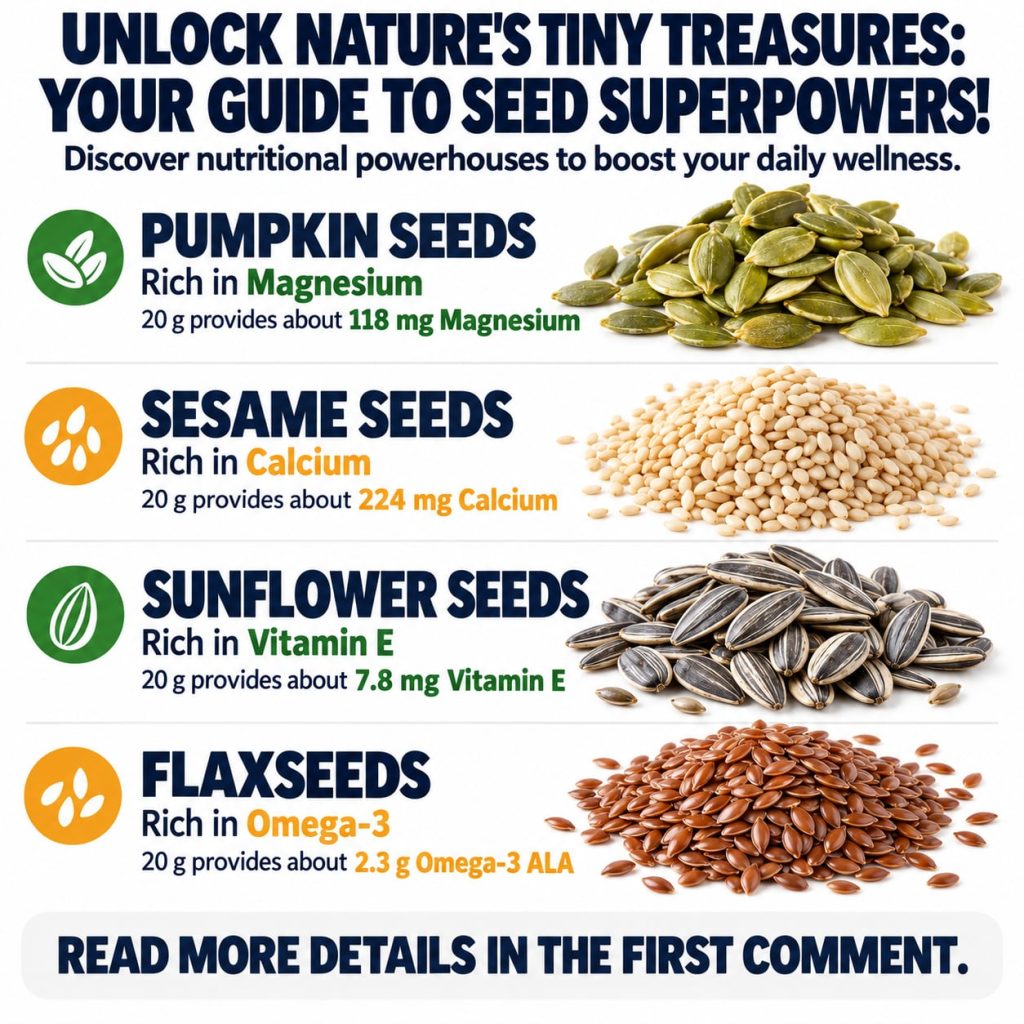
Flaxseeds are perhaps best known for their high content of alpha-linolenic acid (ALA), a plant-based omega-3 fatty acid. They are also an excellent source of dietary fiber and lignans, which are plant compounds with antioxidant properties. Research suggests flaxseeds may help support heart health and digestion.
Chia Seeds: Tiny Gels, Big Nutrients
These tiny seeds have an impressive ability to absorb liquid and form a gel, making them versatile for cooking. Chia seeds are a complete protein, meaning they contain all nine essential amino acids. They are also rich in fiber, omega-3s, calcium, magnesium, and phosphorus, all of which are important for bone health and energy.
Pumpkin Seeds: Magnesium & Zinc Stars
Often enjoyed roasted, pumpkin seeds are a fantastic source of magnesium, a mineral vital for over 300 bodily functions, including muscle and nerve function, blood glucose control, and blood pressure regulation. They also provide zinc, essential for immune function and wound healing, along with beneficial antioxidants.
Sunflower Seeds: Vitamin E & Selenium Boost
Crunchy and satisfying, sunflower seeds are an excellent source of Vitamin E, a powerful antioxidant that helps protect cells from damage. They also provide selenium, which plays a role in thyroid function and immune health, and a good amount of healthy fats and protein.
Sesame Seeds: Calcium & Iron Rich
These small, flavorful seeds are a great source of calcium, important for strong bones, especially for those following a dairy-free diet. They also offer iron, essential for oxygen transport in the blood, and healthy fats, fiber, and protein. Tahini, a paste made from ground sesame seeds, is another delicious way to incorporate them.
Easy Ways to Incorporate Seeds into Your Daily Diet
Adding seeds to your meals doesn’t require complex recipes. Here are some simple ideas:
- Smoothie Boost: Blend a tablespoon or two of flaxseeds, chia seeds, or hemp seeds into your morning smoothie for an extra dose of fiber and omega-3s.
- Yogurt and Oatmeal Topping: Sprinkle a mix of seeds over your yogurt, oatmeal, or cereal.
- Salad Enhancer: Add pumpkin, sunflower, or sesame seeds to your salads for a satisfying crunch and added nutrients.
- Baking Ingredient: Incorporate seeds into homemade bread, muffins, energy bars, or cookies.
- Crusted Coatings: Use crushed seeds (like sesame or flax) as a coating for chicken, fish, or tofu before baking or pan-frying.
- Homemade Dressings: Blend seeds into salad dressings for added texture and nutrition.
- Snack Time: Enjoy a small handful of mixed seeds as a nutritious snack on their own.
Important Considerations
While seeds offer many benefits, it’s important to consume them in moderation as part of a balanced diet, as they are calorie-dense. Also, remember that whole flaxseeds may pass through the digestive system undigested, so grinding them (or buying them pre-ground) can help your body absorb their nutrients more effectively.
Disclaimer: This article is intended for educational purposes only and is not a substitute for professional medical advice, diagnosis, or treatment. Always seek the advice of your physician or other qualified health provider with any questions you may have regarding a medical condition.
Conclusion
Seeds are truly nature’s tiny treasures, offering a wealth of nutrients in a small package. By making them a regular part of your diet, you can easily boost your intake of essential vitamins, minerals, healthy fats, and fiber, supporting your overall health and well-being. Start experimenting with different types of seeds today and unlock their superpowers for a healthier you!