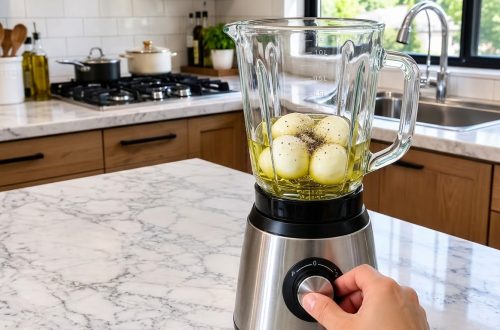
Homemade Mayonnaise Magic: Easy Blender Recipe
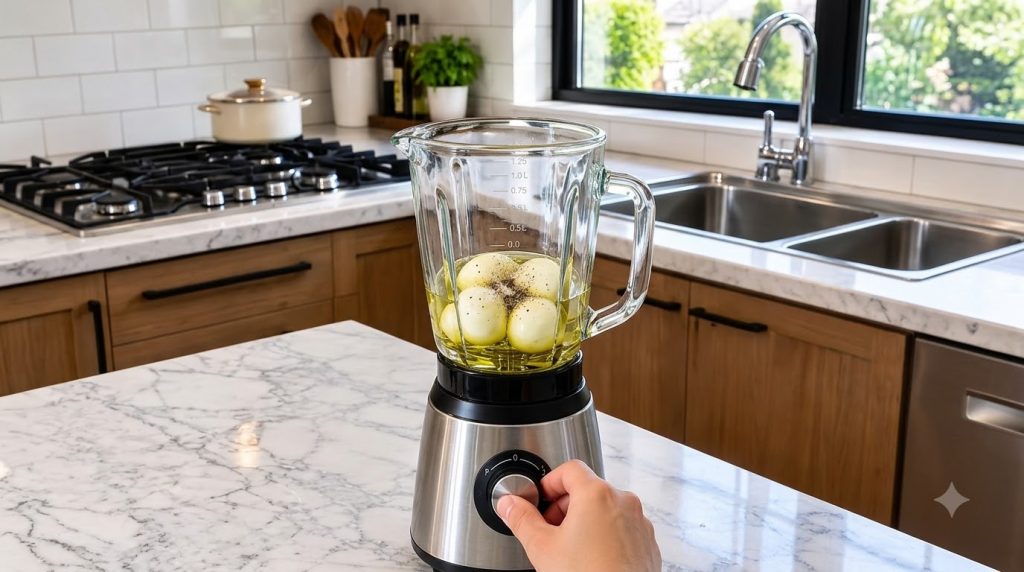
There’s nothing quite like the fresh, vibrant taste of homemade mayonnaise. Forget store-bought versions filled with preservatives and unwanted additives; crafting your own mayonnaise at home is surprisingly simple, especially with the help of a blender. This recipe transforms a few basic ingredients into a rich, creamy condiment that will elevate everything from sandwiches to salads.
This homemade mayonnaise offers a pure, delicate flavor and a velvety smooth texture that’s far superior to anything you’ll find in a jar. It’s perfect as a base for flavorful aiolis, a creamy binder for potato or chicken salad, or simply as a dipping sauce for crispy fries. Get ready to experience the magic of real, fresh mayonnaise!
Why You’ll Love This Homemade Mayonnaise Recipe
- Surprisingly Easy: With a blender, making mayonnaise from scratch is much simpler than you might think.
- Simple Ingredients: You likely already have the core ingredients in your pantry.
- Superior Flavor & Texture: Enjoy a fresh, creamy taste and smooth consistency that store-bought can’t match.
- No Preservatives: Control exactly what goes into your food for a healthier option.
- Customizable: Easily adapt the flavor with herbs, spices, or different oils.
- Quick to Make: From start to finish, you can have a batch ready in under 10 minutes.
Ingredients for Homemade Mayonnaise
Gather these simple ingredients to create your own fresh mayonnaise:
- 4 large eggs, whole
- 3 cups (710 ml) light-flavored olive oil, such as light or extra light virgin olive oil, or a neutral oil like grapeseed or canola
- 1 teaspoon (5 g) fine sea salt
- 1/2 teaspoon (1 g) freshly ground black pepper
Ingredient Notes
- Eggs: Using whole eggs provides a rich, creamy consistency. For best emulsification, ensure your eggs are at room temperature. Cold eggs are more likely to cause your mayonnaise to break.
- Olive Oil: While the recipe specifies olive oil, using a light or extra light virgin olive oil is recommended for a milder flavor. Regular extra virgin olive oil can sometimes impart a strong, bitter taste to mayonnaise. Alternatively, a neutral oil like grapeseed, avocado, or canola oil works wonderfully for a very clean flavor profile.
- Salt & Pepper: Fine sea salt dissolves easily and seasons evenly. Freshly ground black pepper adds a lovely subtle kick. Adjust amounts to your preference.
- Optional Acid & Emulsifier: Traditionally, mayonnaise recipes include an acid like fresh lemon juice or white vinegar, and often a teaspoon of Dijon mustard. These ingredients significantly enhance flavor, add a necessary tang, and help stabilize the emulsion. While not in the original ingredient list provided, for a more stable and flavorful mayonnaise, consider adding 2 tablespoons (30 ml) of lemon juice or vinegar and 1 teaspoon (5 g) of Dijon mustard to the eggs before blending.
Equipment You’ll Need
- High-speed blender or immersion blender
- Measuring cups and spoons
- Rubber spatula (for scraping down sides)
- Airtight container for storage
How to Make Homemade Mayonnaise
Follow these steps to create your perfectly emulsified mayonnaise:
-
Prepare Your Ingredients
Ensure your eggs are at room temperature. This is crucial for proper emulsification. Carefully crack the 4 whole eggs directly into your blender carafe. Add the fine sea salt and freshly ground black pepper.
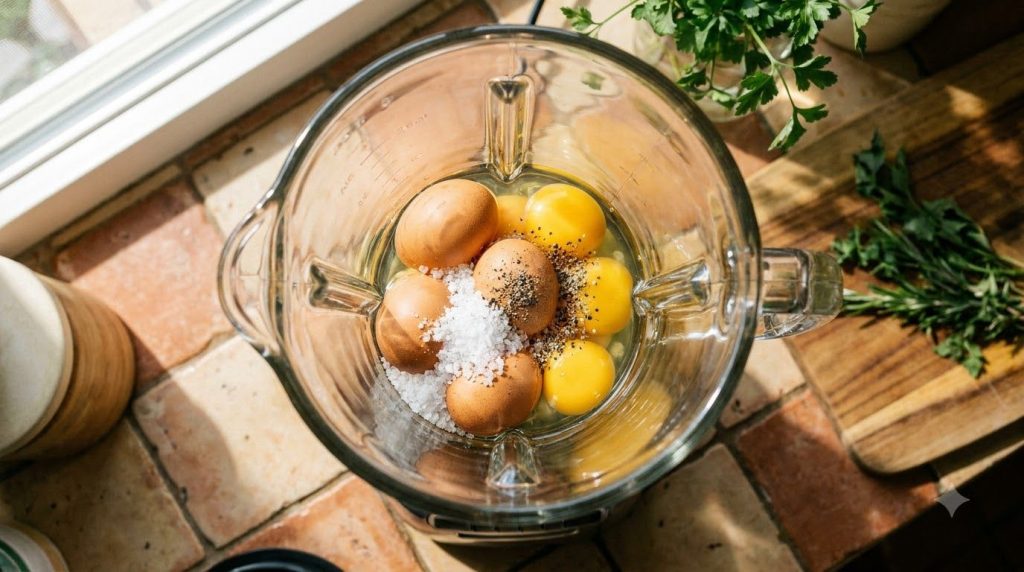
Combine your room temperature eggs and seasonings in the blender. -
Begin Blending
Secure the lid on your blender. Start blending the eggs and seasonings on a low speed for about 30 seconds, just until the mixture is uniform and slightly frothy. If using an immersion blender, place it at the bottom of a tall, narrow container and blend until combined.
-
Slowly Add the Oil
While the blender is still running on low to medium speed, slowly drizzle in the light-flavored olive oil through the opening in the lid (or the top of the immersion blender container). This is the most critical step for successful emulsification. Add the oil in a very slow, steady stream – don’t rush it!
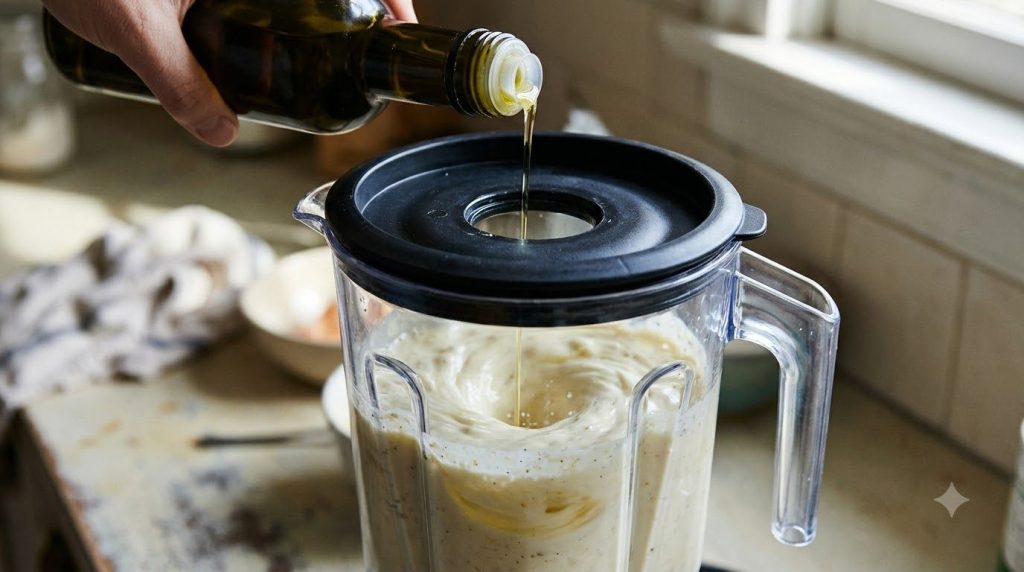
The key to perfect mayo is a slow, steady stream of oil. -
Observe Emulsification
As you continue to add the oil, you will notice the mixture thickening and turning opaque, transforming into creamy mayonnaise. Once all the oil has been added, continue blending for another 30 seconds to ensure everything is thoroughly combined and fully emulsified. The mixture should be thick and light in color.
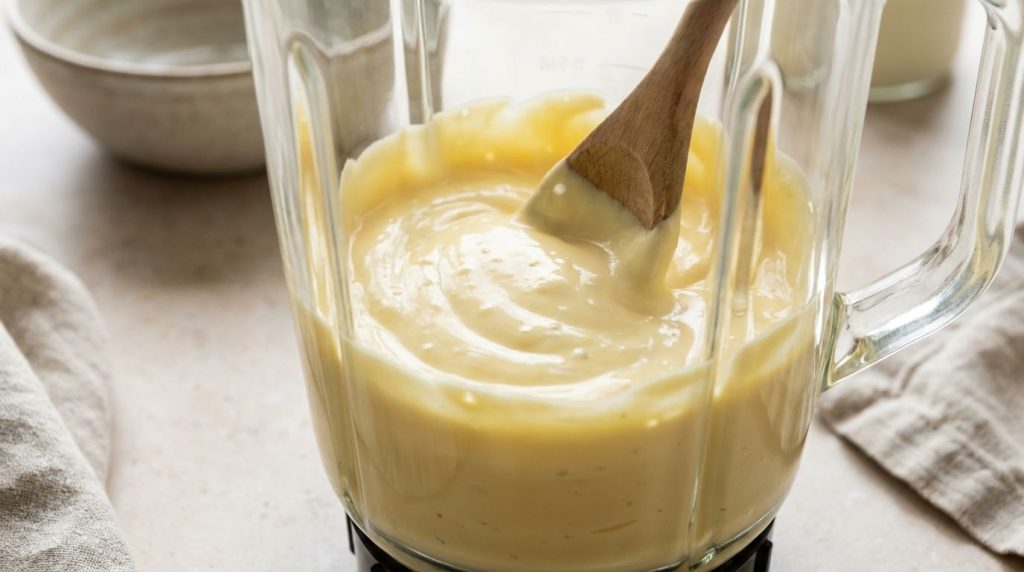
Your homemade mayonnaise is ready when it’s thick and creamy. -
Taste and Adjust
Turn off the blender. Remove the lid and taste the mayonnaise. Adjust seasoning with more salt or pepper as needed. If you opted to add lemon juice or Dijon mustard, this is also a good time to check for balance.
-
Transfer and Store
Use a rubber spatula to scrape the homemade mayonnaise into an airtight jar or container. Store promptly in the refrigerator.
Pro Tips for the Best Results
- Room Temperature Eggs Are Essential: Cold eggs are less likely to emulsify properly with oil, leading to a broken mayonnaise. Let them sit on the counter for at least 30 minutes before starting.
- Drizzle Slowly: This cannot be emphasized enough. Adding the oil too quickly is the most common reason mayonnaise fails. A thin, consistent stream allows the oil to incorporate gradually, creating a stable emulsion.
- Choose the Right Oil: For a mild, classic mayonnaise flavor, opt for a neutral oil or a light-flavored olive oil. Strong extra virgin olive oils can make the mayonnaise bitter.
- Use a Reliable Blender: Both high-speed blenders and immersion blenders work well. Immersion blenders often make it even easier as you blend directly in the storage container.
- Season to Taste: Don’t be afraid to adjust the salt and pepper. Mayonnaise should be well-seasoned to bring out its best flavor.
- Consider Adding Acid: While not strictly in the provided ingredients, adding lemon juice or vinegar helps with both flavor and emulsion stability. It’s highly recommended for a balanced, traditional taste.
Common Mistakes to Avoid
- Adding Oil Too Fast: This is the number one culprit for a broken, soupy mayonnaise. Patience is key during the oil addition step.
- Using Cold Ingredients: Ensure all ingredients, especially eggs, are at room temperature to encourage a stable emulsion.
- Over-Blending: While you want a smooth mixture, excessive blending can sometimes cause the mayonnaise to become too thin or even separate. Blend just until thick and creamy.
- Using Poor Quality Oil: An old or rancid oil will ruin the flavor of your mayonnaise. Always use fresh, good-quality oil.
Variations & Substitutions
- Herb Mayonnaise: Blend in a tablespoon or two of fresh chopped herbs like dill, chives, parsley, or tarragon after the mayonnaise is emulsified.
- Garlic Aioli: Add 1-2 cloves of minced garlic to the blender with the eggs for a flavorful garlic mayonnaise.
- Spicy Mayonnaise: Incorporate a teaspoon of sriracha, a pinch of cayenne pepper, or a dash of your favorite hot sauce for a spicy kick.
- Smoked Paprika Mayonnaise: A teaspoon of smoked paprika adds a wonderful depth of flavor and a lovely color.
- Oil Substitutions: If you prefer a neutral flavor, use grapeseed, avocado, or sunflower oil instead of olive oil. You can also do a 50/50 blend of olive oil with a neutral oil.
Serving Suggestions
Homemade mayonnaise is incredibly versatile! Here are a few ways to enjoy your fresh batch:
- Sandwiches & Wraps: Spread it generously on your favorite sandwiches, burgers, or wraps for added creaminess and flavor.
- Dipping Sauce: Serve it with crispy french fries, sweet potato fries, roasted vegetables, or chicken tenders.
- Salad Dressing Base: Use it as the foundation for creamy salad dressings, like a classic ranch or green goddess dressing.
- Creamy Salads: It’s the perfect binder for potato salad, coleslaw, chicken salad, or egg salad.
- Grilled Fish & Seafood: A dollop pairs beautifully with grilled salmon, baked cod, or shrimp.
Storage & Reheating
Store your homemade mayonnaise in an airtight container or jar in the refrigerator. Due to the raw eggs, it is best consumed within 5-7 days for optimal freshness and food safety. Do not freeze homemade mayonnaise, as the emulsion will separate upon thawing, ruining the texture. Mayonnaise is not meant to be reheated; it is a cold condiment.
FAQ
Why did my homemade mayonnaise break or turn soupy?
The most common reasons are adding the oil too quickly, or using cold eggs. Emulsification requires a slow, steady stream of oil to allow it to fully incorporate. Also, ensure your eggs are at room temperature.
Can I use extra virgin olive oil?
You can, but be aware that strong extra virgin olive oil can impart a bitter or very strong flavor to the mayonnaise that many people find overpowering. A light or extra light olive oil, or a neutral oil, is generally recommended for a more balanced taste.
How long does homemade mayonnaise last?
When stored in an airtight container in the refrigerator, homemade mayonnaise made with raw eggs is best consumed within 5-7 days.
What if I don’t have a high-speed blender?
An immersion blender (stick blender) works exceptionally well and is often preferred for making mayonnaise. You can also make it by hand with a whisk, but it requires significantly more effort and a steady hand for the oil addition.
Is it safe to eat mayonnaise with raw eggs?
Using raw eggs carries a small risk of salmonella. For those concerned, it’s best to use pasteurized eggs if available. Pregnant women, young children, the elderly, and individuals with compromised immune systems should avoid raw egg consumption.
Can I make a smaller batch?
Yes, you can halve the recipe using 2 eggs and 1.5 cups of oil. Ensure your blender can handle the smaller volume to emulsify properly.
Recipe Card
Recipe Name: Homemade Mayonnaise
Short Description: Whip up fresh, creamy mayonnaise in minutes using just a few simple ingredients and a blender.
Prep Time: 5 minutes
Cook Time: 0 minutes
Total Time: 5 minutes
Servings: Approximately 3 cups
Course: Condiment
Cuisine: American
Cooking Method: Blending, Emulsifying
Ingredients:
- 4 large eggs, whole (room temperature)
- 3 cups (710 ml) light-flavored olive oil (or neutral oil)
- 1 teaspoon (5 g) fine sea salt
- 1/2 teaspoon (1 g) freshly ground black pepper
- Optional: 2 tbsp (30 ml) fresh lemon juice or white vinegar
- Optional: 1 tsp (5 g) Dijon mustard
Instructions:
- Ensure eggs are at room temperature. Crack the 4 whole eggs into your blender carafe. Add salt and pepper (and optional lemon juice/vinegar and Dijon mustard, if using).
- Secure the lid and blend on low speed for 30 seconds until combined.
- While the blender is running on low to medium speed, slowly drizzle in the 3 cups of oil through the lid’s opening in a very thin, steady stream. This should take 2-3 minutes.
- Continue blending for another 30 seconds after all the oil is added, until the mixture is thick, creamy, and fully emulsified.
- Taste and adjust seasoning if needed.
- Transfer the homemade mayonnaise to an airtight jar or container and refrigerate immediately.
Notes:
For best results and flavor, consider adding lemon juice/vinegar and Dijon mustard. Always use room temperature eggs. Store in the refrigerator and consume within 5-7 days.
Storage:
Store in an airtight container in the refrigerator for up to 5-7 days. Do not freeze.
Nutrition:
Nutrition information is an estimate and may vary depending on the ingredients and brands used.