Eggs are a true superfood, packed with protein, vitamins, and minerals that support everything from muscle health to brain function. They’re a staple in healthy eating, but have you ever wondered if how you cook your eggs impacts their nutritional punch? The answer is a resounding yes!
Different cooking methods can affect everything from nutrient availability to digestibility and even safety. Let’s dive into the fascinating world of egg preparation and uncover the unique benefits and considerations for each style.
The Nutritional Powerhouse: Why Eggs Matter
Before we explore cooking methods, let’s quickly recap why eggs are so good for you. They are one of the most complete sources of protein, providing all nine essential amino acids. Plus, they’re loaded with:
- Vitamins: A, D, E, K, B vitamins (B12, riboflavin, folate)
- Minerals: Iron, phosphorus, selenium, zinc
- Choline: Essential for brain health and cell membrane function
- Antioxidants: Lutein and zeaxanthin, beneficial for eye health
These nutrients contribute to immune support, healthy aging, energy levels, and overall wellness. But does cooking change how your body accesses these amazing benefits?
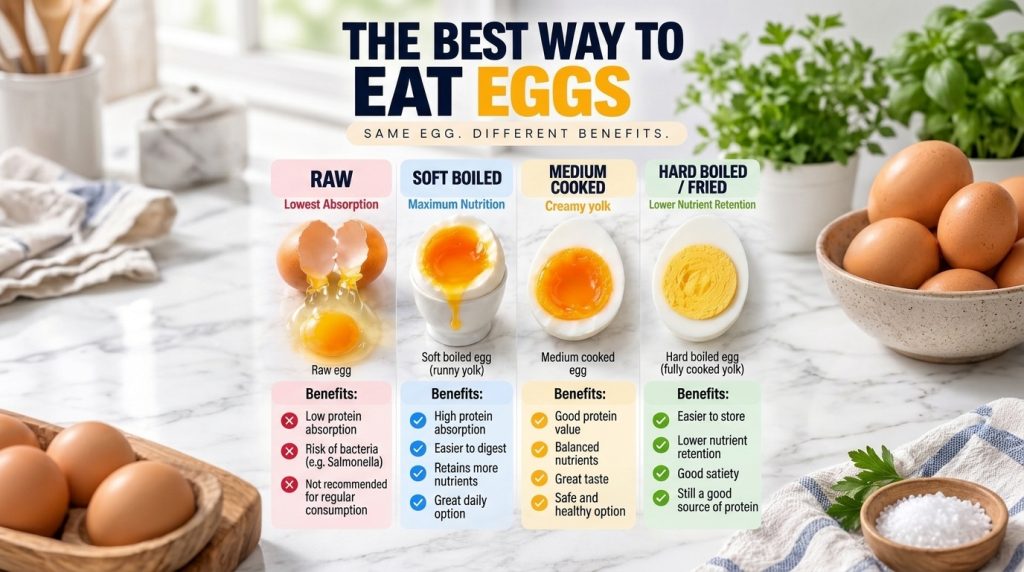
Raw Eggs: A Risky Nutritional Boost?
Some health enthusiasts advocate for consuming raw eggs, believing it preserves more delicate nutrients that might be lost during heating. It’s true that certain heat-sensitive vitamins might be slightly reduced with cooking.
Benefits:
- Potentially higher levels of some B vitamins.
- Easily incorporated into smoothies or protein shakes for a quick boost.
Considerations & Safety First:
However, the main concern with raw eggs is the risk of salmonella contamination. This bacteria can cause serious food poisoning. Additionally, raw egg whites contain avidin, a protein that can bind to biotin (a B vitamin) and prevent its absorption. Cooking denatures avidin, making biotin fully available.
Remedy Tip: If considering raw eggs, always opt for pasteurized eggs to reduce salmonella risk. Still, for most, cooking offers a safer and often more digestible option.
Soft-Boiled Eggs: Runny Yolk, Easy Digestion
Ah, the soft-boiled egg! With its firm white and wonderfully runny yolk, it’s a breakfast favorite for many. This method involves minimal cooking of the yolk, often retaining a good portion of its nutrient profile.
Benefits:
- Digestibility: The lightly cooked yolk is often very easy to digest, making its nutrients readily available.
- Nutrient Preservation: Many of the heat-sensitive nutrients in the yolk are well-preserved due to the short cooking time.
- Versatility: Perfect for dipping toast or topping salads.
To achieve the perfect soft-boiled egg, typically boil for 3-4 minutes after the water reaches a rolling boil.

Medium-Cooked Eggs: The Best of Both Worlds?
Medium-cooked eggs, often achieved with a slightly longer boil than soft-boiled, offer a yolk that’s jammy and slightly firm but still moist and rich. This method strikes a great balance for many.
Benefits:
- Reduced Risk: The yolk is cooked enough to significantly reduce salmonella risk compared to raw or very soft yolks.
- Good Digestibility: Still relatively easy to digest compared to fully hard-cooked yolks.
- Texture: Offers a pleasant, creamy texture that works well in sandwiches or on its own.
Boiling for about 5-6 minutes usually gives you a lovely medium-cooked egg.
Hard-Boiled Eggs: Convenience and Protein Power
Hard-boiled eggs are perhaps the most popular and convenient way to enjoy eggs. The whites and yolks are fully set, making them ideal for meal prep, snacks, and salads.
Benefits:
- Safety: Thoroughly cooked, virtually eliminating salmonella risk.
- Portability & Convenience: Easy to peel, store, and transport, making them a fantastic on-the-go snack.
- Protein Availability: The protein in hard-boiled eggs is highly digestible and readily available for your body to use.
Considerations:
While extremely convenient, prolonged high heat can slightly reduce some delicate nutrients. However, the overall nutritional value remains excellent. Sometimes a greenish ring can form around the yolk; this is harmless and due to a reaction between sulfur and iron, often from overcooking.
For a perfect hard-boiled egg that’s easy to peel, try boiling for 8-10 minutes, then immediately plunging into an ice bath.
Which Egg is Best for You?
Ultimately, the best way to cook your eggs depends on your personal preferences, dietary needs, and comfort with food safety. For most people, consuming cooked eggs (soft-boiled, medium-cooked, or hard-boiled) offers the safest and most reliable way to enjoy their incredible nutritional benefits without unnecessary risks.
Embrace the versatility of eggs in your healthy lifestyle! Whether you prefer a quick hard-boiled snack or a comforting soft-boiled breakfast, you’re nourishing your body with a true gift from nature. What’s your favorite way to enjoy eggs? Share your go-to egg style or recipe in the comments below!