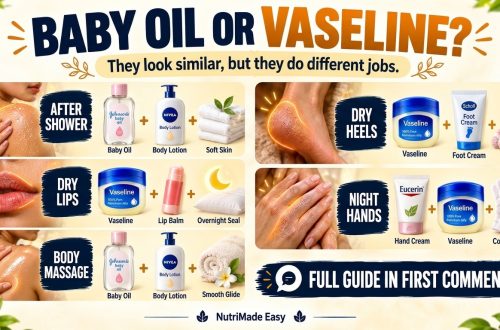
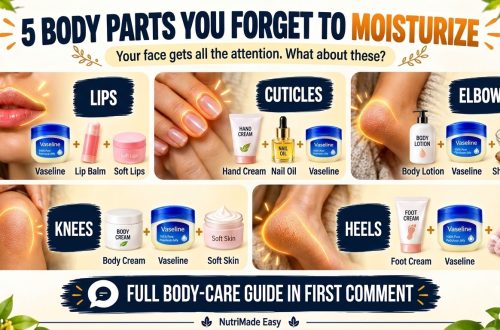
Vaseline, or petroleum jelly, is a household staple often lauded for its incredible occlusive properties. It creates a protective barrier on the skin, locking in moisture and aiding in healing minor cuts, scrapes, and dryness. However, while Vaseline is a fantastic emollient, it’s not always a good idea to mix it with other skincare ingredients. Some combinations can actually do more harm than good, leading to irritation, clogged pores, or reduced efficacy of your other products.
Understanding what not to combine with this versatile product is key to maintaining healthy, happy skin. Let’s dive into some common skincare pairings that you should approach with caution.
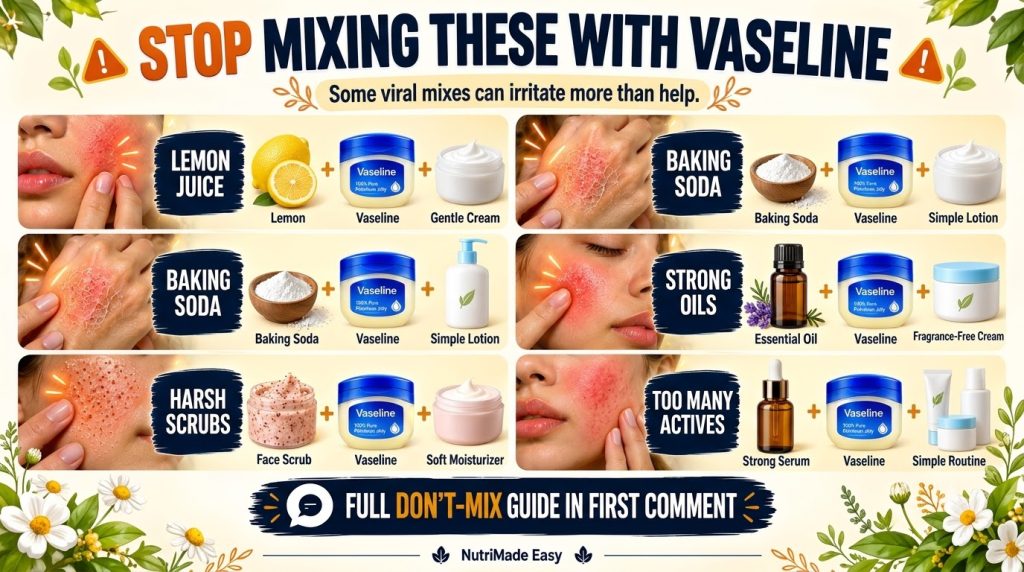
Why Vaseline is So Effective (and What That Means for Mixing)
Vaseline’s primary function is to create an occlusive barrier. This means it forms a protective layer on the surface of your skin, preventing water loss and shielding it from external irritants. This barrier is what makes it excellent for:
- Hydration: Sealing in existing moisture.
- Healing: Protecting minor wounds and allowing the skin to repair itself.
- Preventing Chafing: Reducing friction.
However, this very barrier can become problematic when mixed with certain active ingredients. When applied over active ingredients, Vaseline can sometimes trap them against the skin, potentially increasing their potency and leading to unwanted irritation or an exaggerated response.
Skincare Ingredients You Should Avoid Mixing Directly with Vaseline
1. Exfoliating Acids (AHAs & BHAs)
Ingredients like glycolic acid, lactic acid, and salicylic acid work by exfoliating the skin. When you apply Vaseline over these acids, especially in higher concentrations, it can trap them more intensely against your skin. This increased penetration or prolonged contact can lead to heightened irritation, redness, stinging, or even chemical burns, particularly for those with sensitive skin.
2. Retinoids (Retinol, Tretinoin)
Retinoids are powerful ingredients known for their anti-aging and acne-fighting benefits. However, they can also be quite irritating, especially when you’re first starting out. Applying Vaseline directly on top of or mixed with a retinoid can intensify its effects by driving it deeper into the skin or preventing it from evaporating. This can exacerbate common retinoid side effects like dryness, flaking, and redness.
3. Undiluted Essential Oils
While many essential oils offer various benefits, they are highly concentrated and should almost always be diluted before topical application. Mixing undiluted essential oils with Vaseline can trap these potent compounds against your skin, significantly increasing the risk of allergic reactions, contact dermatitis, or sensitization. Always dilute essential oils in a carrier oil before use, and consider a patch test.
4. Strong Spot Treatments (e.g., Benzoyl Peroxide)
Acne spot treatments containing ingredients like benzoyl peroxide or high concentrations of salicylic acid are designed to be potent. Using Vaseline over these treatments can, similar to acids and retinoids, create an occlusive environment that may intensify their effect. This can lead to excessive dryness, peeling, and irritation in the treated area, making your acne problem potentially worse.
5. Vitamin C (Ascorbic Acid)
Vitamin C serums are often formulated to be quickly absorbed into the skin. While Vaseline is generally harmless with Vitamin C, applying it directly on top of your Vitamin C serum might theoretically hinder the serum’s absorption or create an environment that could destabilize certain forms of Vitamin C, especially L-Ascorbic Acid, if not fully absorbed first. It’s generally best to let your Vitamin C absorb completely before applying any occlusive.
How to Use Vaseline Safely in Your Skincare Routine
Does this mean you should ditch Vaseline? Absolutely not! It’s a fantastic product when used correctly.
- Apply as the Last Step: Use Vaseline as the final step in your evening routine, after all other serums and moisturizers have had time to absorb. This helps to seal everything in.
- Barrier Protection: Apply a thin layer of Vaseline around sensitive areas (like around the eyes or sides of the nose) before applying strong actives to act as a buffer.
- Patch Test: When in doubt, always do a patch test on a small area of skin to see how your skin reacts.
- Clean Skin: Always apply Vaseline to clean skin to avoid trapping bacteria or dirt.
The Takeaway
Vaseline is a powerful and beneficial skincare product, but like all tools, it works best when used wisely. By understanding which ingredients are best kept separate, you can protect your skin from potential irritation and ensure your entire skincare routine is working effectively for you. Protect your skin and keep it healthy!