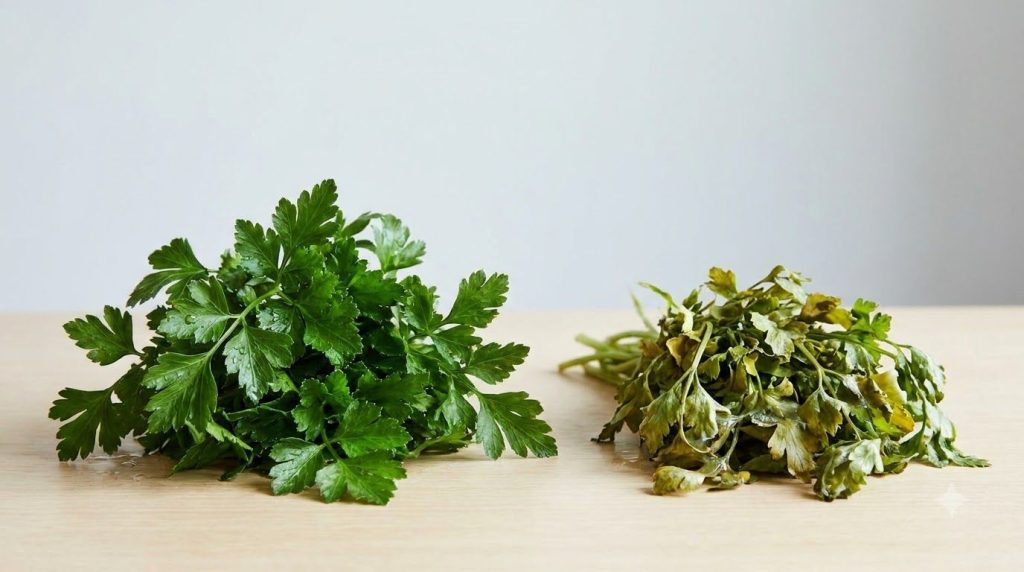
Most people ignore this one simple step, leading to perfectly good parsley turning yellow and slimy in the fridge after just a few days. You bought it fresh, vibrant, and ready to elevate your meals, only to find it a soggy mess when you reach for it. The good news? The problem isn’t your fridge; it’s a small but crucial oversight in how you store your herbs. This often-skipped trick can keep your parsley (and other similar herbs) crisp and flavorful for weeks, not just days. Say goodbye to food waste and hello to always-fresh garnishes.
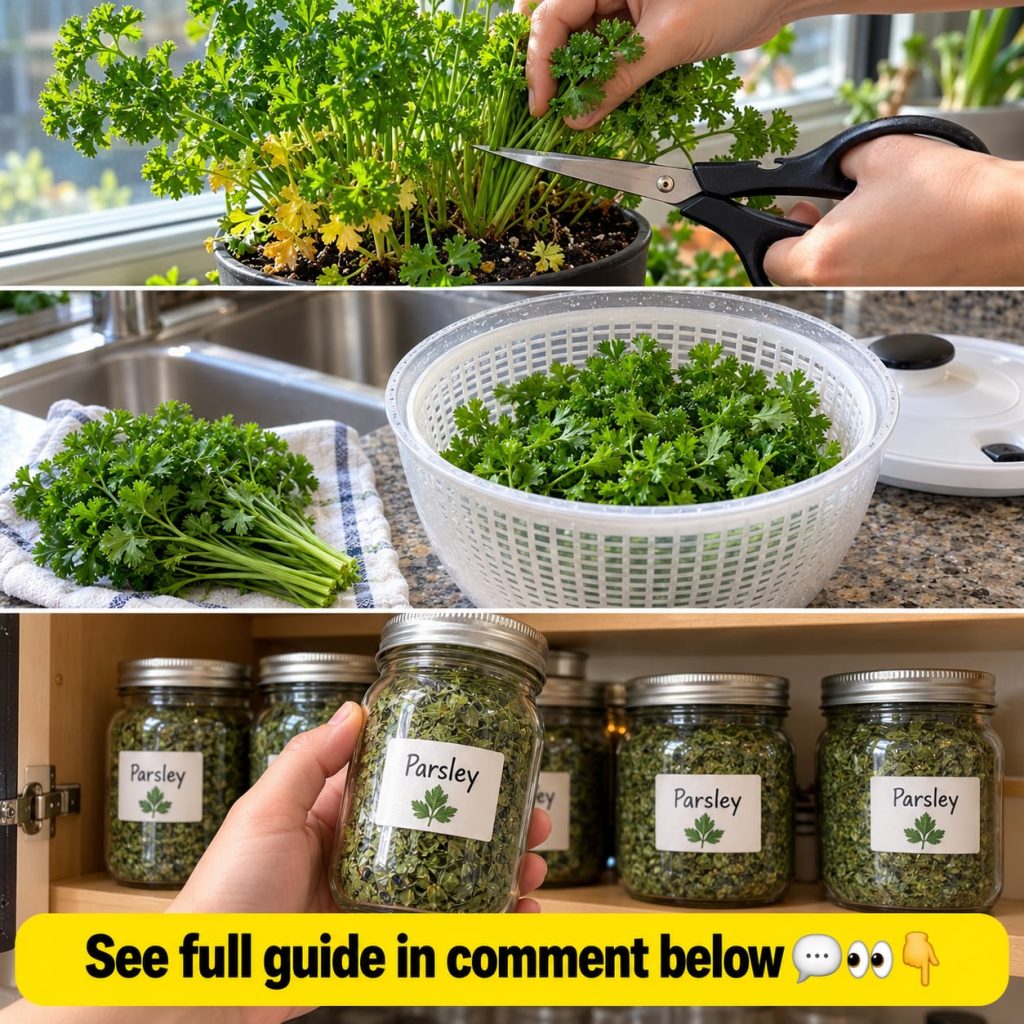
What It Is: The Water Jar Method
This method is deceptively simple and mimics how plants absorb water through their stems. By treating your parsley like a fresh bouquet of flowers, you provide continuous hydration, preventing wilting and slowing down spoilage. Instead of suffocating in a plastic bag or drying out uncovered, the parsley’s stems draw water, keeping the leaves firm and green.
Ingredients You’ll Need
- 1 bunch of fresh parsley (flat-leaf or curly)
- 1 clean glass jar or container (a Mason jar or a drinking glass works well)
- Clean, fresh water
- Optional: A loose-fitting plastic bag or plastic wrap
Approximate Measurements
There are no strict measurements here, as it depends on the size of your parsley bunch and jar. You’ll need enough water to cover about an inch or two of the parsley stems. The jar should be tall enough to support the parsley upright without crushing the leaves.
Formula / Recipe: The Parsley Saver
The core idea is to create a mini-hydrating environment for your parsley. Think of it as putting cut flowers into a vase. The constant access to water keeps the leaves turgid and vibrant, dramatically extending their shelf life compared to traditional methods.
Here’s the part most people skip: Proper Trimming
Before you even think about water, the way you prepare the stems matters. Just like flowers, a fresh cut allows for better water absorption. Don’t just stick the whole bunch in; give it a little love first.
Step-by-Step Method
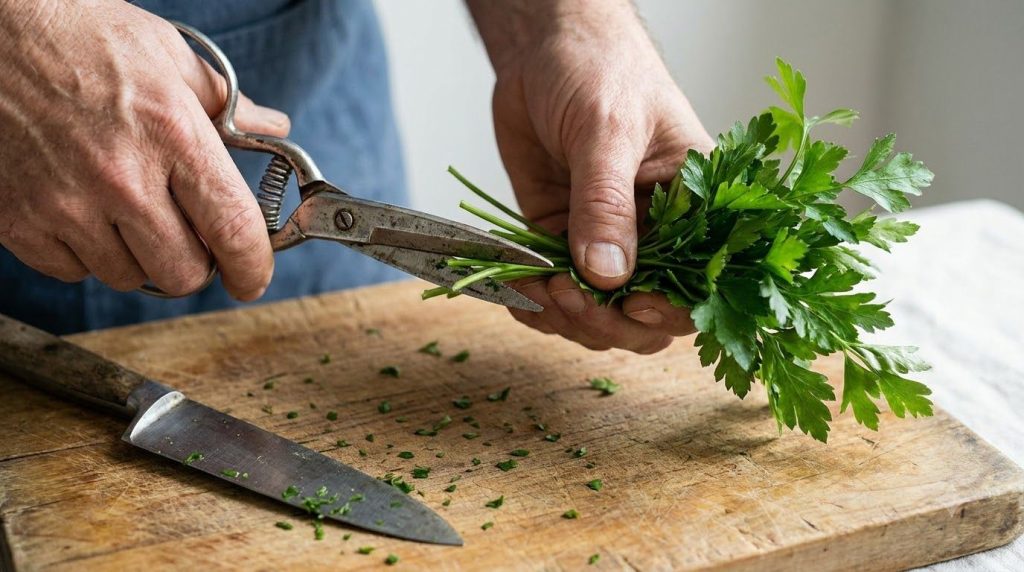
- Trim the Stems: Gather your bunch of parsley. Using a sharp knife or kitchen shears, trim about half an inch to an inch off the bottom of the stems. Make a straight cut. This opens up the capillaries in the stems, allowing them to drink water more efficiently.
- Fill the Jar with Water: Pour about 1-2 inches of fresh, cool water into your clean glass jar.
- Place Parsley in Jar: Carefully place the trimmed parsley stems into the jar, ensuring the cut ends are submerged in the water. The leaves should remain above the waterline.
- Cover (Optional but Recommended): For even better results, loosely cover the top of the parsley and the jar with a plastic bag (like a produce bag) or plastic wrap. This creates a mini-greenhouse effect, retaining moisture and preventing the leaves from drying out.
- Refrigerate: Place the covered jar of parsley in your refrigerator. Avoid placing it near fruits that emit ethylene gas (like apples or bananas), as this can accelerate spoilage.
How to Use Your Preserved Parsley
Simply pull out the desired amount of parsley from the jar, rinse it gently under cool water if needed, and chop or use as directed in your recipe. It will be crisp and ready to add flavor and freshness to salads, sauces, stews, or as a garnish.
How Often to Use / Maintain
To maximize freshness, change the water in the jar every 1-2 days. If the water appears cloudy or you notice any sliminess, change it immediately and rinse the jar. You can expect your parsley to stay fresh this way for 2-3 weeks, sometimes even longer.
How to Buy / How to Choose Ingredients
Start with the freshest parsley possible. Look for bunches with vibrant, deep green leaves that show no signs of yellowing, wilting, or bruising. The stems should be firm, not limp. Avoid any parsley that smells musty or has black spots, as these are signs of spoilage.
You may also like: The Secret to Keeping Cilantro Fresh for Weeks
Storage
Always store the parsley in the refrigerator using the water jar method. The cool temperature slows down metabolic processes, while the water keeps it hydrated. Ensure the plastic bag or wrap is loose, allowing for some air circulation while maintaining humidity.
Quick Tip: Don’t pack too tightly!
Overcrowding the jar can restrict airflow and encourage moisture buildup, leading to faster spoilage. Give your parsley room to breathe.
Practical Tips for Maximum Freshness
- Cold Water is Key: Always use cold water, as warm water can encourage bacterial growth.
- Cleanliness: Ensure your jar is thoroughly clean before each use to prevent bacterial contamination.
- Check Daily: Briefly check your parsley daily for any signs of wilting or discoloration. Remove any compromised sprigs to prevent them from affecting the rest of the bunch.
- Beyond Parsley: This method works wonderfully for other tender-stemmed herbs like cilantro, basil (though basil prefers room temperature water), and mint.
Common Mistakes to Avoid
One small preparation mistake can ruin the whole batch. Here are the most common:
| Common Mistake | Why It’s a Mistake | Better Practice |
|---|---|---|
| Not trimming stems | Stems can’t absorb water efficiently | Always trim 1/2 to 1 inch off bottoms |
| Using old, warm, or dirty water | Promotes bacterial growth; water isn’t fresh | Use fresh, cool water; change every 1-2 days |
| Overcrowding the jar | Restricts airflow, encourages moisture/mold | Use a wider jar or split into two if needed |
| Sealing too tightly | Traps too much moisture, leads to rot | Cover loosely with a bag or plastic wrap |
| Washing before storing | Excess moisture on leaves encourages rot | Wash just before use, not before storage |
Cautions / Who Should Avoid It
This method is generally safe for everyone. The main caution is to ensure cleanliness to prevent any bacterial growth. Always discard parsley that shows signs of mold, rot, or an unusual smell.
Quick Summary
- Best Preparation: Trim stems, place in water-filled jar.
- Best Use-Case: Keeping fresh parsley for weeks in the fridge.
- Storage: Refrigerator, loosely covered.
- When to Use: Any time you buy fresh parsley.
- What to Avoid: Not trimming stems, old water, airtight containers.
Continue with: DIY Ginger Lemon Tea for Better Digestion
FAQ
- Can I use fresh or dried parsley with this method? This method is specifically for fresh parsley to extend its shelf life. Dried parsley has a much longer shelf life and does not require refrigeration or water.
- How long does fresh parsley last with this trick? Typically, 2-3 weeks, sometimes longer, depending on the initial freshness and how regularly you change the water.
- Can I refrigerate it without a plastic bag? Yes, but covering it loosely with a plastic bag or wrap helps maintain humidity and prevents the leaves from drying out, which can extend its freshness even further.
- How often should I change the water? Change the water every 1-2 days, or immediately if it appears cloudy or slimy.
- What part of the parsley is best for cooking? Both the leaves and stems are edible. Leaves are great for garnishes and adding fresh flavor, while finely chopped stems can add a deeper herbal note to cooked dishes like soups and stews.
- Can I reuse the leaves if they start to wilt slightly? If they’ve only slightly wilted and still look green, you might be able to revive them with fresh cold water. However, if they’re yellow, slimy, or discolored, it’s best to discard them.
- When should I avoid this method? This method is ideal for most situations. Avoid it only if you plan to use all the parsley within a day or two, or if you prefer to freeze or dry your herbs for long-term storage.
Conclusion
Stop settling for wilted herbs! This simple water jar method is a game-changer for anyone who loves cooking with fresh parsley but struggles with spoilage. By making a small adjustment to your storage routine, you can enjoy vibrant, flavorful parsley for weeks, cutting down on waste and ensuring your dishes always have that perfect fresh finish. It’s a small trick with a big impact on your kitchen efficiency and your wallet. Try it today and see the difference!