DIY Window Cleaner That Actually Works for Streak-Free Shine
Are you tired of battling stubborn streaks and hazy residues on your windows after a rigorous cleaning session? Many commercial window cleaners promise a sparkling finish but often leave behind frustrating marks. The good news is, you don’t need a cabinet full of expensive products to achieve crystal-clear windows. In fact, some of the most effective solutions are likely already sitting in your pantry and medicine cabinet!
This simple, homemade window cleaner uses a powerful combination of everyday ingredients to cut through grime, dissolve smudges, and leave your glass surfaces gleaming without a single streak. Get ready to enjoy a clearer view of the world outside, all while saving money and using fewer harsh chemicals.
Why This DIY Window Cleaner Works Wonders
The magic behind this streak-free formula lies in the synergistic action of its common household components:
- Water: The primary solvent, acting as the base for the cleaning solution.
- White Vinegar: An acidic powerhouse that cuts through grease, grime, and hard water spots. Its natural acidity helps dissolve mineral deposits and acts as a mild disinfectant.
- Rubbing Alcohol: This ingredient is crucial for streak-free results. Alcohol evaporates much faster than water, preventing droplets from drying on the glass and leaving marks. It also helps to dissolve oils and stubborn residues.
- Cornstarch: The secret weapon! Cornstarch acts as a mild abrasive that helps lift dirt and absorb oils, preventing streaking and leaving a polished, sparkling finish. It essentially buffs the glass as you wipe.
Ingredients You’ll Need
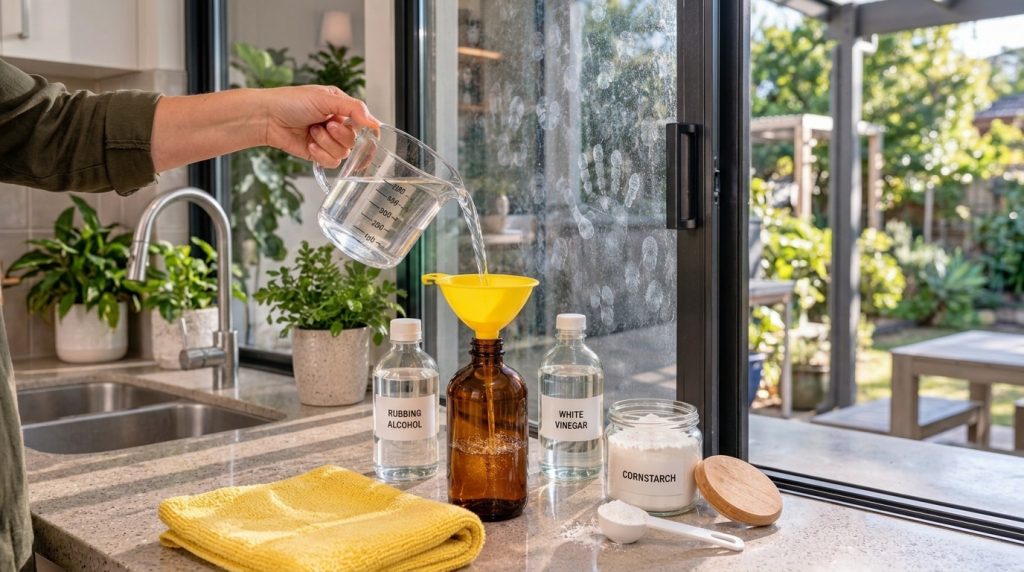
No special trips to the store required! Gather these common items:
- ½ cup white vinegar
- ½ cup rubbing alcohol (70% isopropyl alcohol works best)
- 1 teaspoon cornstarch
- 2 cups distilled or filtered water (to avoid mineral deposits from tap water)
Tools You’ll Need
- Empty spray bottle (at least 24 oz capacity)
- Measuring cups and spoons
- Funnel (optional, but helpful for neat pouring)
- Clean microfiber cloths (several are ideal for a truly streak-free finish)
Step-by-Step Instructions
1. Mix the Solution
- Pour the ½ cup of white vinegar, ½ cup of rubbing alcohol, and 2 cups of water into your spray bottle.
- Add 1 teaspoon of cornstarch.
- Secure the spray bottle cap tightly.
2. Shake Well
Shake the bottle vigorously for about 30 seconds to ensure the cornstarch is fully dissolved and well-mixed. You may need to shake it again before each use, as cornstarch can settle.
3. Apply to Windows
Spray a generous amount of the cleaner directly onto the window surface, covering the dirty areas evenly.
4. Wipe and Buff
- Using a clean microfiber cloth, wipe the window in an S-motion, working from top to bottom.
- For best results, immediately follow up with a second, dry, clean microfiber cloth to buff the glass until it’s completely dry and sparkling. This two-cloth method is key to preventing streaks.
Tips for Best Results
- Choose the Right Day: Clean windows on a cloudy day or when the sun is not directly hitting the glass. Direct sunlight can dry the cleaner too quickly, leading to streaks before you have a chance to wipe them away.
- Use Multiple Cloths: Always have a separate clean, dry microfiber cloth for buffing. When your wiping cloth becomes damp or dirty, switch it out.
- Pre-Clean if Necessary: For extremely dirty windows with heavy dust or cobwebs, give them a quick initial wipe with plain water or a brush first to remove loose debris.
- Store Properly: Label your bottle clearly and store it in a cool, dark place. Shake well before each use.
Safety Notes
- Ventilation: Ensure good ventilation when cleaning, as rubbing alcohol can have strong fumes.
- Eye Contact: Avoid direct contact with eyes. If contact occurs, rinse thoroughly with water.
- Labeling: Always label homemade cleaning solutions clearly to avoid confusion.
- Test First: While generally safe for glass, if you have tinted windows or unique window treatments, always test a small, inconspicuous area first.
Say goodbye to frustrating streaks and hello to brilliantly clean windows! This DIY cleaner is not only incredibly effective but also a budget-friendly and natural alternative to commercial products. Give it a try and see the amazing difference!