Imagine biting into a warm, flaky croissant, its delicate layers melting in your mouth. Now imagine making that magic happen right in your own kitchen! Our ultimate Croissant Recipe Guide is here to turn that dream into a delicious reality, walking you through the intricate yet rewarding process of baking perfect homemade croissants.
This comprehensive guide goes beyond the classic butter croissant, inviting you to explore five other irresistible variations: rich Chocolate, nutty Almond, savory Ham & Cheese, sweet Strawberry Cream, and herbaceous Spinach Feta. Whether you’re a seasoned baker looking for a new challenge or an adventurous home cook eager to impress, this guide provides all the tips, tricks, and detailed steps you need to bring bakery-quality pastries to your table.
Get ready to infuse your home with the intoxicating aroma of freshly baked croissants. They’re perfect for a special breakfast, a decadent brunch, or simply as a delightful treat any time of day. Which delightful variation will you try first?

Why You’ll Love This Croissant Recipe Guide
- Achieve Bakery-Quality Results: Learn the techniques to create perfectly flaky, buttery layers every time.
- Explore Variety: From sweet to savory, this guide covers six distinct and delicious croissant flavors.
- Rewarding Baking Experience: The process of making croissants is a true labor of love, yielding incredibly satisfying results.
- Impress Your Guests: Homemade croissants are a show-stopping addition to any breakfast or brunch spread.
- Customizable for Any Craving: Once you master the basic dough, the possibilities for fillings are endless.
- Freshness You Can Taste: Nothing compares to a warm croissant pulled fresh from your own oven.
Ingredients for Your Ultimate Croissant Recipe Guide
This section outlines the base ingredients for the classic croissant dough, followed by the specific additions for each of the six variations. All measurements are approximate and can be adjusted slightly to taste.
For the Classic Croissant Dough (Détrempe & Butter Block)
- All-Purpose Flour: 4 cups (500 g)
- Granulated Sugar: ¼ cup (50 g)
- Fine Sea Salt: 2 tsp (10 g)
- Active Dry Yeast: 1 tbsp (9 g) or 2 ¼ tsp
- Whole Milk (lukewarm): 1 cup (240 ml)
- Water (lukewarm): ½ cup (120 ml)
- Unsalted Butter (cold, for the détrempe): 2 tbsp (28 g), melted
- High-Quality Unsalted Butter (cold, for the butter block): 1 ½ cups (340 g), 82% fat content recommended
For the Variations (additional ingredients)
(Amounts listed are per batch of croissants, typically yielding 12-16 croissants.)
- Classic Butter Croissant: No additional ingredients beyond the dough.
- Chocolate Croissant (Pain au Chocolat):
- Chocolate batons or good quality semi-sweet chocolate, cut into ½ oz (14 g) pieces: 12-16 pieces
- Almond Croissant:
- For the Frangipane: ½ cup (113 g) unsalted butter (softened), ½ cup (100 g) granulated sugar, 1 large egg, 1 tsp vanilla extract, 1 cup (113 g) almond flour
- For Garnish: ¼ cup (25 g) sliced almonds, powdered sugar for dusting
- Ham & Cheese Croissant:
- Thinly sliced ham: 4-6 oz (110-170 g)
- Gruyère or Swiss cheese, thinly sliced or shredded: 4-6 oz (110-170 g)
- Dijon mustard (optional): 1-2 tbsp (15-30 ml)
- Strawberry Cream Croissant:
- For the Cream Filling: 4 oz (113 g) cream cheese (softened), ¼ cup (50 g) powdered sugar, ½ tsp vanilla extract
- Fresh strawberries, diced: ½ cup (approx. 75 g)
- Optional: strawberry jam or glaze for topping
- Spinach Feta Croissant:
- Fresh spinach, roughly chopped and wilted: 5 oz (140 g)
- Crumbled feta cheese: ½ cup (110 g)
- Minced garlic: 1 clove (optional)
- Pinch of nutmeg (optional)
For Egg Wash
- 1 large egg
- 1 tbsp (15 ml) whole milk or water
Ingredient Notes
- Butter Quality: The quality of your butter makes a significant difference in croissants. Opt for high-fat unsalted butter (ideally 82% fat content) as it will create flakier layers. Keep it very cold.
- Flour: All-purpose flour is suitable, but bread flour can also be used for a slightly chewier texture.
- Yeast: Active dry yeast needs to be proofed in lukewarm liquid. Instant yeast can be mixed directly with dry ingredients.
- Milk and Water: Using a combination helps achieve a tender crumb and good hydration. Ensure liquids are lukewarm, not hot, to activate the yeast without killing it.
- Fillings: Feel free to adjust the quantities of fillings in the variations based on your personal preference. For chocolate, use good quality baking chocolate that holds its shape.
Equipment You’ll Need
- Large mixing bowls
- Stand mixer with dough hook (optional, but highly recommended)
- Rolling pin (preferably a heavy, French-style rolling pin)
- Kitchen scale (for precise measurements, especially butter)
- Plastic wrap
- Sharp knife or pizza cutter
- Baking sheets
- Parchment paper
- Pastry brush
- Wire cooling rack
How to Make Your Ultimate Croissant Recipe Guide
Making croissants is a multi-day process that requires patience and precision. Follow these steps carefully for the best results.
Part 1: Prepare the Croissant Dough (Détrempe)
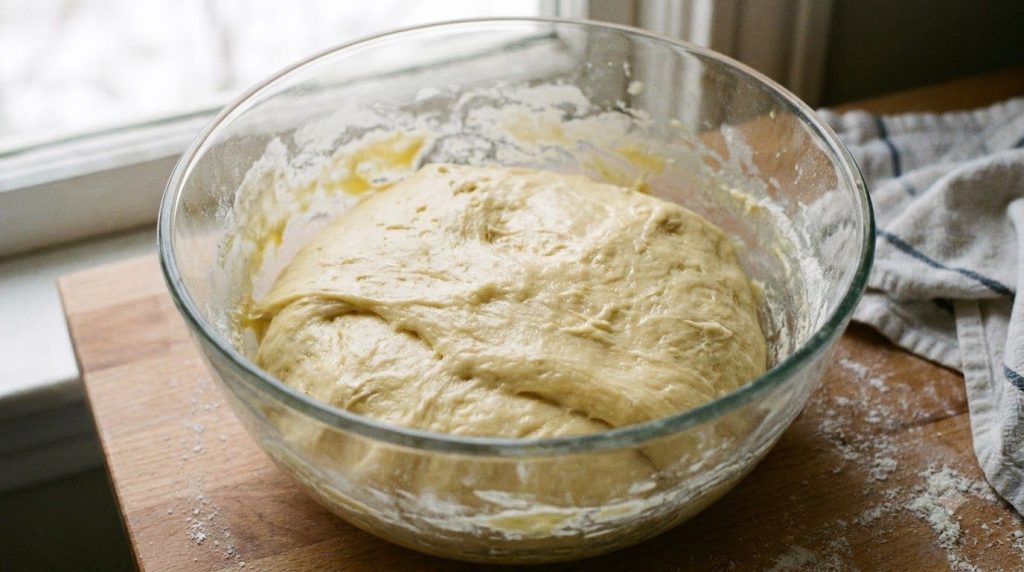
- Combine Dry Ingredients: In a large mixing bowl (or stand mixer bowl), whisk together the flour, sugar, and salt.
- Activate Yeast: In a separate bowl, combine the lukewarm milk, water, and active dry yeast. Let it sit for 5-10 minutes until foamy, indicating the yeast is active.
- Mix Dough: Add the activated yeast mixture and the melted 2 tbsp (28g) butter to the dry ingredients. Mix with a spoon or dough hook on low speed until a shaggy dough forms.
- Knead: Turn the dough out onto a lightly floured surface and knead by hand for about 5-7 minutes, or use a stand mixer on medium-low for 3-5 minutes, until the dough is smooth and elastic. It should be slightly sticky but manageable.
- First Rise & Chill: Form the dough into a ball, place it in a lightly oiled bowl, cover with plastic wrap, and let it rise in a warm place for 1 hour until slightly puffy. Then, punch it down gently, reshape into a rectangle, wrap tightly in plastic wrap, and refrigerate for at least 4 hours, or preferably overnight.
Part 2: Prepare the Butter Block & Lamination
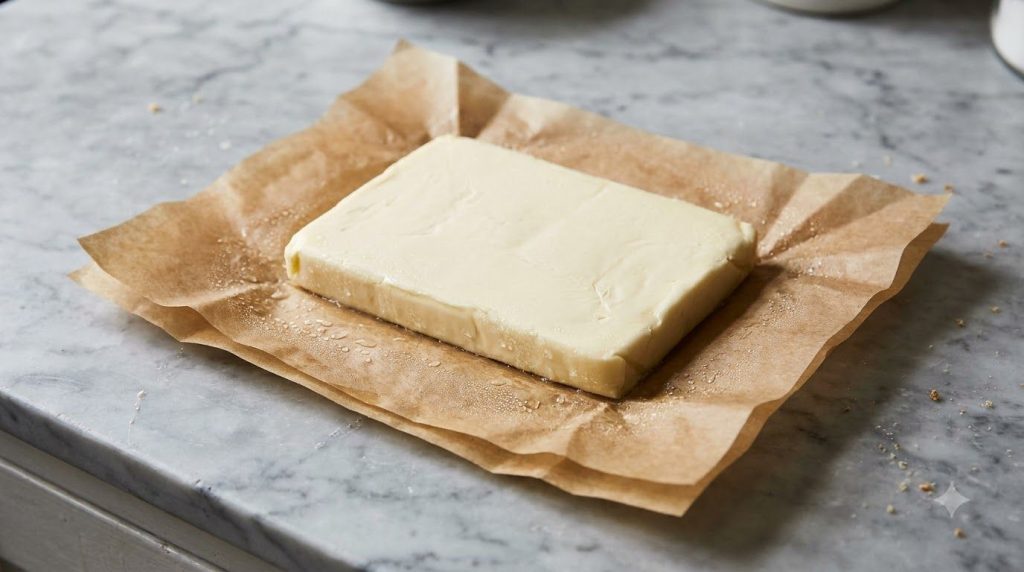
- Make the Butter Block: Place the 1 ½ cups (340 g) cold unsalted butter between two sheets of parchment paper. Using a rolling pin, pound and roll the butter into an 8×8 inch (20×20 cm) square. Ensure the butter remains cold and uniform in thickness. Place it back in the refrigerator.
- First Fold (Single Turn): On a lightly floured surface, roll the chilled dough into a 16×8 inch (40×20 cm) rectangle. Place the cold butter block in the center of one half of the dough rectangle. Fold the other half of the dough over the butter, sealing the edges to fully enclose the butter.
- First Roll & Fold: Turn the dough 90 degrees so the seam is facing your left. Gently roll the dough into a 24×8 inch (60×20 cm) rectangle. Fold the dough into thirds, like a business letter (bring one end to the center, then the other end over it). Wrap tightly in plastic wrap and refrigerate for 30 minutes.
- Second Fold (Single Turn): Repeat the rolling and folding process from step 3. Turn the dough 90 degrees, roll to 24×8 inches (60×20 cm), fold into thirds. Wrap and refrigerate for another 30 minutes.
- Third Fold (Single Turn): Repeat the rolling and folding process one last time. Turn the dough 90 degrees, roll to 24×8 inches (60×20 cm), fold into thirds. Wrap and refrigerate for at least 1-2 hours, or overnight. The dough should now have 27 layers of butter.
Part 3: Shaping Your Croissants (Classic & Variations)
After the final chill, the dough is ready for shaping. Divide the dough into two equal halves to make it more manageable. Keep one half refrigerated while working with the other.

- Roll & Cut Dough: On a lightly floured surface, roll one piece of dough into a long rectangle, about 1/8 inch (3 mm) thick and about 10-12 inches (25-30 cm) wide. Use a ruler to ensure evenness.
- Cut Triangles: Using a sharp knife or pizza cutter, cut the rectangle into triangles. For classic croissants, cut a base of about 3-4 inches (7-10 cm) wide and 8-9 inches (20-23 cm) long. You can make a small ½ inch (1 cm) notch in the center of the base of each triangle.
- Shape Classic Butter Croissants: Gently stretch the base of the triangle outwards slightly, then roll tightly from the wide base towards the pointed tip. Curve the ends slightly to form the classic crescent shape.
For the Variations:
Instead of shaping into a crescent, prepare the dough as follows after cutting the triangles or by using square/rectangular cuts as specified.
- Chocolate Croissant (Pain au Chocolat):
- Roll the dough into a rectangle, about 10×12 inches (25×30 cm). Cut into 4-inch (10 cm) wide rectangles.
- Place a chocolate baton (or 14g chocolate piece) about ½ inch (1 cm) from one short end. Roll the dough once.
- Place a second chocolate baton ½ inch (1 cm) from the first. Continue rolling tightly until the dough is fully rolled around the chocolate.
- Almond Croissant (Pre-baked & Filled):
This variation typically uses day-old croissants. For fresh, partially bake classic croissants first.
- Partially bake classic croissants for about 10-12 minutes until slightly golden but not fully cooked. Let cool.
- Slice the cooled croissant horizontally (almost all the way through).
- Spread about 1-2 tbsp (15-30 ml) of frangipane generously inside the croissant.
- Close the croissant, spread more frangipane on top, and sprinkle with sliced almonds.
- Ham & Cheese Croissant:
- Roll dough into 4-inch (10 cm) wide rectangles (similar to chocolate croissants).
- Spread a thin layer of Dijon mustard (if using).
- Place a slice of ham and a slice of cheese on one half of the rectangle.
- Fold the other half of the dough over, pressing gently to seal.
- Strawberry Cream Croissant:
- Roll dough into triangles as for classic croissants.
- Before rolling, place 1-2 tsp of cream cheese filling and a few diced strawberries near the base of the triangle.
- Roll tightly from the base to the tip.
- Spinach Feta Croissant:
- Sauté wilted spinach with minced garlic and nutmeg until all moisture evaporates. Let cool.
- Mix cooled spinach with crumbled feta cheese.
- Roll dough into 4-inch (10 cm) wide rectangles.
- Place 1-2 tbsp of spinach-feta mixture on one half of the rectangle.
- Fold the other half over and seal, or roll from the base like a pinwheel if preferred for a different shape.
- Proofing: Place the shaped croissants on parchment-lined baking sheets, leaving plenty of space between them. Cover loosely with plastic wrap or a damp kitchen towel. Let them proof in a warm, draft-free place for 2-3 hours, or until they are noticeably puffed up and jiggly, nearly doubled in size. They should look light and airy. This is a critical step; do not rush it.
- Preheat Oven: About 30 minutes before baking, preheat your oven to 400°F (200°C).
- Egg Wash: In a small bowl, whisk together the egg and milk/water for the egg wash. Gently brush the tops of the proofed croissants with the egg wash.
- Bake: Reduce oven temperature to 375°F (190°C). Bake for 15-20 minutes, rotating the baking sheet halfway through, until the croissants are deep golden brown and appear crisp. Almond croissants may require a longer bake if they were pre-baked, possibly 20-25 minutes.
- Cool: Transfer the baked croissants to a wire rack to cool slightly before serving. For almond croissants, dust with powdered sugar while still warm.
- Keep Everything Cold: Temperature control is paramount. Cold butter and cold dough are essential for achieving distinct, flaky layers during lamination. Work quickly and return the dough to the fridge if it starts to warm up.
- Don’t Rush the Lamination: The chilling periods between folds are crucial. They allow the butter to firm up and the gluten in the dough to relax, preventing tearing and ensuring even layers.
- Use a Good Quality Butter: A high-fat butter (European-style, 82% butterfat) melts slower and creates better flakiness than lower-fat alternatives.
- Gentle Handling: Handle the dough gently at all stages. Overworking or pressing too hard can damage the delicate layers.
- Proper Proofing is Key: Under-proofed croissants will be dense and bready; over-proofed ones may collapse. Look for a visibly puffed, jiggly dough that has increased significantly in size.
- Sharp Tools: Use a very sharp knife or pizza cutter to cut the dough. A dull blade can drag and seal the layers, hindering flakiness.
- Don’t Over-Flour: Use just enough flour to prevent sticking during rolling. Excess flour can be incorporated into the dough, making it tough.
- Invest in a Kitchen Scale: For baking, especially complex recipes like croissants, precise measurements are vital. A kitchen scale ensures accuracy for your ingredients.
- Warm Butter: If the butter block is too warm, it will melt into the dough during rolling, preventing distinct layers and resulting in a bready croissant.
- Overworking the Dough: Too much kneading or rough handling can develop gluten excessively, leading to tough croissants.
- Skipping Chill Times: Rushing the chilling steps will lead to butter melting, sticky dough, and poor lamination.
- Uneven Rolling: If the dough is not rolled evenly, some parts will be thicker and others thinner, affecting the texture and bake of the final product.
- Improper Proofing: As mentioned, both under and over-proofing can ruin the croissant’s texture. Pay close attention to the visual cues.
- Inconsistent Oven Temperature: An oven that’s too hot can burn the outside before the inside cooks; too cool can result in greasy, dense croissants. Use an oven thermometer if unsure.
- Sweet Fillings: Try Nutella, fruit preserves (apricot, raspberry), apple pie filling, or custard.
- Savory Twists: Experiment with sun-dried tomato and pesto, sausage and provolone, or even a mushroom and Gruyère filling.
- Spices: Add a pinch of cinnamon or cardamom to your classic croissants for a subtle warmth.
- Different Flours: While all-purpose is standard, you can experiment with a small percentage of whole wheat flour for a nuttier flavor, though it may affect flakiness.
- Vegan Croissants: Specialized vegan butters and plant-based milks can be used to create delicious vegan croissants, though the technique might require slight adjustments.
- A strong cup of coffee or a delicate tea.
- Fresh fruit and yogurt for a balanced breakfast.
- Jams, jellies, or honey.
- A side of scrambled eggs or bacon for a heartier meal.
- As a delightful dessert with a scoop of vanilla bean ice cream or a drizzle of chocolate sauce.
- Room Temperature: Freshly baked croissants are best enjoyed the day they are made. They can be stored in an airtight container at room temperature for up to 1-2 days.
- Refrigerator: To extend freshness slightly, store in an airtight container in the refrigerator for up to 3-4 days. They may lose some crispness.
- Freezer (Baked): Once baked and completely cooled, croissants can be frozen in an airtight container or freezer bag for up to 1 month.
- Freezer (Unbaked): Shaped, unbaked croissants can be frozen after the final shape, before proofing. Place them on a baking sheet and freeze until solid, then transfer to a freezer bag. When ready to bake, transfer to a baking sheet, thaw overnight in the refrigerator, and then proceed with proofing and baking as usual. This is a great meal-prep option!
- Reheating: For best results, reheat baked croissants in a preheated oven at 300°F (150°C) for 5-10 minutes until warmed through and crispy. Avoid microwaving, as it can make them chewy.
- 4 cups (500 g) all-purpose flour
- ¼ cup (50 g) granulated sugar
- 2 tsp (10 g) fine sea salt
- 1 tbsp (9 g) active dry yeast
- 1 cup (240 ml) lukewarm whole milk
- ½ cup (120 ml) lukewarm water
- 2 tbsp (28 g) unsalted butter, melted (for détrempe)
- 1 ½ cups (340 g) high-quality unsalted butter, cold (for butter block)
- 1 large egg (for egg wash)
- 1 tbsp (15 ml) whole milk or water (for egg wash)
- Prepare the Détrempe: In a large bowl, whisk flour, sugar, and salt. In another, combine lukewarm milk, water, and yeast; let foam for 5-10 minutes. Add yeast mixture and melted butter to dry ingredients. Mix until shaggy, then knead for 5-7 minutes until smooth and elastic.
- First Rise & Chill Détrempe: Form dough into a ball, place in a lightly oiled bowl, cover, and let rise for 1 hour. Punch down, reshape into a rectangle, wrap tightly, and refrigerate for 4 hours to overnight.
- Make the Butter Block: Place cold 1 ½ cups (340 g) butter between parchment paper. Pound and roll into an 8×8 inch (20×20 cm) square. Refrigerate.
- First Lamination Fold: Roll chilled dough into a 16×8 inch (40×20 cm) rectangle. Place butter block in the center of one half, fold other half over, sealing edges.
- First Roll & Fold: Turn dough 90 degrees. Roll to 24×8 inches (60×20 cm). Fold into thirds (like a business letter). Wrap and refrigerate for 30 minutes.
- Second Lamination Fold: Repeat step 5. Turn dough 90 degrees, roll, fold into thirds. Wrap and refrigerate for 30 minutes.
- Third Lamination Fold: Repeat step 5. Turn dough 90 degrees, roll, fold into thirds. Wrap and refrigerate for 1-2 hours or overnight.
- Shape Croissants: Divide dough in half. Roll one half into a 1/8 inch (3 mm) thick, 10-12 inch (25-30 cm) wide rectangle. Cut into 3-4 inch (7-10 cm) wide triangles, 8-9 inches (20-23 cm) long. Make a small notch at the base. Gently stretch base, roll tightly from base to tip. Curve ends for crescent shape.
- Proof: Place shaped croissants on parchment-lined baking sheets. Cover loosely and proof in a warm, draft-free place for 2-3 hours, until puffed and jiggly.
- Bake: Preheat oven to 400°F (200°C). Whisk egg and 1 tbsp milk/water for egg wash; gently brush croissants. Reduce oven to 375°F (190°C). Bake for 15-20 minutes until deep golden brown.
- Cool: Transfer to a wire rack to cool slightly before serving.
Part 4: Proofing and Baking

Pro Tips for the Best Results
Common Mistakes to Avoid
Variations & Substitutions
Beyond the six delicious recipes in this guide, here are more ideas to inspire your croissant journey:
Serving Suggestions
Freshly baked croissants are a treat on their own, but they also pair wonderfully with:
Storage & Reheating
FAQ
Can I make croissant dough ahead of time?
Absolutely! The dough requires significant chilling time, so it’s ideal to prepare the détrempe and even complete the lamination process a day or two in advance. Store the dough wrapped tightly in the refrigerator.
Why are my croissants not flaky?
Lack of flakiness is usually due to butter melting into the dough during lamination (butter was too warm), insufficient chilling between folds, or incorrect rolling technique (pressing too hard, sealing layers).
What is the ideal temperature for proofing croissants?
An ideal proofing temperature is around 75-80°F (24-27°C). A slightly warm, humid environment (like a turned-off oven with a pan of hot water) can be helpful, but avoid anything too hot which could melt the butter.
Can I use a different type of flour?
All-purpose flour works well. Bread flour can be used for a slightly chewier croissant, but avoid cake flour or self-rising flour, which are not suitable for laminated doughs.
How do I know when my croissants are perfectly proofed?
A perfectly proofed croissant will be visibly puffy and airy, nearly doubled in size, and will jiggle slightly when gently shaken. If you lightly press a finger into the dough, it should slowly spring back, leaving a slight indentation. If it springs back immediately, it needs more time; if it collapses, it’s over-proofed.
What if my butter breaks through the dough during rolling?
If the butter starts to break through, immediately stop rolling. Gently patch the hole with a piece of excess dough if possible, or press the edges together. Wrap the dough tightly and return it to the refrigerator for at least 30 minutes to firm up before continuing.
Can I make smaller or larger croissants?
Yes, you can adjust the size by changing the dimensions of your dough rectangle and the width of your cuts. Just remember to adjust baking time accordingly.
Recipe Card: Classic Butter Croissants
Recipe Name: Classic Butter Croissants
Short Description: Master the art of the perfect flaky, buttery classic croissant with this detailed recipe guide.
Prep Time: 3 hours (active) + 12-24 hours (chilling)
Cook Time: 15-20 minutes
Total Time: 15-24 hours (due to chilling)
Servings: 12-16 croissants
Course: Breakfast, Pastry
Cuisine: French
Cooking Method: Baking
Ingredients:
Instructions:
Notes:
For variations like Chocolate, Almond, Ham & Cheese, Strawberry Cream, or Spinach Feta, prepare and incorporate your chosen fillings during the shaping step (Instruction 8) as detailed in the ‘How to Make’ section of the article. Almond croissants typically involve partially baking classic croissants first, then filling and rebaking.
Storage:
Store baked croissants at room temperature in an airtight container for 1-2 days. For longer storage, freeze cooled, baked croissants in an airtight container for up to 1 month. Reheat in a 300°F (150°C) oven for 5-10 minutes.
Nutrition:
Nutrition information is an estimate and may vary depending on the ingredients and brands used.