Prawns vs. Chicken: Which Packs More Punch?
Choosing between lean protein sources can sometimes feel like a culinary challenge. Both prawns and chicken breast are popular choices for healthy meals, offering excellent nutritional benefits. But have you ever wondered how they truly stack up against each other?
This article dives deep into a head-to-head nutritional comparison of prawns and skinless chicken breast. We’ll break down their calorie count, protein content, fat profiles, and essential vitamins and minerals. Whether you’re aiming for muscle growth, weight management, or simply seeking diverse healthy meal ideas, understanding these differences will empower you to make informed choices that best suit your dietary goals.
Let’s explore which protein powerhouse truly packs more punch for your plate!
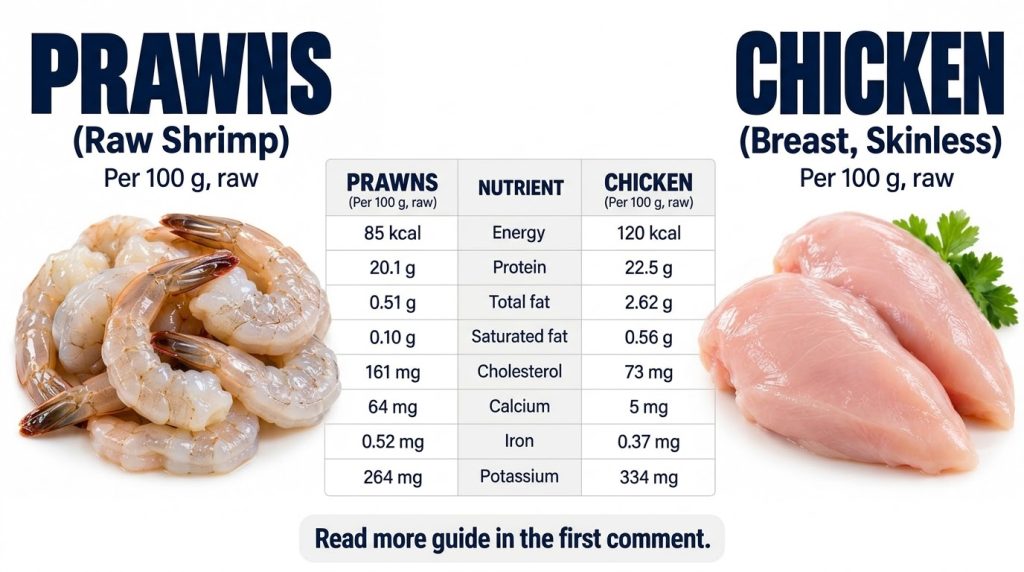
Nutrition Comparison: Prawns vs. Chicken (Per 100g Raw)
Let’s get straight to the facts with a clear comparison of their key nutritional components.
| Nutrient (per 100g raw) | Prawns (Approx.) | Skinless Chicken Breast (Approx.) |
|---|---|---|
| Calories | 85-100 kcal | 110-120 kcal |
| Protein | 20-24 g | 22-25 g |
| Fat | 0.5-1 g | 1-2 g |
| Carbohydrates | 0-0.5 g | 0 g |
| Fiber | 0 g | 0 g |
| Cholesterol | 150-200 mg | 50-70 mg |
| Sodium | 100-150 mg | 50-70 mg |
| Selenium | Significant | Significant |
| Vitamin B12 | Excellent source | Excellent source |
| Phosphorus | Good source | Good source |
| Zinc | Good source | Good source |
| Iodine | Excellent source | Trace |
| Omega-3s | Trace amounts | Trace amounts |
Calories
When it comes to calorie content, both prawns and skinless chicken breast are relatively low, making them excellent choices for weight management. Prawns typically contain slightly fewer calories per 100 grams compared to chicken breast. This can be a small advantage if you are meticulously counting calories.
Protein
Both options are phenomenal sources of lean protein, essential for muscle repair, growth, and overall bodily functions. You’ll find very similar protein levels in both prawns and chicken breast, with roughly 20-25 grams per 100-gram serving. This makes them equally effective for satiety and supporting an active lifestyle.
Fat
This is where a notable difference often appears. Prawns are remarkably low in total fat, often containing less than 1 gram per 100 grams. Skinless chicken breast is also very lean but usually has slightly more fat, typically in the range of 1-2 grams per 100 grams. Both are considered healthy, low-fat protein sources.
Carbohydrates
Neither prawns nor chicken breast contain significant carbohydrates. They are primarily protein sources, making them ideal for low-carb diets or for anyone looking to increase their protein intake without adding carbs.
Fiber
As animal products, neither prawns nor chicken breast naturally contain dietary fiber. To add fiber to your meal, pair these proteins with plenty of vegetables, whole grains, or legumes.
Vitamins
Both prawns and chicken breast are rich in B vitamins. They are particularly good sources of Vitamin B12, which is crucial for nerve function and red blood cell production. Chicken also offers niacin and Vitamin B6, while prawns contribute a good amount of Vitamin E.
Minerals
Prawns shine in their mineral content, particularly iodine and selenium. Iodine is vital for thyroid health, and selenium is a powerful antioxidant. Prawns also provide zinc and phosphorus. Chicken breast is also a good source of selenium, phosphorus, and zinc, though it generally contains less iodine than prawns.
Taste and Texture
Beyond the numbers, the culinary experience differs greatly between these two proteins:
- Prawns: Offer a delicate, slightly sweet flavor with a firm, succulent, and springy texture when cooked properly. They absorb flavors well, making them versatile for various cuisines.
- Chicken Breast: Has a more neutral flavor, making it incredibly adaptable to different seasonings and cooking methods. Its texture is typically tender and lean.
Best For
- Prawns: Excellent for quick-cooking meals, stir-fries, light salads, seafood pasta, or as an appetizer. Ideal for those looking for a very low-fat protein or needing a boost in iodine.
- Chicken Breast: A go-to for meal prep, grilling, roasting, curries, sandwiches, and almost any dish where a robust, versatile protein is needed. Perfect for building muscle and general healthy eating.
The Verdict: Which Packs More Punch?
There isn’t a single