The push-up is a foundational exercise, a true staple in any fitness routine. It’s fantastic for building upper body strength and core stability, using just your body weight. However, many people perform push-ups with incorrect form, which can limit their effectiveness and, more importantly, increase the risk of injury. Mastering the correct technique is not just about showing off; it’s about making every repetition count, activating the right muscles, and building a stronger, more resilient body.
This guide will walk you through the proper mechanics of a push-up, helping you understand the muscles involved and how to execute each movement with precision. Let’s transform your push-ups from a struggle into a powerful, effective exercise!
Why Form Matters: Beyond Just Moving
Proper form is the cornerstone of any effective exercise, and the push-up is no exception. When you execute a push-up with correct technique, you:
- Maximize Muscle Activation: You ensure that the target muscle groups — chest, shoulders, and triceps — are fully engaged, leading to greater strength gains.
- Prevent Injuries: Incorrect form can place undue stress on your joints (wrists, elbows, shoulders) and spine, potentially leading to pain or injury. Good form protects your body.
- Improve Efficiency: By moving correctly, you leverage your body’s mechanics more efficiently, making the exercise more effective and less taxing on compensatory muscles.
- Build a Strong Foundation: A well-executed push-up builds foundational strength that translates to other exercises and daily activities.
The Anatomy of a Perfect Push-Up
Understanding which muscles are working will help you perform the exercise with greater intention and control. While push-ups are often seen as a chest exercise, they are truly a full upper-body and core workout.
Primary Muscles Activated
- Pectoralis Major (Chest): This large muscle is responsible for pushing your body up from the floor.
- Anterior Deltoids (Shoulders): The front part of your shoulder muscles assists the chest in the pushing motion.
- Triceps Brachii (Back of Arms): These muscles are crucial for extending your elbows and completing the push-up.
Supporting Muscles
- Core Muscles (Abs, Obliques, Lower Back): Your core works to keep your body in a straight line, preventing sagging hips or an arched back.
- Glutes and Hamstrings: These engage to stabilize your lower body.
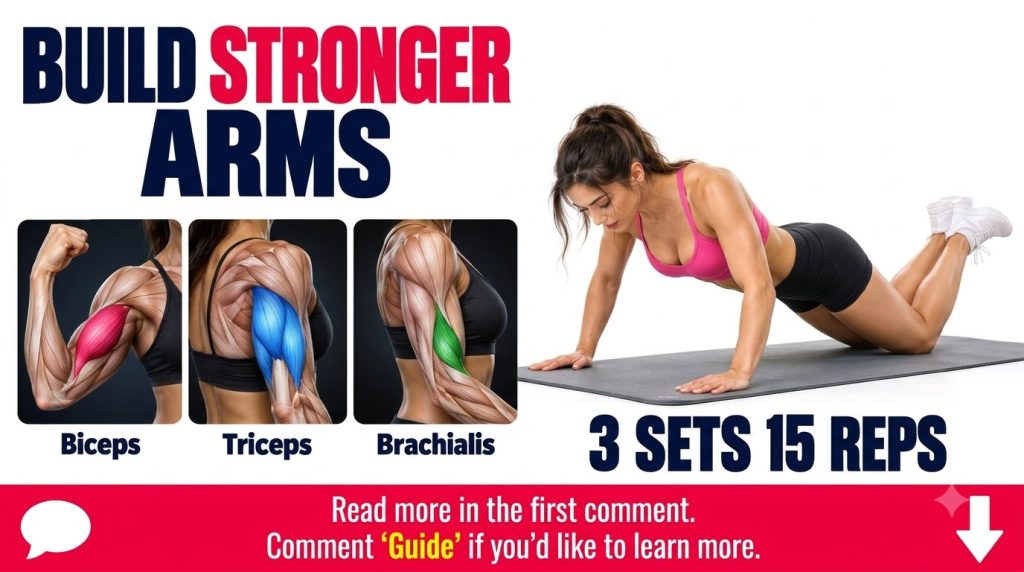
- Biceps Brachii (Front of Arms) and Brachialis/Anconeus: While not primary movers, these muscles, as highlighted in some anatomical references, play a stabilizing role in the elbow joint during the movement.
Step-by-Step Guide to the Classic Push-Up
Follow these steps to ensure you’re performing a classic push-up with perfect form:
- Starting Position: Begin on all fours, then extend your legs back so you’re in a plank position. Your hands should be placed slightly wider than your shoulders, with your fingers pointing forward. Your body should form a straight line from your head to your heels. Engage your core and glutes.
- Lowering Phase: Inhale as you bend your elbows, lowering your chest towards the floor. Keep your elbows tucked in at about a 45-degree angle to your body, not flared out to the sides. Lower until your chest is just a few inches from the floor, or as far as you can comfortably go while maintaining a straight body line.
- Pushing Up Phase: Exhale as you powerfully push through your hands, engaging your chest, shoulders, and triceps to return to the starting plank position. Keep your core tight and your body straight throughout the movement.
- Breathing and Control: Maintain a controlled pace throughout. Avoid rushing. Breathe in on the way down, and out on the way up.
Common Mistakes and How to Fix Them
Even experienced individuals can fall into common push-up traps. Here’s how to identify and correct them:
- Sagging Hips: If your hips drop towards the floor, your core isn’t engaged. Fix: Actively squeeze your glutes and brace your abs as if preparing for a punch to keep your body straight.
- Raised Hips (Pike Position): If your hips are too high, you’re taking pressure off your chest and shoulders. Fix: Focus on maintaining a straight line from head to heels throughout the entire movement.
- Flared Elbows: Elbows pointing directly out to the sides can strain your shoulder joints. Fix: Keep your elbows tucked in closer to your body, aiming for a 45-degree angle as you lower.
- Half Reps: Not going low enough or not fully extending at the top limits muscle activation. Fix: Focus on a full range of motion — chest close to the floor at the bottom, full arm extension (without locking elbows) at the top.
Variations to Build Strength
If the classic push-up is too challenging, or if you’re ready for more, there are variations to suit every fitness level:
- Wall Push-Ups: Stand facing a wall, place your hands on it slightly wider than shoulder-width, and lean in, bending your elbows. This reduces the load significantly.
- Incline Push-Ups: Perform push-ups with your hands elevated on a stable surface (e.g., a bench, chair, or sturdy box). The higher the elevation, the easier it becomes.
- Knee Push-Ups: Lower your knees to the ground and perform the push-up from this position, keeping your body straight from your head to your knees. This is an excellent way to build strength before moving to full push-ups.
Maximizing Your Gains: Tips for Success
- Consistency is Key: Regular practice, even just a few sets a few times a week, will yield noticeable improvements. Aim for a consistent routine, perhaps 3 sets of 10-15 repetitions as suggested in some fitness approaches, adjusting based on your current strength.
- Listen to Your Body: If you feel pain, stop. Don’t push through discomfort. Rest and recovery are just as important as the workout itself.
- Control the Movement: Avoid using momentum. Focus on slow, controlled descents and powerful, controlled pushes.
- Mindful Breathing: Proper breathing enhances performance and helps oxygenate your muscles.
Mastering your push-up form is a rewarding journey that will strengthen your body and boost your confidence. By focusing on technique, understanding muscle engagement, and consistently practicing, you’ll soon be performing push-ups like a pro. Remember, progress takes time and dedication, so celebrate every small improvement along the way!
Disclaimer: This article is for informational purposes only and does not constitute medical advice. Always consult with a qualified healthcare professional or fitness expert before starting any new exercise program, especially if you have any pre-existing health conditions or concerns.