Do you notice stubborn white, chalky, or yellowish streaks building up around your shower faucet and on your tiles? These unsightly marks are often hard water stains, caused by mineral deposits left behind as water evaporates. If you also have a leaky faucet, these stains can accumulate even faster, making your bathroom look less than pristine.
Before you reach for harsh chemical cleaners, consider trying a simple, effective DIY solution using common household ingredients. This method is gentle on surfaces, safer for your home environment, and can bring back the sparkle to your shower area. Plus, tackling these stains regularly can help extend the life of your fixtures and keep your bathroom feeling fresh.
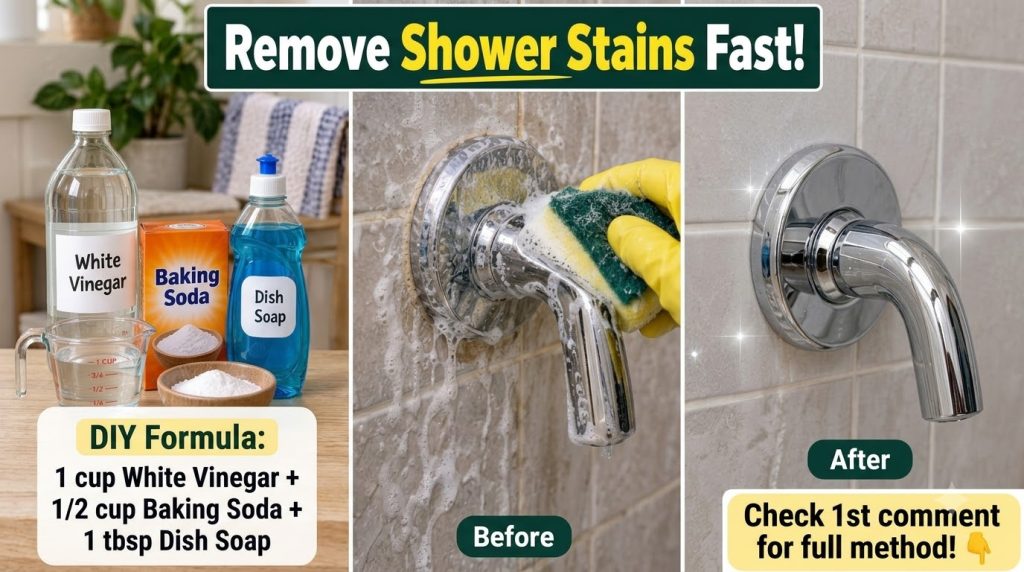
What You’ll Need
- 1 cup white vinegar
- 1/2 cup baking soda (optional, for a scrubbing paste)
- Empty spray bottle
- Soft scrubbing brush or sponge
- Microfiber cloths
- Old toothbrush (for crevices)
- Rubber gloves (optional, for comfort and protection)
Why This DIY Can Be Useful
This DIY relies on two powerhouse ingredients: white vinegar and baking soda. White vinegar is acidic, making it excellent at dissolving the mineral deposits that cause hard water stains. Its natural acidity breaks down the bonds holding the calcium and magnesium to your surfaces, allowing them to be wiped away.
Baking soda, while optional, serves as a mild abrasive that can help scrub away more stubborn grime and soap scum without scratching surfaces. It also has deodorizing properties, leaving your bathroom smelling fresh. Together, or even just vinegar alone, they provide an effective and natural cleaning alternative.
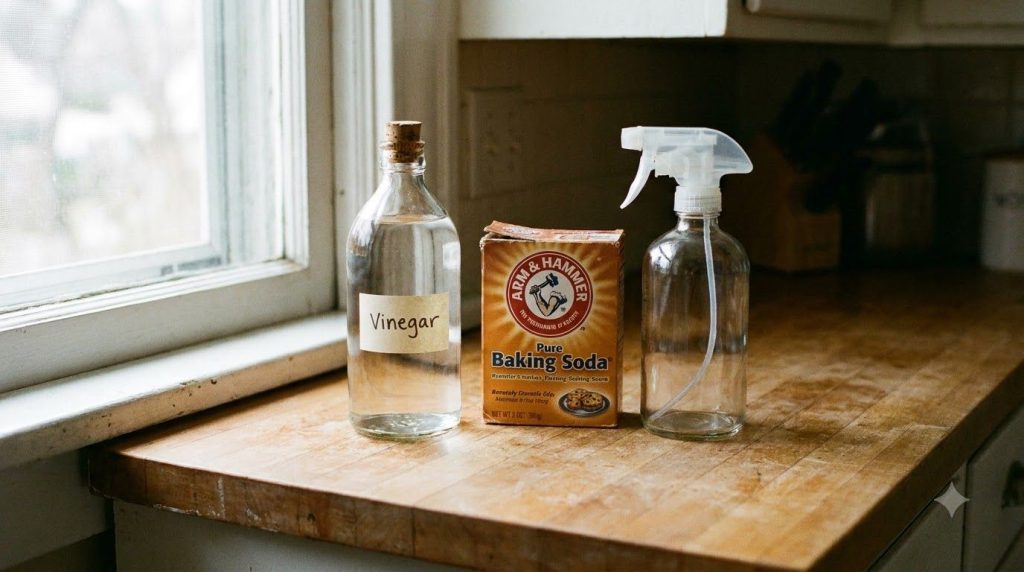
How to Make It
- Pour the white vinegar directly into your empty spray bottle. There’s no need to dilute it for tough hard water stains, but if you prefer, you can use a 1:1 ratio of vinegar to water.
- If you’re using baking soda for a scrubbing paste, simply keep it in its box or a small bowl; you’ll mix it as needed.
How to Use It
- Address Any Leaks First: For the most lasting results, try to address any leaks from your shower faucet before cleaning. A continuous drip will quickly lead to new stains.
- Prepare the Area: Clear any soaps, shampoos, and other items from around the faucet and affected tiles.
- Spray the Vinegar: Generously spray the white vinegar directly onto the hard water stains, soap scum, and grime around the faucet, on the handles, and on the surrounding tiles. Ensure the stained areas are thoroughly saturated.
- Let It Sit: Allow the vinegar to sit and work its magic for at least 15-30 minutes. For very stubborn stains, you can leave it for an hour or even longer. For an extra boost, you can soak a cloth in vinegar and drape it over the faucet and heavily stained areas.
- Create a Scrubbing Paste (Optional): If you have particularly tough buildup, sprinkle a small amount of baking soda onto your damp scrubbing brush or directly onto the stained areas. Alternatively, mix baking soda with a little vinegar or water in a small bowl to create a paste.
- Scrub Away: Using your scrubbing brush or sponge, vigorously scrub the stained surfaces. The vinegar will have loosened the mineral deposits, making them easier to remove. Use an old toothbrush to get into tight spots and crevices around the faucet and in grout lines.
- Rinse Thoroughly: Once you’ve scrubbed the stains away, rinse the entire area thoroughly with clean water. You can use your showerhead or a wet microfiber cloth for this.
- Wipe Dry: Immediately wipe down the faucet and tiles with a clean, dry microfiber cloth to prevent new water spots and enhance the shine.
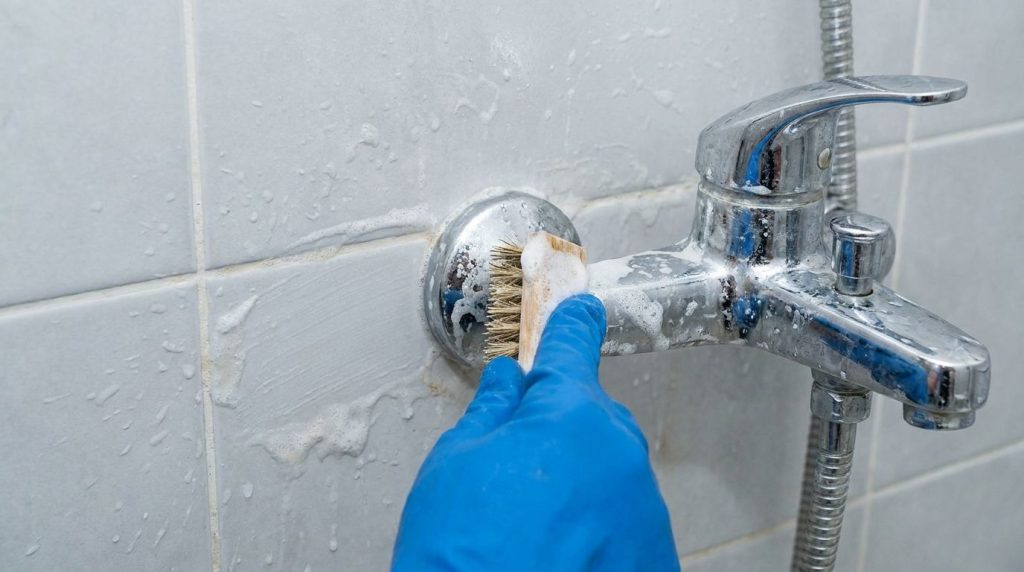
What to Expect
You can expect a significant reduction, if not complete removal, of hard water stains, soap scum, and general grime. Your shower faucet and surrounding tiles should look cleaner and shinier. For extremely old or severe buildup, you might need to repeat the process or extend the soaking time. While this method is very effective, it may not restore severely corroded fixtures to their original condition.
Helpful Tips
- Regular Maintenance: To prevent heavy buildup, make this a part of your weekly or bi-weekly cleaning routine. A quick spray and wipe can save you from a major scrubbing session.
- Wipe Down After Each Use: Keeping a squeegee or a microfiber cloth in the shower and quickly wiping down the faucet and tiles after each use can drastically reduce water spots and mineral accumulation.
- Ventilation: Always ensure good ventilation in your bathroom to help dry surfaces faster and reduce moisture, which contributes to mineral buildup and mold.
Important Notes / Safety
- Ventilation: Even with natural ingredients, it’s always wise to ensure good ventilation when cleaning your bathroom. Open a window or turn on the exhaust fan.
- Patch Test: Before applying vinegar to your entire surface, especially on natural stone tiles (like marble, granite, or travertine) or colored grout, always test a small, inconspicuous area first. Vinegar’s acidity can etch or discolor some sensitive materials.
- Avoid Mixing: Never mix vinegar with bleach or hydrogen peroxide, as this can create dangerous fumes. Stick to using vinegar on its own or with baking soda.
- Skin Sensitivity: If you have sensitive skin, consider wearing rubber gloves to protect your hands during scrubbing.
- Eye Contact: Avoid direct contact with eyes. If contact occurs, rinse thoroughly with water.
- Keep Out of Reach: Store cleaning solutions out of reach of children and pets.
