4 Incredible Cleaning Hacks Using Coca-Cola: From Greasy Stovetops to Sparkling Glass
Cleaning stubborn grease, bathroom grout, rust, and mineral spots often requires harsh chemical products that can be expensive and sometimes even harmful to your health or the environment. But what if we told you that you could tackle many of these everyday household cleaning challenges using a surprising and accessible ingredient found right in your kitchen: Coca-Cola?
Yes, the popular fizzy drink isn’t just for quenching your thirst! Its unique chemical composition makes it a powerful, albeit unconventional, cleaning agent. Below is the complete guide detailing four powerful cleaning hacks combining Coca-Cola with everyday household items to restore your home effortlessly and effectively.
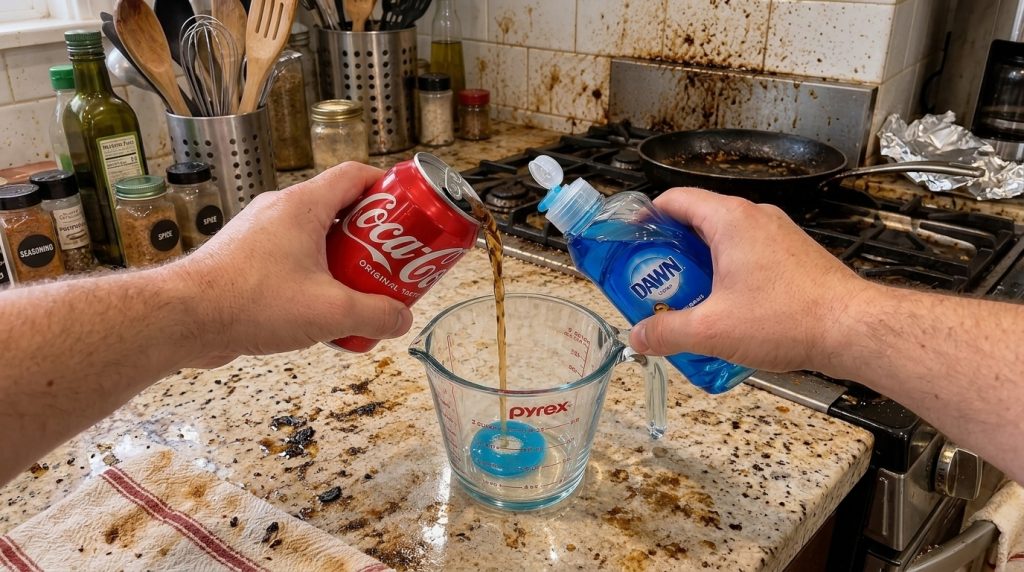
1. Cut Through Greasy Stovetop Grime (Coca-Cola & Dish Soap)
Greasy buildup and burnt-on food residue on stovetops can be notoriously difficult to scrub away with water alone. This simple concoction harnesses the degreasing power of dish soap and the acidic punch of Coca-Cola.
Ingredients:
- Coca-Cola: 1/2 cup
- Dish soap: 2 tablespoons
How to do it:
- Pour the Coca-Cola and dish soap into a container and mix them gently. Avoid shaking too vigorously to prevent excessive fizzing.
- Apply the mixture directly onto the greasy, burnt-on areas of your stovetop. Ensure the surface is cool before application.
- Let the solution sit for about 5-10 minutes. This allows the acids in the cola to start breaking down the burnt-on particles and the dish soap to emulsify the grease.
- Use a non-abrasive sponge or cloth to scrub the pre-existing grease. For tougher spots, a soft-bristled brush can be effective.
- Wipe away the loosened grime with a clean, damp cloth, then rinse thoroughly with water. The carbonation and acidity of the cola help break down oils while the soap lifts away the loosened grime, leaving a shiny metallic finish.
2. Scrub Away Dirty Tile Grout (Coca-Cola & Baking Soda)
Tile grout lines easily trap dark dirt and grime, making your floors and backsplashes look dingy. This powerful duo creates a fizzing, scrubbing action that lifts away embedded dirt.
Ingredients:
- Coca-Cola: 1/4 cup
- Baking Soda: 2 tablespoons
How to do it:
- In a small bowl, combine the Coca-Cola and baking soda to form a paste. The mixture will fizz, which is a sign of the chemical reaction at work.
- Apply the paste directly onto the dirty grout lines using an old toothbrush or a small brush.
- Allow the paste to sit and work its magic for 10-15 minutes.
- Scrub the grout lines vigorously with the brush. The baking soda acts as a gentle abrasive, while the acid from the cola helps to dissolve the grime.
- Rinse the area thoroughly with clean water, wiping away any residue with a damp cloth. You’ll be amazed at how much brighter your grout becomes!
3. Tackle Stubborn Rust Spots (Coca-Cola & Aluminum Foil)
Rust can plague metal tools, old screws, or even chrome fixtures around the house. Coca-Cola’s phosphoric acid is a natural rust dissolver.
Ingredients:
- Coca-Cola: Enough to submerge rusty items or a small amount for spot treatment.
- Aluminum foil: A small piece, crumpled.
How to do it:
- For small, rusty items (like screws, nuts, or old coins), immerse them in a bowl of Coca-Cola. Let them soak overnight for best results, or for at least a few hours.
- For larger rusted areas on surfaces like chrome bumpers or tools, saturate a cloth with Coca-Cola and lay it over the rust, or pour cola directly onto the spot. Let it sit for 30 minutes to an hour.
- After soaking, remove the item or lift the cloth. Crumple a piece of aluminum foil into a ball and use it to scrub the rusted areas. The foil, softer than steel wool, acts as a mild abrasive that won’t scratch most metals, while reacting with the phosphoric acid to help remove the rust.
- Rinse the cleaned item or surface thoroughly with water and dry completely to prevent new rust from forming.
4. Erase Hard Water & Toilet Stains (Coca-Cola)
Those unsightly brown rings in the toilet bowl or persistent hard water stains on porcelain can be a real nuisance. The acidity of Coca-Cola can dissolve these mineral deposits effectively.
Ingredients:
- Coca-Cola: 1 can or 1-2 cups
How to do it:
- For toilet bowl stains, pour an entire can of Coca-Cola directly into the bowl, ensuring it covers the stained areas, especially along the water line.
- Let the Coca-Cola sit in the toilet bowl for at least an hour, or even overnight for very tough stains. The longer it sits, the more effective it will be at breaking down the mineral deposits.
- After soaking, use a toilet brush to scrub the stained areas. The stains should loosen and scrub away much more easily.
- Flush the toilet to rinse away the cola and dissolved stains.
- For hard water stains on other porcelain or ceramic surfaces (like sinks or shower tiles), soak a cloth in Coca-Cola and lay it over the stained area, letting it sit for an hour before scrubbing and rinsing.
Why Does Coca-Cola Work for Cleaning? The Science Behind the Fizz
The secret to Coca-Cola’s unexpected cleaning power lies in its acidity. The primary active ingredient responsible is phosphoric acid, which is also found in many commercial rust removers and cleaners. Coca-Cola also contains carbonic acid, which is what gives it its fizz. These acids react with metal oxides (like rust) and mineral deposits (like calcium and magnesium from hard water), breaking them down and making them easier to scrub away.
- Phosphoric Acid: This potent acid excels at dissolving rust (iron oxide) and mineral deposits.
- Carbonic Acid: The fizz helps to agitate and lift dirt particles from surfaces.
- Mild Abrasiveness: When combined with agents like baking soda or even aluminum foil, the physical scrubbing action further enhances the chemical reaction, leading to sparkling results.
Important Safety and Usage Tips
- Always rinse thoroughly: After using Coca-Cola for cleaning, always rinse the surface with clean water to remove any sticky residue from the sugar.
- Test in an inconspicuous area: Before applying Coca-Cola to a large or visible surface, test it on a small, hidden spot to ensure it doesn’t cause discoloration or damage, especially on delicate materials like marble or certain types of sealant.
- Avoid electronics: Never use Coca-Cola to clean electronic devices or components.
- Not a disinfectant: While effective at removing stains and grime, Coca-Cola is not a disinfectant. For sanitization, follow up with appropriate cleaning products.
Who knew your favorite fizzy drink could be such a powerhouse in your cleaning arsenal? By harnessing the acidic properties of Coca-Cola, combined with common household items, you can tackle some of the toughest cleaning challenges around your home, saving money and reducing your reliance on harsh chemicals. Give these hacks a try and enjoy a cleaner home the unexpected way!