Craving a dessert that’s light as a cloud and melts in your mouth? The Japanese cheesecake, also known as cotton cheesecake or soufflé cheesecake, delivers an unparalleled airy, jiggly texture that has charmed dessert lovers worldwide. This isn’t your dense New York-style cheesecake; it’s a delicate creation that feels almost weightless.
Many believe this unique dessert is complicated to make at home, but with our simple, step-by-step guide, you’ll be baking a perfect, jiggly Japanese cheesecake in no time. Get ready to impress yourself and your loved ones with this delicate dessert that truly lives up to its ‘melt-in-your-mouth’ reputation. Let’s dive into the magic!
The Secret to that Signature Jiggly Texture
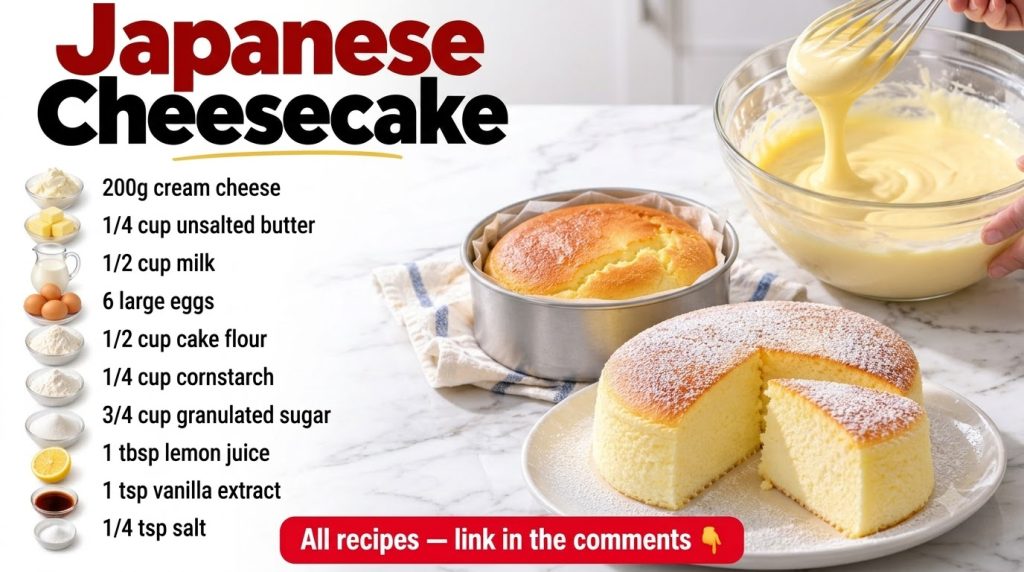
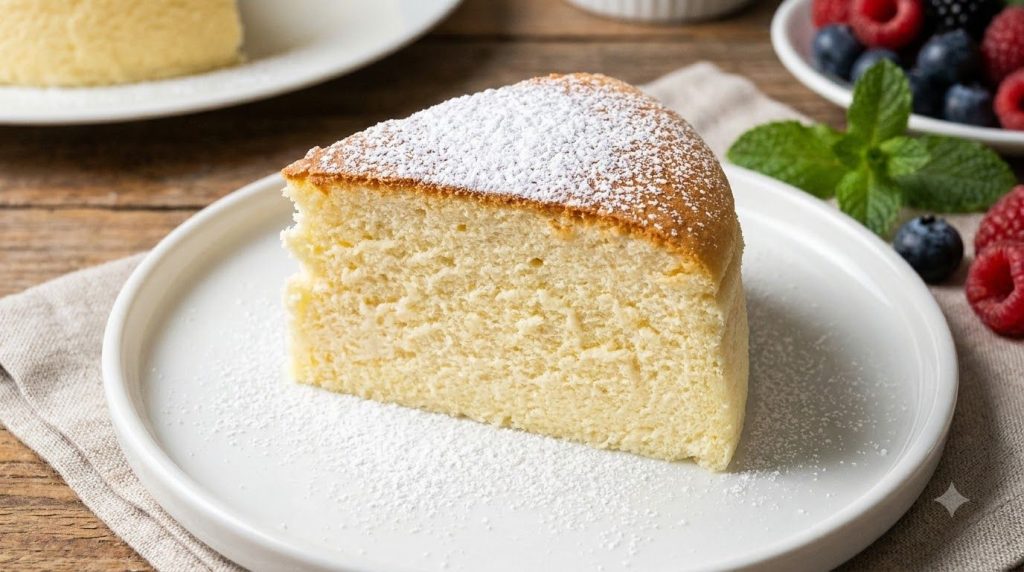
The characteristic ‘jiggle’ and airy texture of Japanese cheesecake come from a combination of methods. Unlike traditional cheesecakes, it uses a meringue base (whipped egg whites) folded into a cream cheese batter, similar to a soufflé. Baking it in a water bath (bain-marie) also ensures gentle, even cooking, preventing cracks and keeping the cake incredibly moist and tender. This delicate balance of ingredients and cooking technique is key to achieving its signature lightness.
What You’ll Need: Ingredients for Fluffy Japanese Cheesecake
To recreate this delightful dessert, you’ll need precise measurements and good quality ingredients. Here’s a comprehensive list for a standard 9-inch (23 cm) round cake, which typically yields 8-10 servings:
- 250 grams (8.8 oz) cream cheese, softened
- 50 grams (1/4 cup) unsalted butter
- 100 ml (approx. 2/5 cup) whole milk
- 6 large eggs, separated
- 100 grams (1/2 cup) granulated sugar, divided (60g for batter, 40g for meringue)
- 60 grams (1/2 cup) cake flour, sifted (all-purpose flour can be used, but cake flour yields a finer crumb)
- 20 grams (2 tablespoons) cornstarch, sifted
- 1 tablespoon fresh lemon juice
- 1 teaspoon vanilla extract
- Pinch of salt
Equipment Essentials
Having the right tools will make your baking process smooth and enjoyable:
- 9-inch (23 cm) round springform pan
- Parchment paper
- Large roasting pan (for the water bath)
- Electric mixer (stand mixer or hand mixer)
- Several mixing bowls
- Whisk and spatula
- Fine-mesh sieve for sifting dry ingredients
Step-by-Step: Crafting Your Japanese Cheesecake
Follow these instructions carefully to ensure a perfect, jiggly result.
Preparation is Key (Prep Time: 30 minutes)
- Preheat Oven & Prepare Pan: Preheat your oven to 325°F (160°C). Line the bottom and sides of your 9-inch springform pan with parchment paper. If using a springform pan, wrap the outside bottom and sides tightly with aluminum foil to prevent water from seeping in during the water bath.
- Set Up Water Bath: Place the foil-wrapped springform pan inside a larger roasting pan.
Making the Cream Cheese Batter
- Melt Wet Ingredients: In a heatproof bowl set over a pot of simmering water (double boiler method), combine the softened cream cheese, unsalted butter, and whole milk. Stir constantly until the mixture is smooth and fully melted. Remove from heat and let cool slightly.
- Add Yolks & Flavor: Whisk in the 6 egg yolks, lemon juice, and vanilla extract into the cream cheese mixture until well combined.
- Incorporate Dry Ingredients: Sift the cake flour and cornstarch directly into the cream cheese mixture. Whisk until no lumps remain and the batter is smooth. Set aside.
Creating the Meringue
- Whip Egg Whites: In a separate, clean, large bowl, add the 6 egg whites and a pinch of salt. Using an electric mixer, beat the egg whites on medium speed until foamy.
- Gradually Add Sugar: Slowly add the remaining 40 grams of granulated sugar, a little at a time, while continuing to beat the egg whites. Increase speed to high and beat until stiff peaks form. The meringue should be glossy and hold its shape when you lift the whisk. Be careful not to overbeat, as this can make the meringue dry.
Combining and Baking (Cook Time: 60-75 minutes)
- Fold Meringue into Batter: Gently fold one-third of the meringue into the cream cheese batter using a spatula to lighten it. Then, carefully fold in the remaining meringue in two additions, taking care not to deflate the air. Mix just until no white streaks remain. Overmixing will result in a dense cake.
- Pour and Bake: Pour the cheesecake batter into the prepared springform pan. Gently tap the pan on the counter a few times to release any large air bubbles.
- Add Hot Water to Bath: Carefully pour hot water into the larger roasting pan, around the cheesecake pan, until it reaches about halfway up the sides of the springform pan.
- Bake: Carefully transfer the roasting pan to the preheated oven. Bake for 60-75 minutes, or until the top is golden brown and the center is set but still slightly jiggly when gently shaken.
- Cool Gradually: Once baked, turn off the oven and leave the oven door ajar for about 15-20 minutes. This slow cooling prevents the cheesecake from collapsing too much.
- Chill: Remove the cheesecake from the water bath and the roasting pan. Allow it to cool completely on a wire rack at room temperature. Once cooled, cover and refrigerate for at least 4 hours, or preferably overnight, for the best texture and flavor.
Tips for a Perfect Japanese Cheesecake Every Time
- Room Temperature Ingredients: Ensure cream cheese, butter, and milk are at room temperature for a smooth, lump-free batter.
- Don’t Overmix: Overmixing can lead to a dense cheesecake. Mix only until ingredients are just combined, especially when folding in the meringue.
- Water Bath is Essential: The water bath provides gentle, moist heat, crucial for the cake’s light texture and preventing cracks.
- Cool Gradually: Drastic temperature changes can cause the cheesecake to crack or collapse. Always allow it to cool slowly in the oven before chilling.
- Sift Dry Ingredients: Sifting flour and cornstarch prevents lumps and contributes to the smooth, airy texture.
- Use Cake Flour: While all-purpose flour works, cake flour has a lower protein content, leading to a more tender and delicate crumb.
Serving and Storage
Dust your chilled Japanese cheesecake with a light coating of powdered sugar just before serving for a beautiful finish. It’s best enjoyed cold. Store any leftovers in an airtight container in the refrigerator for up to 3-4 days.
Final Thoughts
Baking a fluffy Japanese cheesecake is a rewarding experience that combines delicate technique with irresistible flavor. From the careful folding of the meringue to the gentle bake in a water bath, each step contributes to the legendary jiggly, melt-in-your-mouth texture. This recipe proves that even gourmet desserts can be accessible to home bakers. So, roll up your sleeves, gather your ingredients, and get ready to create a truly magical dessert that will surely become a favorite. Enjoy every light and airy bite!