Do you dream of bountiful harvests but feel limited by the size of your garden? Whether you have a small backyard, a tiny balcony, or just a few containers, the good news is you can still grow an impressive amount of fresh produce! The secret lies in a clever technique called ‘intensive planting’ or ‘crowded planting,’ and it’s a game-changer for maximizing your garden’s output.
Forget everything you thought you knew about wide spacing between plants. While some vegetables certainly need their room, many actually thrive and produce more when planted closer together. This method makes the most of every inch of soil, suppresses weeds, and even helps retain soil moisture.
Understanding the Magic of Crowded Planting
Crowded planting isn’t about haphazardly tossing seeds into a bed. It’s a strategic approach where compatible plants are placed closer than traditional guidelines suggest, allowing them to form a living mulch that shades the soil, keeps it cool, and reduces evaporation. This creates a microclimate that benefits many shallow-rooted and leafy greens.
By optimizing space, you get more yield from a smaller footprint. This method is especially popular in raised beds, container gardens, and urban gardening setups where space is a premium.
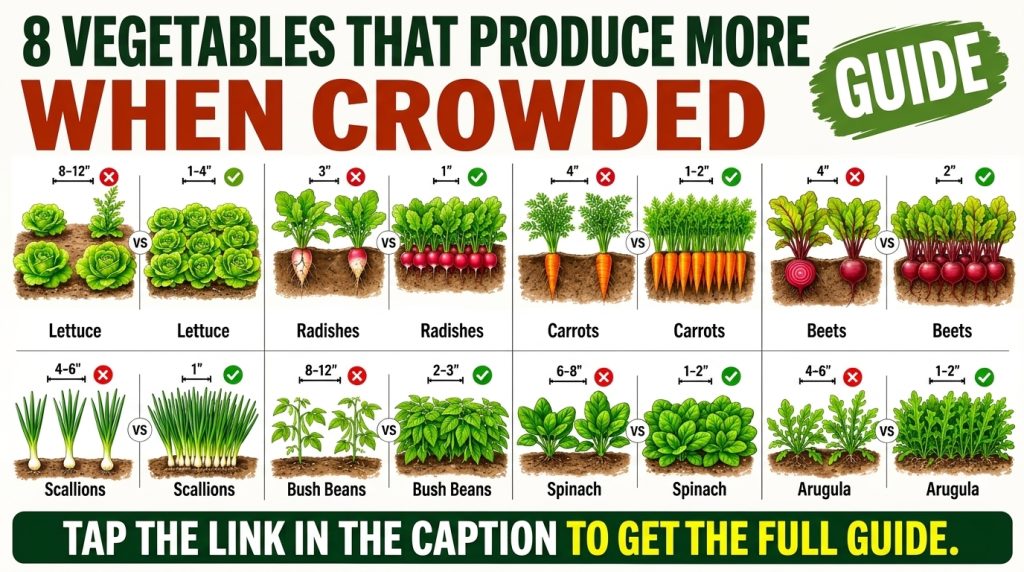
Which Vegetables Love to Be Crowded?
Not all plants enjoy close company, but many of your favorite vegetables will flourish with a bit of strategic crowding. Here are some top contenders:
Lettuce & Leafy Greens (Spinach, Arugula)
- Why they love it: These fast-growing greens can be harvested as ‘cut and come again,’ meaning you can snip the outer leaves and let the inner ones continue to grow. Planting them densely ensures a continuous supply of tender leaves. The dense canopy also shades the soil, keeping it cool and moist, which helps prevent bolting in hot weather.
- How to do it: Plant seeds or seedlings just a few inches apart. Harvest by picking individual outer leaves rather than the whole head.
Radishes
- Why they love it: Radishes are quick growers, maturing in as little as three weeks. They don’t mind close neighbors because their edible root develops underground, and their small foliage doesn’t compete heavily for sunlight. Crowded planting encourages them to grow straight down.
- How to do it: Sow seeds about 1-2 inches apart in all directions. Harvest them young for the best flavor and tenderness.
Carrots
- Why they love it: Similar to radishes, carrots are root vegetables that grow beneath the soil. When planted closely, their foliage creates a dense canopy that helps keep the soil moist and loose, which is crucial for straight root development.
- How to do it: Sow seeds about 2-3 inches apart. Thin as needed to give larger roots space, but don’t be afraid to keep them closer than traditional recommendations.
Beets
- Why they love it: Beets can be grown for both their roots and their delicious greens. They handle crowded conditions well because their leaves grow upright, and the roots push against each other, often leading to slightly smaller but equally tasty individual beets.
- How to do it: Plant beet seeds (which are actually clusters of multiple seeds) 2-3 inches apart. You can thin them by harvesting some young beet greens, leaving others to develop larger roots.
Scallions (Green Onions)
- Why they love it: Scallions are naturally clumping plants. They actually prefer to grow in groups, and crowding them encourages long, slender white bases. They are also ‘cut and come again,’ allowing for multiple harvests from the same patch.
- How to do it: Plant onion sets or seeds closely together, about 1 inch apart. Snip what you need, and they’ll regrow!
Bush Beans
- Why they love it: Unlike pole beans, bush beans are self-supporting and grow compactly. Planting them closer together can actually provide mutual support, especially in windy conditions. The dense foliage also helps to keep bean pods shaded and cool.
- How to do it: Plant seeds 4-6 inches apart in a grid pattern.
Tips for Successful Crowded Planting
- Rich Soil is Key: With more plants in a smaller area, they’ll need more nutrients. Amend your soil with plenty of compost and organic matter before planting.
- Consistent Watering: Denser planting means plants might transpire more, and the soil might dry out faster. Water regularly and deeply.
- Fertilize Regularly: Provide a balanced organic fertilizer every few weeks to ensure all plants get enough food to thrive.
- Good Air Circulation: While crowding is beneficial, ensure there’s still enough air circulation to prevent fungal diseases. Avoid planting in overly humid, shaded spots.
- Harvest Often: Regular harvesting encourages new growth and prevents plants from becoming stressed or bolting. It also makes space for remaining plants to expand.
Transform Your Garden Space Today!
Don’t let a small garden footprint limit your gardening dreams. By embracing crowded planting, you can significantly boost your harvest and enjoy an abundance of fresh, homegrown vegetables. It’s an efficient, rewarding, and surprisingly simple way to get more from your garden.
Give these techniques a try and watch your small space transform into a powerhouse of delicious produce. Happy gardening!