A messy stovetop is a common sight in any busy kitchen, often a casualty of delicious cooking. Burnt-on food and grease can seem impossible to remove, leaving your kitchen feeling less than sparkling. But don’t despair! This simple deep-cleaning method is designed to tackle even the most stubborn stovetop grime, bringing back that fresh, clean look without endless scrubbing. It’s an effective way to restore your kitchen’s sparkle and make daily cooking a more pleasant experience.
What You’ll Need
- Heavy-duty kitchen degreaser or oven/stovetop cleaner (foaming is often effective)
- Durable scrubbing sponge (like the yellow and green type)
- Microfiber cloths or clean paper towels
- Rubber gloves (for protection)
- Warm water
- Non-abrasive scraper (optional, for very tough, hardened spots)
Why This DIY Can Be Useful
Regular cooking can leave behind layers of grease, food splatters, and burnt-on residue that general wiping can’t handle. Heavy-duty kitchen degreasers are formulated with strong surfactants and solvents designed to break down oils, fats, and carbonized food particles. When applied correctly and given time to work, these cleaners penetrate the grime, making it much easier to lift away with a scrubbing sponge, transforming your stovetop from grimy to gleaming.
How to Use It
- Prepare Your Stovetop: Ensure your stovetop is completely cool before starting. Remove all grates, burner caps, and any other removable parts. If these also need cleaning, you can soak them in a separate sink with hot soapy water or apply the degreaser to them as well.
- Protect Yourself and Your Surroundings: Put on your rubber gloves. You may also want to lay down newspaper or old towels around the stovetop to catch any drips, especially if you have sensitive countertops.
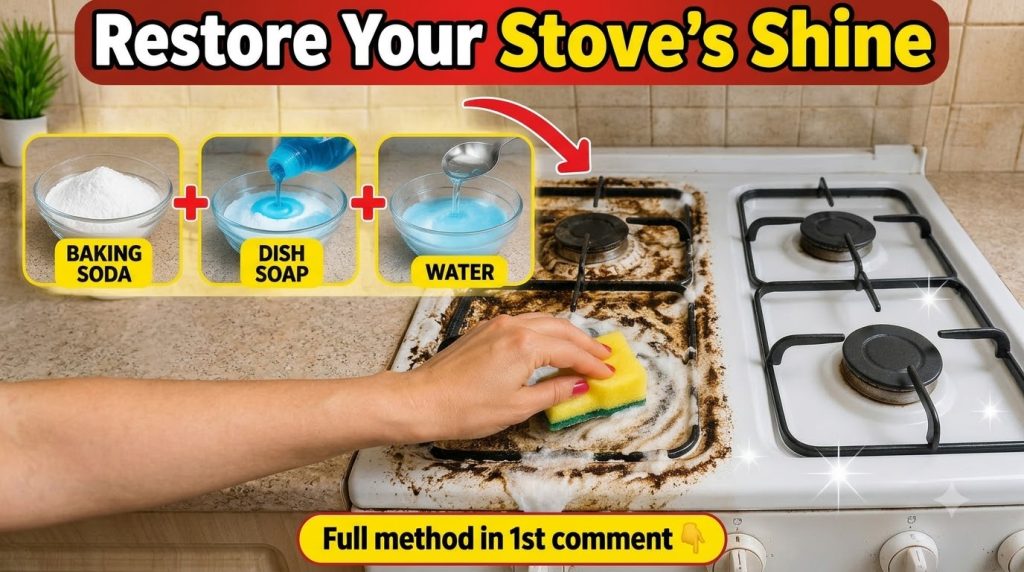
- Apply the Cleaner: Generously spray or apply the heavy-duty degreaser directly onto the heavily soiled areas of your stovetop. Ensure good coverage, especially on burnt-on spots, mimicking the foaming application seen in the image.
- Allow It to Work: Let the cleaner sit on the surface for the time recommended on its packaging, typically 5-15 minutes. This allows the chemicals to penetrate and break down the tough grime. Do not let the cleaner dry out.
- Scrub the Grime Away: Using your durable scrubbing sponge, begin scrubbing the treated areas. Focus on the burnt-on residue, applying firm but not excessive pressure. You should see the grime loosening and lifting away. For exceptionally stubborn spots, you can use a non-abrasive scraper carefully, holding it at a shallow angle to avoid scratching the surface.
- Wipe Clean: Dampen a microfiber cloth with warm water and thoroughly wipe down the entire stovetop surface, removing all cleaner residue and loosened grime. Rinse the cloth frequently and continue wiping until the surface is clean and free of streaks. You may need to use several cloths or paper towels.
- Dry and Reassemble: Use a dry microfiber cloth to buff the stovetop dry. Once completely dry, replace all grates and burner caps.
What to Expect
After following these steps, you can expect a significantly cleaner stovetop with most, if not all, of the burnt-on food and grease removed. While it may not look brand new if there are deep scratches or stains etched into the enamel, it will be visibly refreshed and much more hygienic. The hard work of deep cleaning will bring a satisfying shine back to your kitchen.
Helpful Tips
- Ventilation is Key: Always ensure your kitchen is well-ventilated when using strong cleaning products. Open windows or turn on your range hood.
- Regular Maintenance: To avoid future deep-cleaning sessions, wipe down your stovetop with a mild kitchen cleaner after each use.
- Tackle Spills Immediately: The quicker you clean up spills, the less likely they are to burn on and become tough stains.
- Patch Test: If you’re unsure about the cleaner’s effect on your particular stovetop material, test it on an inconspicuous area first.
Important Notes / Safety
Always read and follow the instructions and safety warnings on your chosen cleaning product. Avoid getting chemical cleaners on control knobs or electronic displays, as they could damage the finish or internal components. Store cleaning products safely out of reach of children and pets. Proper rinsing is crucial to ensure no chemical residue is left behind that could affect future cooking or create fumes when heated.