Trees are the silent giants of our world, shaping landscapes, providing shade, and adding breathtaking beauty with their unique forms, vibrant flowers, or striking foliage. From towering ancient specimens to delicate flowering wonders, each tree tells a story and contributes to the richness of our planet. As gardeners, we often dream of cultivating these magnificent beings, bringing a touch of the extraordinary into our own outdoor spaces. While some of the world’s most stunning trees require specific climates or vast expanses, understanding their unique characteristics can inspire thoughtful landscape design or simply deepen our appreciation for nature’s artistry.
Join us on a journey to discover 12 truly remarkable trees. We’ll explore what makes each one so special, from their ideal growing conditions to practical considerations for those wishing to incorporate a touch of global grandeur into their gardening endeavors, whether in a sprawling backyard or through careful selection for a specialized environment.
Understanding Tree Suitability for Your Landscape
Before you fall in love with a stunning tree, it’s crucial to consider its long-term needs and how it will fit into your specific environment. Factors like USDA hardiness zones, mature height and spread, soil preferences, and water requirements are paramount. Many of the trees highlighted below are tropical or subtropical and thrive only in warmer climates (Zones 9-11), while others are adapted to specific arid or mountainous regions. For those outside these optimal zones, appreciating them in botanical gardens or specialized conservatories often becomes the practical approach.
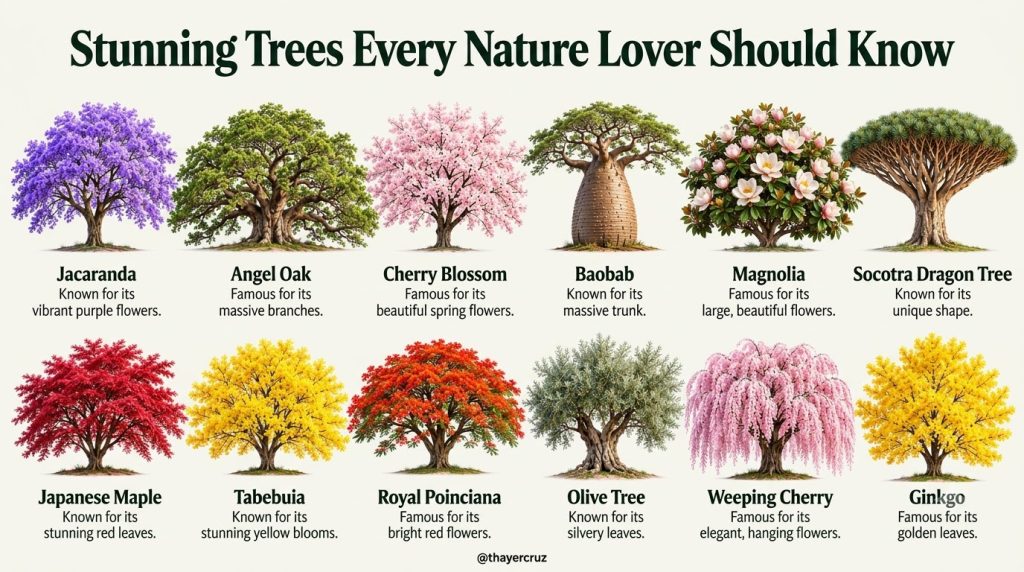
Jacaranda Tree (Jacaranda mimosifolia)
Known for its spectacular violet-blue, trumpet-shaped flowers that blanket the tree and the ground beneath, the Jacaranda creates a truly magical display in late spring to early summer. Its fern-like foliage adds a delicate texture even when not in bloom.
- Hardiness: USDA Zones 9-11. Grown as an ornamental tree in frost-free to mildly frosty regions.
- Plant Type: Deciduous to semi-evergreen flowering tree.
- Exposure: Full sun (at least 6 hours direct sunlight).
- Height: 25-50 feet (7.5-15 m)
- Spread: 20-30 feet (6-9 m)
Practical Care: Prefers well-drained, sandy soil. Established trees are drought-tolerant but benefit from deep watering during dry spells. Avoid pruning young trees excessively, as this can reduce flowering. The fallen flowers can create a mess on patios and sidewalks, a consideration for placement.
Ginkgo Tree (Ginkgo biloba)
An ancient species often called a ‘living fossil,’ the Ginkgo is celebrated for its unique fan-shaped leaves that turn a brilliant golden-yellow in the fall, creating a stunning seasonal spectacle. It’s incredibly resilient and tolerant of urban pollution.
- Hardiness: USDA Zones 3-8.
- Plant Type: Deciduous tree.
- Exposure: Full sun to partial shade.
- Height: 50-80 feet (15-24 m), some cultivars smaller.
- Spread: 30-40 feet (9-12 m)
Practical Care: Prefers well-drained soil and is adaptable to a wide range of soil types, including poor urban soils. Choose male cultivars to avoid the foul-smelling fruit produced by female trees. Plant in an area with ample space to appreciate its majestic form.
Baobab Tree (Adansonia digitata)
Instantly recognizable by its massive, bottle-shaped trunk and sparse canopy, the Baobab is a symbol of the African savanna. It can live for thousands of years and stores water in its trunk, earning it the nickname ‘tree of life.’ Its large, white, nocturnal flowers are pollinated by bats.
- Hardiness: USDA Zones 10-12 (tropical/subtropical, sensitive to frost).
- Plant Type: Deciduous succulent tree.
- Exposure: Full sun.
- Height: 40-75 feet (12-23 m).
- Spread: 30-50 feet (9-15 m).
Practical Care: Requires extremely well-drained soil and a warm, dry climate. It can be grown in large containers in non-tropical zones and overwintered indoors, but it’s a slow grower when cultivated outside its native range. Appreciate its unique form as a specimen plant.
Rainbow Eucalyptus (Eucalyptus deglupta)
The Rainbow Eucalyptus is a marvel, known for its spectacularly colored bark that peels away to reveal streaks of green, orange, purple, and maroon underneath. This vibrant display makes it look like a living abstract painting.
- Hardiness: USDA Zones 9-11 (frost-tender).
- Plant Type: Evergreen tree.
- Exposure: Full sun.
- Height: 100-200 feet (30-60 m) in native habitats, smaller in cultivation.
- Spread: 30-50 feet (9-15 m).
Practical Care: Needs consistently moist, well-drained soil and a warm, humid climate. Due to its potentially massive size, it’s best suited for large landscapes in tropical and subtropical regions. In cooler zones, it can be grown as a fast-growing container plant and trimmed, though it won’t reach its full splendor.
Wisteria (Wisteria sinensis, Wisteria floribunda)
While often trained as a standard to resemble a small tree, Wisteria is fundamentally a vigorous, woody vine. Its long, pendulous clusters of fragrant purple, blue, pink, or white flowers are an iconic sight in spring and early summer.
- Hardiness: USDA Zones 5-9 (varies by species/cultivar).
- Plant Type: Deciduous woody vine, often trained as a standard or over pergolas.
- Exposure: Full sun for best flowering.
- Height: Can reach 20-30 feet (6-9 m) as a vine; trained standards are smaller.
- Spread: 10-15 feet (3-4.5 m) as a vine.
Practical Care: Requires strong support and diligent pruning to control its vigorous growth and promote flowering. Plant in well-drained soil. Consider native American wisteria species (e.g., W. frutescens) as alternatives to the more aggressive Asian varieties, which can be invasive in some areas of the US.
Dragon’s Blood Tree (Dracaena cinnabari)
Native to the Socotra archipelago, this tree has an unmistakable umbrella-shaped canopy and secretes a dark red resin, known as ‘dragon’s blood,’ when cut. Its unique form is an adaptation to its arid, windy environment.
- Hardiness: USDA Zones 10-12 (extremely sensitive to cold).
- Plant Type: Evergreen tree/succulent tree.
- Exposure: Full sun.
- Height: 20-30 feet (6-9 m).
- Spread: 20-30 feet (6-9 m).
Practical Care: Demands arid conditions and excellent drainage. It’s a very slow-growing tree, typically seen in botanical collections or as a unique, high-value specimen in specific subtropical dry climates. Not suitable for most home gardens.
Kapok Tree (Ceiba pentandra)
A majestic tropical tree, the Kapok is known for its immense buttress roots, thorny trunk, and the fluffy fiber (kapok) produced by its seed pods. It’s a vital part of rainforest ecosystems.
- Hardiness: USDA Zones 10-12 (tropical, requires warm temperatures year-round).
- Plant Type: Deciduous tree.
- Exposure: Full sun.
- Height: 60-150 feet (18-45 m) or more.
- Spread: 40-70 feet (12-21 m).
Practical Care: Needs ample space and a consistently warm, humid climate. Its rapid growth and large size make it unsuitable for most residential landscapes, but it’s a truly stunning sight in botanical gardens or its native tropical regions.
Cherry Blossom Tree (Prunus serrulata and other species)
Synonymous with spring, Cherry Blossom trees (often ornamental cherries) are adored for their profusion of delicate pink or white flowers that create a cloud-like spectacle. Varieties like ‘Kwanzan’ and ‘Yoshino’ are particularly popular.
- Hardiness: USDA Zones 5-8 (species dependent).
- Plant Type: Deciduous flowering tree.
- Exposure: Full sun.
- Height: 15-40 feet (4.5-12 m).
- Spread: 15-30 feet (4.5-9 m).
Practical Care: Prefers well-drained, fertile soil. Requires consistent moisture, especially during flowering, and benefits from annual mulching. Prune after flowering to maintain shape and remove dead or crossing branches. Choose a cultivar suitable for your local conditions.
African Flame Tree (Spathodea campanulata)
Also known as the African Tulip Tree, this striking tree produces large, showy, fiery red-orange, bell-shaped flowers, often in clusters. It’s a fast-growing, evergreen tropical tree.
- Hardiness: USDA Zones 10-11 (very frost-sensitive).
- Plant Type: Evergreen flowering tree.
- Exposure: Full sun.
- Height: 20-50 feet (6-15 m).
- Spread: 15-30 feet (4.5-9 m).
Practical Care: Thrives in tropical climates with ample water and rich soil. Warning: While beautiful, the African Flame Tree is considered invasive in many tropical and subtropical regions worldwide, including parts of Florida and Hawaii, where it outcompetes native species. Exercise caution and check local regulations before planting.
Weeping Willow (Salix babylonica)
Recognizable by its gracefully drooping branches that sweep towards the ground, the Weeping Willow creates a serene and picturesque landscape. It’s particularly stunning near water bodies.
- Hardiness: USDA Zones 6-8.
- Plant Type: Deciduous tree.
- Exposure: Full sun to partial shade.
- Height: 30-50 feet (9-15 m).
- Spread: 30-50 feet (9-15 m).
Practical Care: Requires consistently moist to wet soil and is often found along streams or ponds. Its aggressive root system can seek out water sources, potentially damaging pipes and foundations, so plant it far from structures and septic systems. It’s a fast-growing tree but can be short-lived compared to other large trees.
Bristlecone Pine (Pinus aristata, P. longaeva, P. balfouriana)
The Bristlecone Pine is revered for its incredible longevity, with some specimens being among the oldest living organisms on Earth (over 5,000 years old). These slow-growing, resilient trees are characterized by their gnarled, twisted forms and short, bristly needles.
- Hardiness: USDA Zones 4-7.
- Plant Type: Evergreen conifer.
- Exposure: Full sun.
- Height: 15-40 feet (4.5-12 m), very slow growth.
- Spread: 10-20 feet (3-6 m).
Practical Care: Requires dry, rocky, well-drained soil and cold winters. Not suitable for rich garden soils or humid climates, as these conditions can lead to root rot. Best appreciated in its native high-altitude environments or very specific garden settings mimicking those conditions.
Monkey Puzzle Tree (Araucaria araucana)
This striking conifer is named for its seemingly impossible-to-climb branches, covered in tough, scale-like, sharply pointed leaves. It has a distinctive, prehistoric appearance and is very slow-growing.
- Hardiness: USDA Zones 7-10.
- Plant Type: Evergreen conifer.
- Exposure: Full sun to partial shade.
- Height: 50-80 feet (15-24 m), can exceed 100 feet in native range.
- Spread: 20-30 feet (6-9 m).
Practical Care: Prefers well-drained, slightly acidic soil and cool, moist conditions. It’s tolerant of coastal exposure. Due to its unique appearance and slow growth, it’s often used as a specimen tree in landscapes with sufficient space and suitable climates.
Common Mistakes to Avoid When Planting Trees
Choosing the right tree is only the first step. Avoiding these common mistakes will ensure your tree thrives:
- Ignoring Mature Size: Always research the tree’s ultimate height and spread. Planting a giant like a Kapok or Rainbow Eucalyptus in a small yard will lead to problems for the tree, your property, and potentially your neighbors.
- Incorrect USDA Zone: Planting a tropical tree in a cold climate or a cold-hardy tree in intense heat without proper care will lead to failure. Understand your zone and microclimate.
- Poor Soil Preparation: Most trees need well-drained soil. Amend heavy clay or overly sandy soils before planting to give roots a strong start.
- Improper Watering: Both overwatering (leading to root rot) and underwatering (causing stress) are detrimental. Water deeply and consistently, especially during the establishment period, then adjust based on the tree’s needs and rainfall.
- Planting Too Deeply: The root flare (where the trunk widens at the base) should be at or slightly above soil level. Planting too deep can suffocate roots.
- Over-Pruning or Incorrect Pruning: Prune for structure and health, removing dead, diseased, or crossing branches. Avoid excessive topping or shearing, which can harm the tree’s natural form and health.
Cultivating Regional Tree Beauty
The United States encompasses a vast range of climates, making it possible to grow many of these stunning trees in different regions:
- Zones 3-5 (Northern US, Mountainous Regions): Focus on cold-hardy options like Ginkgo and Bristlecone Pine, which can withstand harsh winters. Consideration of local elevation and soil type is critical for Bristlecone.
- Zones 6-8 (Mid-Atlantic, Pacific Northwest, parts of Midwest): This temperate zone offers flexibility for Cherry Blossoms, many Ginkgo cultivars, Weeping Willows (with proper siting), and Monkey Puzzle Trees in coastal or milder areas.
- Zones 9-11 (Southern US, Florida, California, Southwest, Hawaii): These warmer regions are ideal for tropical and subtropical marvels like Jacaranda, Rainbow Eucalyptus, Baobab (in very specific dry, warm spots), Kapok (very large scale), and the more demanding Dragon’s Blood Tree. Always be mindful of local invasiveness warnings, especially for species like the African Flame Tree.
Always consult your local extension services for specific advice tailored to your microclimate and soil conditions. They can provide invaluable gardening tips, including suitable cultivars and pest management strategies for your area.
Embracing the Majesty of Trees
From the delicate beauty of a Cherry Blossom to the ancient grandeur of a Baobab, trees are more than just plants; they are cornerstones of our ecosystems and sources of profound inspiration. While not every stunning tree can grace every garden, understanding their needs and appreciating their unique forms enriches our horticultural knowledge. Thoughtful plant care, guided by an understanding of climate and mature growth, allows us to cultivate a beautiful and sustainable garden. Whether you’re planting a new specimen or simply admiring these arboreal wonders from afar, take a moment to connect with the timeless majesty of trees and consider the impact they have on our world.
