When planning healthy meals, choosing the right protein sources is key. Eggs have long been a breakfast staple and a go-to for many, celebrated for their complete protein and versatility. On the other hand, soya chunks, a popular plant-based option, are gaining traction for their impressive nutritional profile, especially among vegetarians, vegans, and those looking to diversify their protein intake.
This article dives into a direct nutritional comparison between a single medium egg and 50 grams of dry soya chunks. We’ll explore their calorie content, protein power, fat breakdown, fiber contribution, and essential vitamins and minerals. Understanding these differences can help you make informed choices that best suit your dietary needs, health goals, and culinary preferences.
Get ready to discover which of these protein champions might be the perfect fit for your next meal!
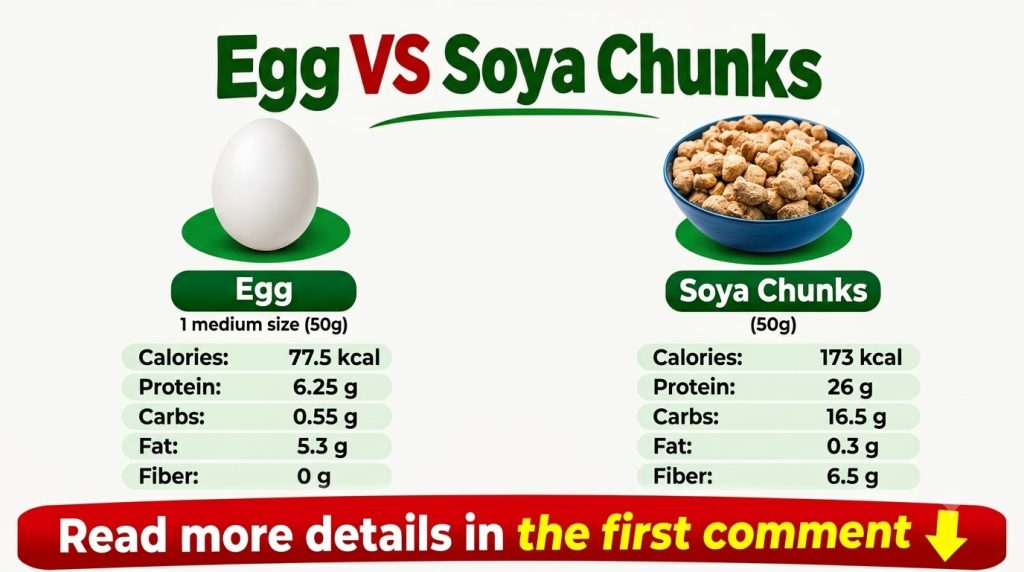
Nutrition Comparison Table: Egg vs. Soya Chunks
Let’s break down the numbers to see how one medium egg stacks up against 50 grams of dry soya chunks. Please note that values are approximate and can vary slightly based on specific products and preparation methods.
| Nutrient | 1 Medium Egg (approx. 50g) | 50g Dry Soya Chunks |
|---|---|---|
| Calories | ~70-80 kcal | ~170-180 kcal |
| Protein | ~6g | ~25g |
| Carbs | ~0.5g | ~17-20g |
| Fat | ~5g | ~0.5g |
| Fiber | 0g | ~8-9g |
| Main Nutrients | Vitamin D, B12, Choline, Selenium | Iron, Calcium, Magnesium, Folate, Zinc, B Vitamins |
| Best Benefit | Complete protein, versatile, good for satiety | High plant-based protein, high fiber, vegan-friendly |
Calories
When comparing 50 grams of dry soya chunks to one medium egg (approximately 50 grams), soya chunks generally contain more calories. One medium egg typically provides about 70-80 calories, making it a relatively low-calorie source of protein. In contrast, 50 grams of dry soya chunks packs around 170-180 calories due to its concentrated protein and carbohydrate content. It’s important to remember that soya chunks expand significantly when cooked, so a 50-gram dry portion makes a substantial serving.
Protein
This is where soya chunks truly shine, especially for plant-based diets. Fifty grams of dry soya chunks can deliver a remarkable 25 grams of protein, making it an excellent source of plant-based protein. A single medium egg provides about 6 grams of high-quality, complete protein, meaning it contains all nine essential amino acids necessary for the body. Both are excellent for muscle repair and growth, but soya chunks offer a higher protein density per 50 grams.
Fat
Eggs contain approximately 5 grams of fat, with a mix of saturated and unsaturated fats, along with cholesterol. For most healthy individuals, dietary cholesterol from eggs has minimal impact on blood cholesterol levels. Soya chunks, when dry, are incredibly low in fat, typically containing less than 1 gram per 50 grams. This makes them a fantastic option for those looking to reduce their fat intake while still getting ample protein.
Carbs
Eggs are virtually carb-free, making them an ideal food for low-carb or ketogenic diets, with less than 1 gram per egg. Fifty grams of dry soya chunks, however, contain a more significant amount of carbohydrates, usually between 17-20 grams. These carbohydrates contribute to the energy content and can be a good source of fuel, especially as they are often accompanied by beneficial fiber.
Fiber
One of the most significant differences lies in fiber content. Eggs contain no dietary fiber. Soya chunks, on the other hand, are a fiber powerhouse, providing around 8-9 grams of fiber per 50 grams dry. Fiber is crucial for digestive health, helps regulate blood sugar, and can contribute to feelings of fullness, which is beneficial for weight management.

Vitamins & Minerals
Both foods offer valuable micronutrients:
- Eggs: Are rich in Vitamin D, which is essential for bone health and immune function. They also provide Vitamin B12 for nerve health and energy, choline (important for brain function), and selenium, an antioxidant.
- Soya Chunks: Are a great source of iron, vital for oxygen transport; calcium for bone strength; magnesium for muscle and nerve function; folate; and zinc. They also contain various B vitamins.
Taste
When it comes to taste and texture, eggs and soya chunks are quite different:
- Eggs: Offer a rich, savory flavor and a soft, creamy texture (when cooked properly). They are incredibly versatile and can be prepared in countless ways, from scrambled to poached.
- Soya Chunks: Have a neutral flavor profile that readily absorbs the flavors of spices, marinades, and sauces. Once rehydrated, they have a meaty, chewy texture, making them an excellent substitute for meat in many dishes.
Best For
- Eggs are best for: A quick, nutrient-dense breakfast, a versatile snack, those following low-carb diets, and individuals looking for a complete protein source that’s easy to prepare.
- Soya Chunks are best for: Vegetarians and vegans seeking high-protein meat alternatives, individuals looking to boost fiber intake, meal prep (as they absorb flavors well), and those wanting a low-fat protein option.
Winner: It Depends on Your Goals!
There’s no single
