Are your refrigerator door seals looking a little less than fresh? Those rubber gaskets are a magnet for spills, crumbs, and everyday grime, often becoming discolored and sticky over time. Before you reach for harsh chemical cleaners, consider a simple, natural DIY paste that can effectively lift away dirt and leave your fridge seals sparkling clean.
This easy homemade solution uses common pantry staples to tackle the hidden grime in those tricky grooves, helping to extend the life of your fridge seals and keep your kitchen healthier.
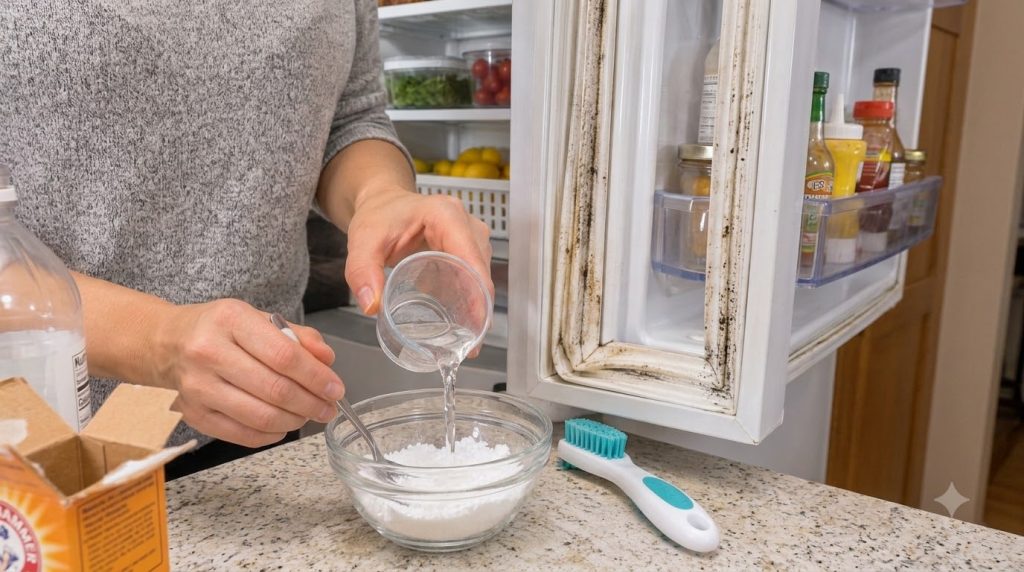
What You’ll Need
- 1/2 cup baking soda
- 1/4 cup white vinegar (approximately)
- Small mixing bowl
- Measuring cups
- Old toothbrush or small detail brush
- Clean damp cloth
- Clean dry cloth
Why This DIY Can Be Useful
This cleaning paste harnesses the power of two natural superstars:
- Baking Soda: A mild abrasive that gently scrubs away grime without scratching. It’s also a fantastic natural deodorizer, helping to eliminate any stale odors trapped in the seals.
- White Vinegar: A mild acid that cuts through grease, sticky residues, and helps to dissolve mineral deposits. When combined with baking soda, it creates a fizzing reaction that helps to lift and loosen dirt.
Together, they form a powerful yet gentle cleaning agent, perfect for delicate rubber seals.
How to Make It
- Pour the 1/2 cup of baking soda into your small mixing bowl.
- Gradually add the white vinegar, a little at a time, to the baking soda.
- Stir constantly until a thick, spreadable paste forms. You might not need all 1/4 cup of vinegar, or you might need a tiny bit more to achieve the right consistency, similar to toothpaste.
How to Use It
- Prepare the Seals: Open your refrigerator door wide and inspect the seals. If there are any loose crumbs or debris, quickly wipe them away with a dry cloth.
- Apply the Paste: Using your old toothbrush or detail brush, scoop up a generous amount of the paste. Apply it directly onto the dirty refrigerator door seals, paying special attention to the grooves and crevices where grime tends to accumulate. Don’t be shy – cover the dirty areas thoroughly.
- Let It Sit: Allow the paste to sit on the seals for 5 to 10 minutes. This gives the ingredients time to work their magic, softening and loosening the accumulated dirt and residue.
- Scrub Gently: After the waiting time, use your brush to gently scrub the seals. The mild abrasive action of the baking soda will help lift the grime. Work the brush into all the nooks and crannies.
- Wipe Clean: Take a clean, damp cloth and thoroughly wipe away all the paste and loosened dirt. You may need to rinse and wring out your cloth multiple times to ensure all residue is removed.
- Dry: Finish by wiping the seals with a clean, dry cloth to remove any remaining moisture. This helps prevent future mold growth and keeps the seals supple.
What to Expect
After using this natural cleaning paste, you can expect your refrigerator door seals to be visibly cleaner, brighter, and free of sticky residue. Any stale odors should also be significantly reduced. While it may not make old, stained seals look brand new, it will certainly improve their appearance and hygiene dramatically. Regular cleaning will help maintain this fresh look.
Helpful Tips
- Regular Maintenance: Make this a routine task, perhaps once a month, to prevent heavy grime buildup.
- Toothpick for Tight Spots: For extremely stubborn or hard-to-reach gunk deep in the seal’s folds, a toothpick can be useful for gently dislodging debris before scrubbing.
- Lemon Boost: For an extra burst of freshness and cleaning power, you can substitute a tablespoon of the white vinegar with fresh lemon juice.
- Warm Water: When wiping, use a cloth dampened with warm water for better residue removal.
Important Notes / Safety
- Ventilation: While these are natural ingredients, always ensure good ventilation in your kitchen when cleaning.
- Rinse Thoroughly: Make sure to wipe away all baking soda and vinegar residue to prevent any drying or cracking of the rubber seals over time.
- Avoid Internal Contact: Try to keep the paste on the seals themselves and avoid getting large amounts inside the refrigerator where it could come into contact with food.
- Patch Test: Although generally safe for rubber, if you are concerned, you can always test a small, inconspicuous area of your fridge seal first.