Tired of battling stubborn, baked-on grease and grime on your stovetop or kitchen counters? It’s a common struggle, and sometimes commercial cleaners just don’t cut through the mess without a lot of elbow grease. This simple DIY cleaning paste, made from two common household ingredients, is designed to help loosen those tough spots, making your cleaning routine much easier and more effective. It’s an affordable and practical solution that might just become your new favorite kitchen hack!
What You’ll Need
- 1 cup baking soda
- 2-3 tablespoons liquid dish soap (a grease-cutting formula works best)
- Small mixing bowl
- Spoon for mixing
- Cleaning sponge or soft brush
- Warm water
- Clean cloths or paper towels
Why This DIY Can Be Useful
This cleaning paste harnesses the power of two everyday ingredients:
- Baking Soda: A mild abrasive that helps scrub away grime without scratching most surfaces. It also acts as a natural deodorizer, helping to eliminate unpleasant smells often associated with old grease.
- Dish Soap: Specifically formulated to break down grease and oil. When combined with baking soda, it provides a strong degreasing action that helps lift stubborn, sticky residues.
Together, they create a thick paste that clings to vertical surfaces and allows the ingredients more contact time to work on the grime, leading to easier removal.
How to Make It
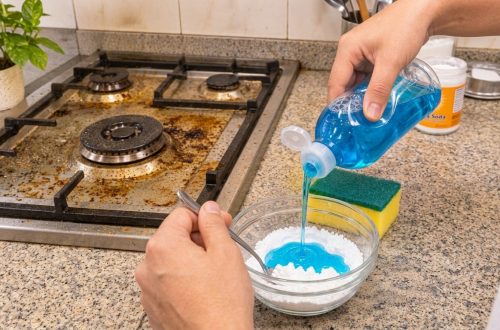
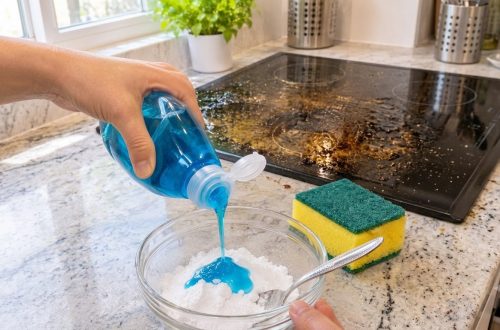
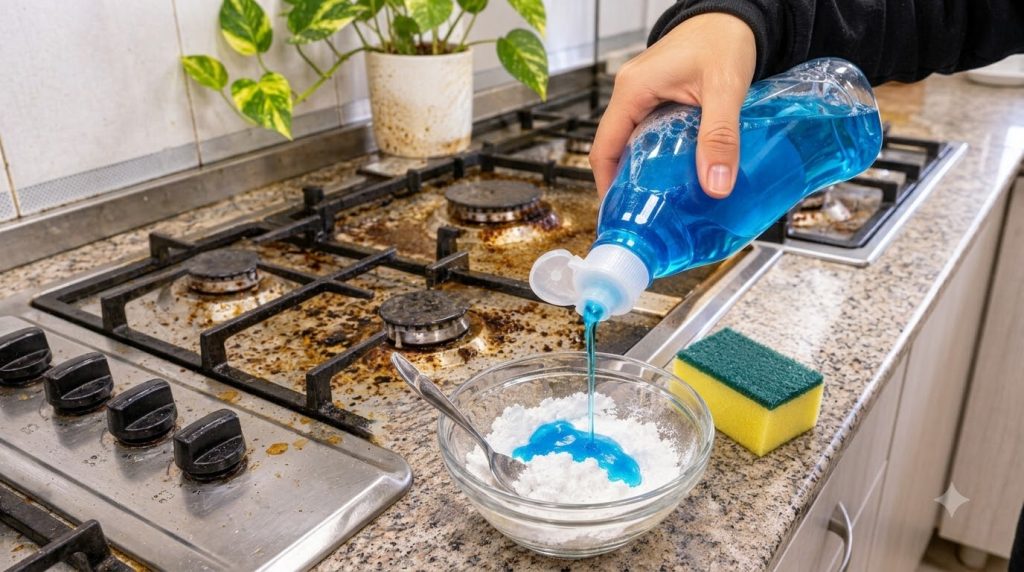
- Pour 1 cup of baking soda into your small mixing bowl.
- Add 2 tablespoons of liquid dish soap to the baking soda.
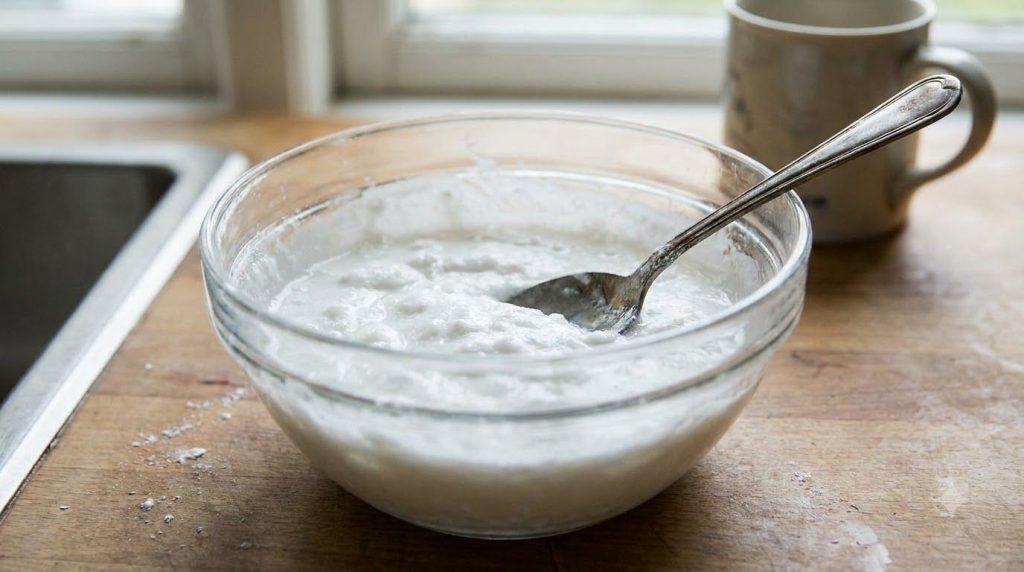
- Using a spoon, mix the ingredients thoroughly. You’re aiming for a thick, spreadable paste. If the mixture is too dry, add a little more dish soap, half a teaspoon at a time, until you reach the desired consistency. If it becomes too wet, add a little more baking soda.
How to Use It
- Prepare the Area: Clear away any loose debris from the surface you want to clean, such as a stovetop, oven door, or greasy counter.
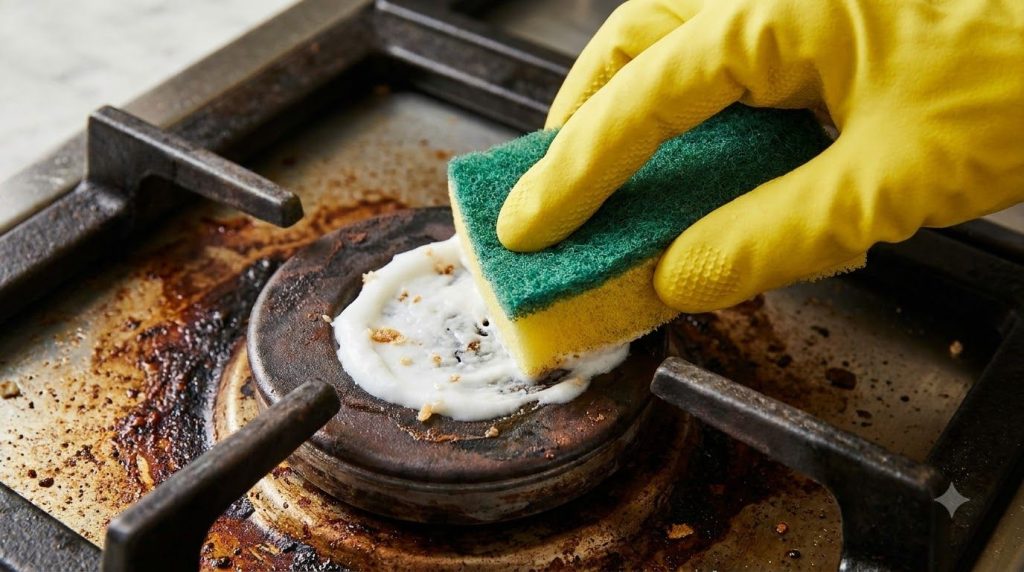
- Apply the Paste: Take a generous amount of the paste with your spoon or fingers and spread it directly over the greasy or grimy areas. For very stubborn spots, apply a thicker layer.
- Let It Sit: Allow the paste to sit on the surface for at least 15-30 minutes. For extremely tough, baked-on grime, you can let it sit for a few hours, or even overnight. This gives the ingredients time to penetrate and break down the grease.
- Scrub: After the waiting time, use a damp cleaning sponge or soft brush to gently scrub the treated areas in circular motions. You’ll notice the grime starting to lift and dissolve.
- Wipe and Rinse: Wipe away the paste and loosened grime with a clean, damp cloth. For best results, use a cloth dampened with warm water. Repeat wiping with fresh damp cloths until all residue is removed and the surface is clean.
- Dry: Finish by drying the surface with a clean, dry cloth or paper towel for a streak-free shine.
What to Expect
You can expect this DIY cleaning paste to significantly loosen and lift stubborn grease and grime, making the scrubbing process much easier than with water and soap alone. While it won’t magically make your surfaces look brand new instantly, it will dramatically reduce the effort needed to achieve a clean, sparkling result. For very old or heavily encrusted grime, you might need to repeat the application or allow the paste to sit for a longer period.
Helpful Tips
- Warm Water Boost: For tougher grease, use warm water when dampening your sponge or cloth to wipe away the paste. The heat can help further break down the oils.
- For Vertical Surfaces: The thick consistency of the paste is excellent for vertical surfaces like oven doors or the sides of a range hood, as it will cling instead of dripping.
- Store Leftovers: If you have any leftover paste, store it in an airtight container for future use. It generally keeps well for a few weeks.
Important Notes / Safety
- Patch Test: Before applying the paste to an entire surface, especially on delicate finishes or painted areas, always perform a small patch test in an inconspicuous spot to ensure there’s no discoloration or damage.
- Rinse Thoroughly: Always rinse the treated area thoroughly with clean water to remove all baking soda and soap residue, which could otherwise leave a dull film.
- Ventilation: While the ingredients are generally safe, ensure good ventilation in your kitchen when cleaning, especially when tackling large greasy areas.
- Avoid Contact with Eyes: As with any cleaning product, avoid direct contact with your eyes. Rinse immediately with water if contact occurs.