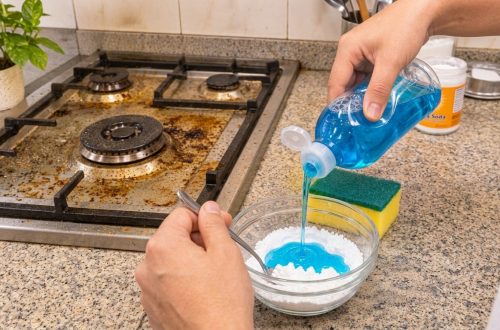
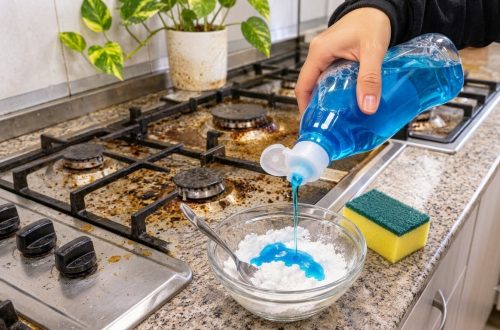
Tackling stubborn kitchen messes like baked-on grease and grime can feel like a never-ending battle. If you’re tired of endless scrubbing that barely makes a dent, it’s time to try a simple yet powerful DIY cleaning hack. This easy-to-make paste uses two common household ingredients to cut through tough buildup, helping your kitchen surfaces sparkle with less effort.
It’s a practical and affordable solution that might already be hiding in your pantry and under your sink!
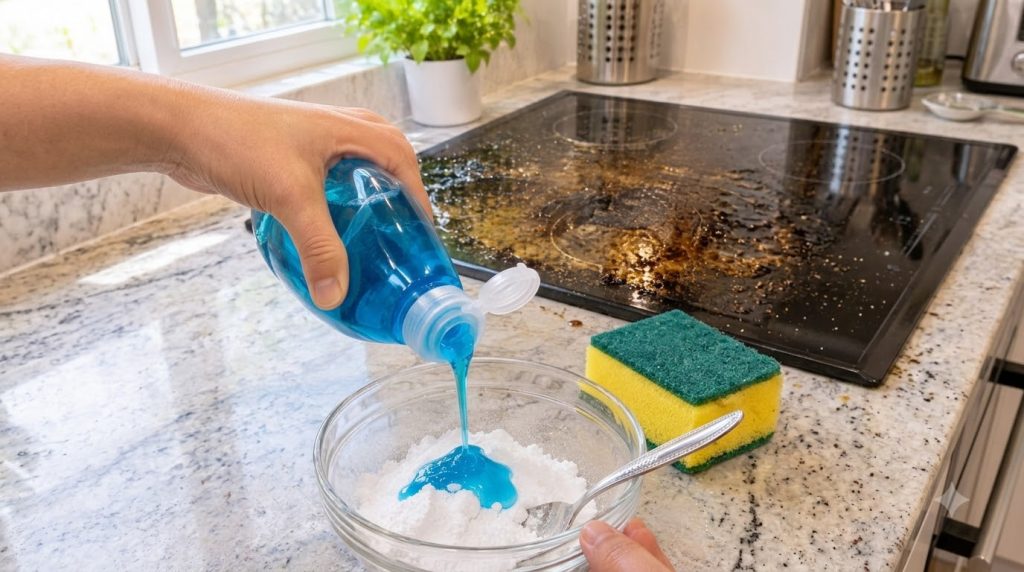
What You’ll Need
- 1/2 cup baking soda
- 2-3 tablespoons liquid dish soap (blue dish soap is commonly used for its grease-cutting properties)
- Small mixing bowl
- Spoon or spatula for mixing
- Cleaning sponge or soft brush
- Clean cloths or paper towels
- Warm water
Why This DIY Can Be Useful
This cleaning paste harnesses the individual strengths of its two main components:
- Baking Soda: A mild abrasive that helps scour away stuck-on food and grime without scratching most surfaces. It also works as a natural deodorizer.
- Dish Soap: Designed to break down grease and oils, making it excellent for dissolving sticky residues and lifting dirt from surfaces.
Together, they form a formidable paste that tackles tough kitchen messes more effectively than using either ingredient alone.
How to Make It
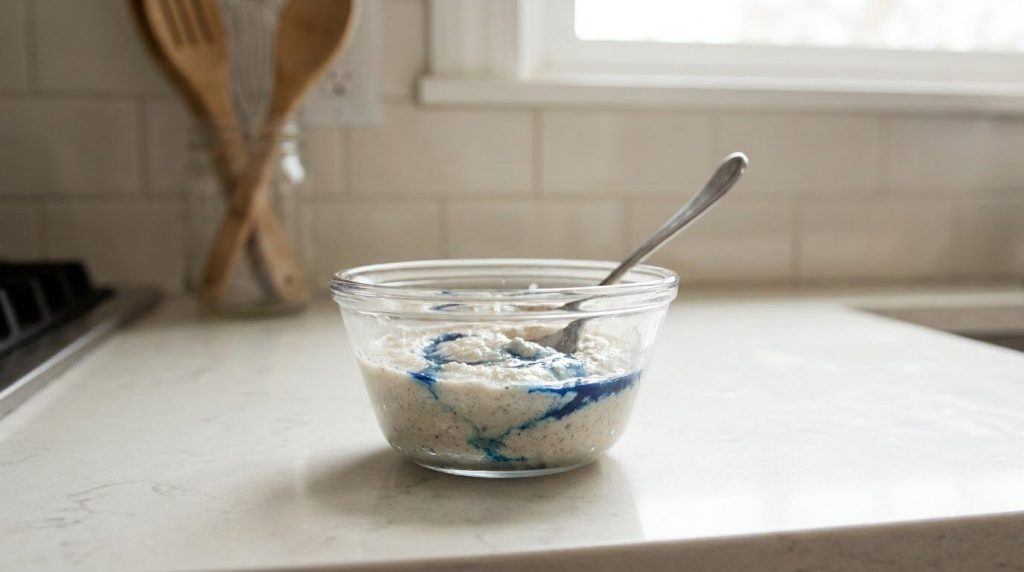
- Pour the 1/2 cup of baking soda into your small mixing bowl.
- Gradually add 2 tablespoons of liquid dish soap to the baking soda.
- Using a spoon or spatula, mix the ingredients thoroughly. You are aiming for a thick, spreadable paste consistency.
- If the paste is too dry, add the remaining tablespoon of dish soap, a little at a time, until you reach the desired consistency. It should resemble a thick frosting or toothpaste.
How to Use It
This paste is particularly effective on stovetops, sinks, and countertops, especially those with greasy buildup or baked-on food.
- Prepare the Surface: Wipe away any loose crumbs or debris from the area you plan to clean.
- Apply the Paste: Scoop a generous amount of the paste with your spoon or fingers and apply it directly onto the dirty surface. Spread it evenly over the grime and stained areas.
- Let It Sit: Allow the paste to sit on the surface for at least 5-10 minutes. For very stubborn stains, you can let it sit for up to 30 minutes to allow the ingredients to work their magic.
- Scrub: Using a damp cleaning sponge or a soft brush, gently scrub the paste into the stained areas. You’ll notice the grime starting to lift away.
- Rinse/Wipe: Once you’ve scrubbed, use a clean, damp cloth or paper towels to wipe away the paste and lifted grime. Rinse your cloth frequently with warm water to ensure you’re removing all residue.
- Buff: Finish by wiping the surface with a dry, clean cloth to buff it to a shine.
What to Expect
You can expect a significant improvement in the cleanliness and shine of your kitchen surfaces. This paste is highly effective at removing grease, food splatters, and light stains. For older, deeply set-in stains or severe charring, it may require a second application or more vigorous scrubbing, but it will certainly make a noticeable difference.
Helpful Tips
- Warm Water Boost: Use warm water when dampening your sponge or rinsing your cloth, as it can help the dish soap work more effectively.
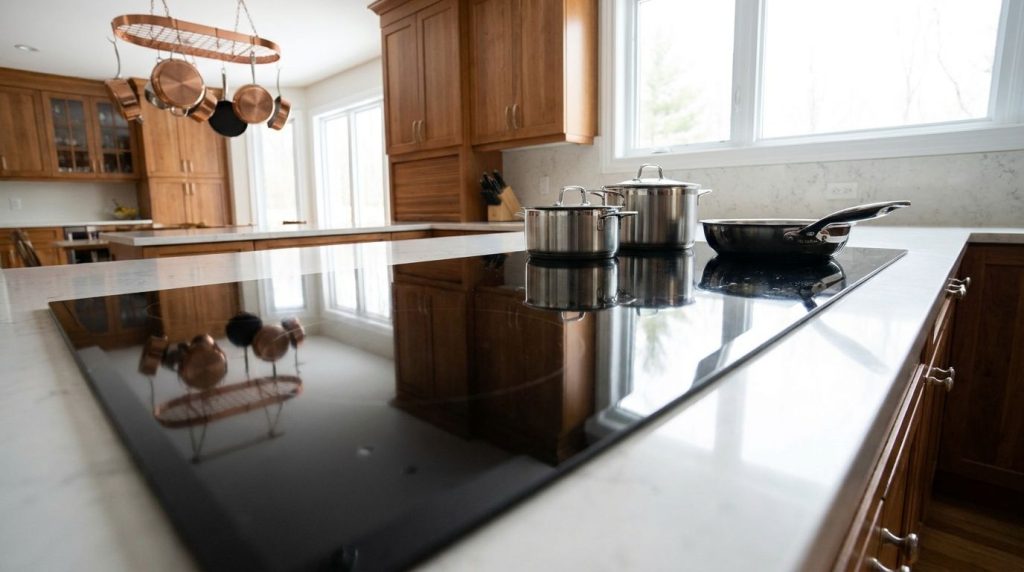
- Non-Scratch Tools: Always use a non-abrasive sponge or cloth, especially on delicate surfaces like induction stovetops, to avoid scratching.
- Consistency is Key: Adjust the amount of dish soap to achieve the perfect paste consistency. Too runny and it won’t cling; too thick and it will be hard to spread.
Important Notes / Safety
- Patch Test: Before applying the paste to an entire surface, especially a new or delicate one, test it on an inconspicuous area first to ensure there is no discoloration or damage.
- Rinse Thoroughly: Always rinse the treated area thoroughly with clean water to remove all traces of the paste. Residue can leave streaks or a hazy film.
- Ventilation: While both ingredients are generally safe, ensuring good ventilation in your kitchen during cleaning is always a good practice.
- Not for All Surfaces: Avoid using baking soda on highly polished or delicate surfaces like marble or aluminum, as its abrasive nature can potentially scratch or dull them over time. This paste is best suited for durable surfaces like ceramic stovetops, stainless steel sinks, and laminate countertops.