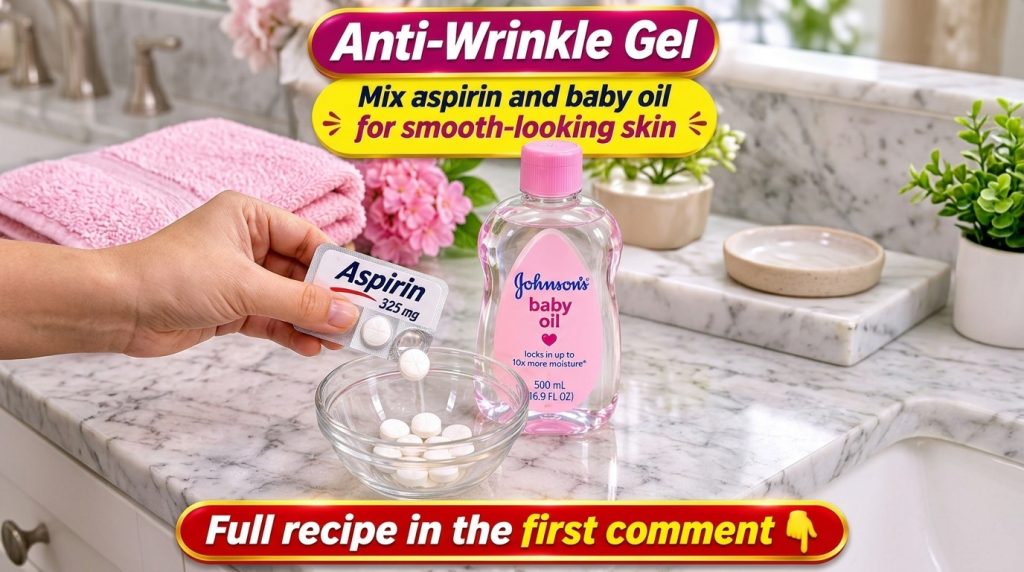
If you have spent any time scrolling through beauty videos, you have probably seen a “secret” anti-wrinkle gel made with aspirin and baby oil. The idea is simple: crush a few tablets, mix them with oil, and spread the paste on your face like a mask. It sounds clever and budget-friendly, and many people are curious enough to try it. Before you reach for the pill bottle, though, it helps to understand what these ingredients can and cannot do.
What Is in This Viral DIY Recipe?
Most versions of this recipe use two basic ingredients. The first is aspirin, which is acetylsalicylic acid. Once it touches the skin, it can break down into salicylic acid, a gentle exfoliant that is used in many acne and brightening products. The second is baby oil, which is a light mineral oil. Mineral oil creates a protective layer on the skin that slows moisture loss.
Together, the mixture is meant to exfoliate dead skin cells and soften the look of the skin. The results people share are usually smoother-looking skin for a short time, which is what makes the recipe appealing.
What the Science Says About Wrinkles
Here is the honest part. There is no solid research showing that aspirin mixed with baby oil reduces wrinkles. Wrinkles form from changes in collagen, elastin, and years of sun exposure, and a kitchen-cabinet mixture does not rebuild those structures. Any smoother look you notice is most likely from temporary hydration and light exfoliation, not lasting anti-aging change.
Also, baby oil is not really a gel. Because it is an oil, it will not hold the thick, spreadable texture that the name suggests. If you want a true gel texture, you would need a gelling ingredient such as aloe vera gel, which is a far better base for a homemade face treatment.
Possible Risks to Keep in Mind
- Irritation: Aspirin can sting, redden, or dry out sensitive skin, especially around the eyes.
- Allergic reactions: Some people are sensitive to aspirin or salicylates, and reactions can range from rash to swelling.
- Clogged pores: Heavy oils can trap dirt and sweat, which may lead to breakouts for oily or acne-prone skin.
- Uneven strength: Crushed tablets do not dissolve evenly, so some spots may get more product than others.
Because of these risks, it is wise to avoid this mixture on broken skin, after recent procedures, or if you take blood-thinning medication.
A Safer Way to Care for Your Skin
If your goal is smoother, more radiant skin, you can get good results with gentle, well-studied habits. Daily sunscreen is one of the most effective anti-aging steps you can take. A simple routine with a mild cleanser, a hydrating moisturizer, and a retinoid or vitamin C product recommended by a dermatologist can also make a visible difference over time.
If you still want a natural DIY treatment, try a light honey mask or a aloe vera gel with a few drops of jojoba oil. These options are gentler, easier to spread, and simpler to rinse off. Always do a patch test on your inner arm for 24 hours before applying anything new to your face.
The Bottom Line
The aspirin and baby oil trend is popular because it promises quick, affordable results. However, there is little evidence that it reduces wrinkles, and it carries real risks for irritation and breakouts. If you are curious, treat it as an experiment at most, not a true anti-aging solution. For lasting results, focus on sun protection, consistent hydration, and a routine that suits your skin type. When in doubt, speak with a dermatologist before trying a new homemade treatment.