Homemade sauces can turn a simple plate of rice, roasted vegetables, or grilled chicken into a meal you look forward to. Most of them come together quickly with pantry staples, fresh herbs, and a few basic techniques.
Why Make Your Own Sauces
Store-bought sauces are convenient, but making your own lets you control salt, sugar, and heat. You can also adjust flavors to suit your household and use fresh herbs and aromatics that taste brighter than what comes from a bottle.
Two Sauces to Try First
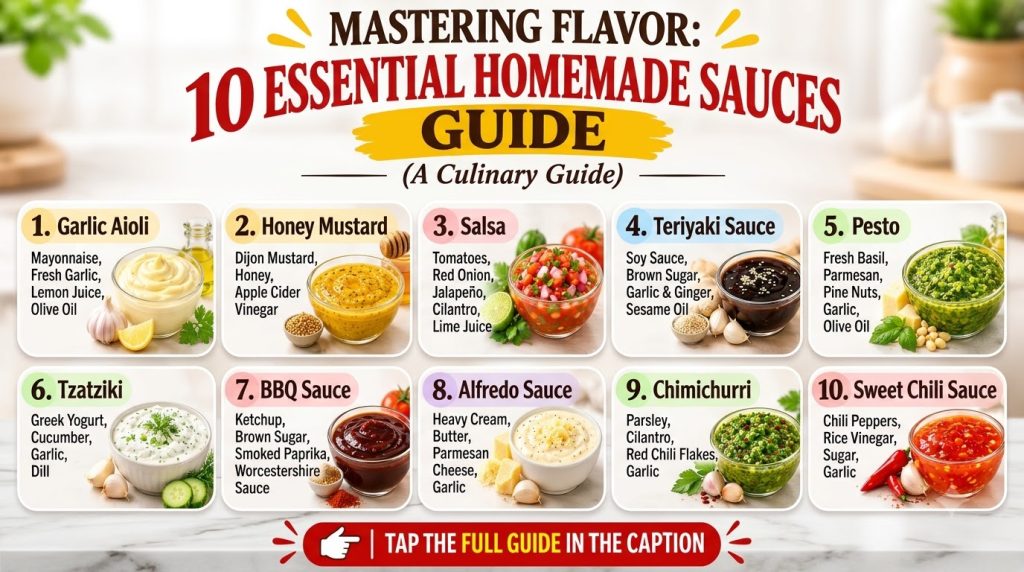
If you are not sure where to start, creamy garlic aioli and sweet chili sauce are both approachable choices with a big flavor payoff.
Garlic Aioli
Aioli is a garlic-forward emulsion, traditionally made by slowly whisking oil into egg yolk. Add the oil a little at a time at first so the mixture thickens smoothly. Once it looks like thick mayonnaise, finish it with a squeeze of lemon juice and a pinch of salt. If you are concerned about raw eggs, use pasteurized eggs.
Sweet Chili Sauce
Sweet chili sauce balances sugar, vinegar, garlic, and chili heat. Simmer the mixture gently over medium-low heat until it turns syrupy and coats the back of a spoon. It will thicken further as it cools, so do not overcook it.
Tips for Sauce Success
- Taste as you go and adjust salt, acid, and sweetness in small amounts.
- Chop garlic finely or grate it so its flavor blends evenly.
- Use fresh herbs and add them near the end to keep their color and aroma.
- Let cooked sauces cool before you transfer them to jars to avoid condensation.
Common Mistakes to Avoid
- Adding oil too fast: Emulsified sauces can break if oil goes in too quickly. Slow down and whisk steadily.
- Overcooking sugar-based sauces: They can become too thick or sticky once cooled. Pull them off the heat when they coat a spoon.
- Skipping the taste test: Most sauces need a final pinch of salt or a splash of acid to taste balanced.
Serving Ideas
Serve aioli with roasted potatoes, burgers, or grilled vegetables. Sweet chili sauce works well with chicken, shrimp, spring rolls, and rice bowls. Many of the other sauces in this lineup can be drizzled over salads, grain bowls, or sandwiches.
How to Store Homemade Sauces
Keep homemade sauces in clean, airtight jars in the refrigerator. Storage time depends on the ingredients, so check each recipe for guidance. Sauces that contain eggs or fresh garlic are best used within a few days. Discard any sauce that smells off, looks discolored, or shows mold.
Frequently Asked Questions
Can I make sauces ahead of time?
Yes, many sauces can be made a day or two in advance. Stir them well before serving, since some may separate slightly as they sit.
Do I need special equipment?
Most sauces need only a bowl, a whisk, a small saucepan, and a jar with a lid. A blender or food processor makes some recipes faster but is not required.
Which sauce are you excited to try first?